A Landmark Achievement for Environmental Conservation
The Costa Rican Electricity Institute (ICE) has reached a major environmental milestone by symbolically planting its 25 millionth tree, marking more than six decades of continuous commitment to reforestation and ecosystem conservation across the country.
Far from being a recent initiative, this long-term program has been part of ICE’s environmental strategy since the 1960s. Its mission has been to protect watersheds, restore degraded landscapes, conserve native tree species, and safeguard the natural resources that support both biodiversity and Costa Rica’s renewable energy production.
A History Rooted in Watershed Protection
ICE’s commitment to environmental restoration began alongside the development of the country’s first hydroelectric projects.
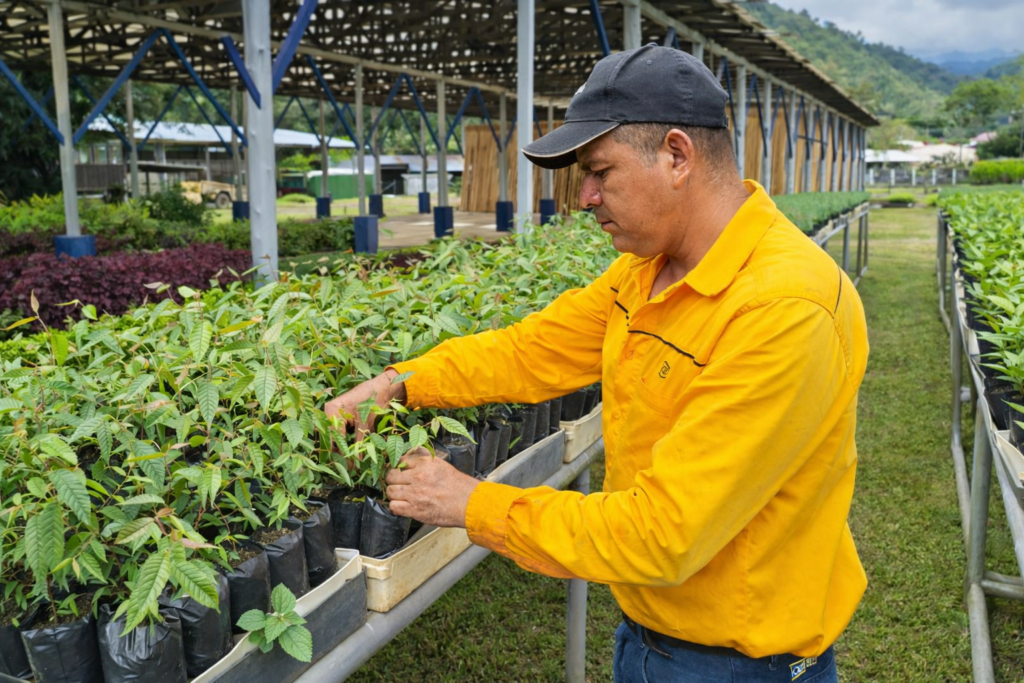
In 1956, the institution launched conservation efforts to protect the Reventazón River watershed and, a few years later, established its first forest nursery in La Garita, Alajuela Province. Since then, tree production has steadily expanded with the goal of restoring forests, protecting springs, stabilizing soils, and preserving biological corridors that are essential for wildlife.
Over time, additional nurseries in Cachí and Tronadora further strengthened the program, allowing it to expand its reach nationwide.
Millions of Trees Helping Restore Ecosystems
The trees produced in ICE’s nurseries are not used exclusively for institutional projects.
Every year, hundreds of thousands of seedlings are distributed to municipalities, schools, universities, community associations, environmental organizations, private companies, and public institutions that carry out ecological restoration initiatives throughout Costa Rica.
Through these partnerships, thousands of hectares have been reforested with native species that help restore biodiversity and protect vital water sources.
Protecting Native and Threatened Tree Species
ICE’s forestry program also plays an important role in conserving native tree species with high ecological value.
Its nurseries cultivate species such as bitter cedar, cocobolo, nazareno, royal guayacán, river almond, cristóbal, guachipelín, and many others.
According to institutional data, nearly 510,000 trees were produced during 2024 alone. Approximately 77,000 belonged to threatened or vulnerable species, while 172,000 were specifically designated for ecological restoration projects.
Reforestation Supporting Water and Renewable Energy
Forest conservation is closely connected to Costa Rica’s renewable energy production.
Healthy forests protect soils, regulate the water cycle, and help maintain the water resources that supply many of the country’s hydroelectric plants.
For this reason, environmental restoration forms part of a broader strategy that combines watershed protection, renewable electricity generation, and biodiversity conservation.
This model has helped Costa Rica maintain one of the cleanest electricity matrices in the world, relying primarily on hydroelectric, geothermal, wind, and solar energy.
A Nationwide Collaborative Effort
The success of the program is the result of collaboration far beyond the institution itself.
Over the years, thousands of students, volunteers, local communities, municipalities, and environmental organizations have participated in tree-planting campaigns and restoration projects coordinated by ICE.
This collective effort has strengthened environmental education while increasing public awareness about the importance of protecting natural resources for future generations.
A Symbol of Costa Rica’s Environmental Commitment
Planting the 25 millionth tree represents far more than an impressive number.
It reflects decades of consistent work demonstrating how long-term environmental planning, institutional cooperation, and citizen participation can generate lasting benefits for the country’s natural heritage.
At a time when ecosystem restoration and climate change adaptation have become global priorities, initiatives like this strengthen Costa Rica’s environmental resilience and reinforce its position as an international leader in sustainability.
Recommended Official Sources
- Costa Rican Electricity Institute (ICE)
- Ministry of Environment and Energy (MINAE)
- National System of Conservation Areas (SINAC)
- National Forestry Financing Fund (FONAFIFO)
- National Landscape Restoration Program
- Food and Agriculture Organization of the United Nations (FAO)