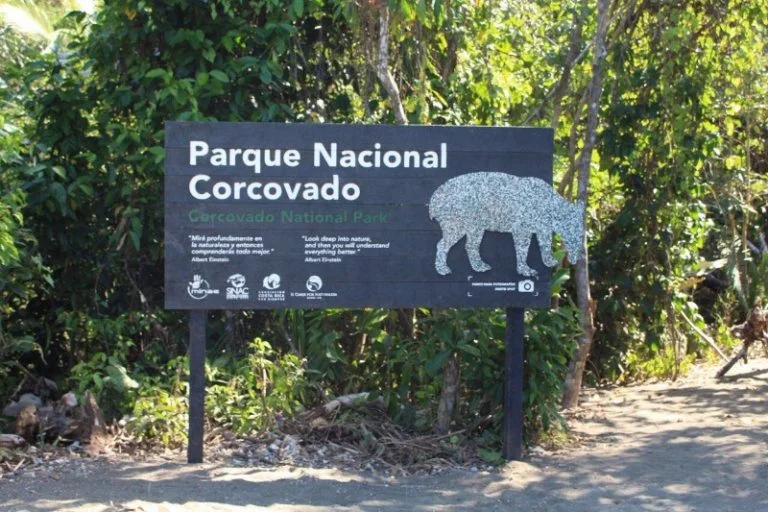
Corcovado National Park, located on the Osa Peninsula, is facing growing pressure from illegal gold mining and difficulties in maintaining sufficient surveillance in one of Costa Rica’s most important protected areas.
The situation has drawn renewed attention in 2026 following reports of illegal mining operations, threats against park rangers and limited staffing to monitor such a vast and challenging territory.
A Park of Exceptional Ecological Importance
Corcovado was established as a national park in 1975 and was later expanded. According to the National System of Conservation Areas (SINAC), it currently covers approximately 42,570 hectares of land and 5,375 hectares of marine territory.
The park contains tropical forests, beaches, coral reefs, mangroves and freshwater wetlands. SINAC estimates that Corcovado contains approximately 2.5% of the world’s biodiversity, an exceptional concentration within a relatively limited area.
Among the species found in the park are Baird’s tapirs, jaguars, pumas, peccaries, scarlet macaws and several species of monkeys, as well as a remarkable diversity of birds, reptiles, amphibians and insects.
Illegal Mining Remains a Threat
Illegal gold mining is not a new problem on the Osa Peninsula, but new incidents have been documented inside Corcovado during 2026.
In January, four men were arrested inside the park while allegedly extracting gold illegally in the Sirena River area. During the operation, SINAC park rangers reportedly received death threats, according to documents incorporated into a judicial investigation.
Other reports published in April indicated that illegal gold extraction in Corcovado could be connected to criminal networks providing equipment, financing and buyers for the mineral. These claims form part of ongoing investigations and testimonies and remain subject to the relevant legal proceedings.
Park Rangers Covering a Difficult Territory
One of the main challenges is the enormous territory that must be patrolled.
A report published in July 2026 stated that four park rangers were working in Corcovado, meaning that, on average, each ranger would be responsible for approximately 203 square kilometers.
Other reports based on ranger testimonies indicated that, under certain circumstances, one ranger may have to cover around 3,000 hectares alone. Staff rotations and days off also mean that the entire team is not necessarily present in the park at the same time.
This makes surveillance particularly difficult in mountainous and remote areas, especially in sectors far from the park’s main tourist sites.
Operations Against Illegal Gold Mining
Costa Rican authorities have been conducting operations inside and around Corcovado for years to locate illegal mining camps and arrest people involved in unauthorized extraction.
The Ministry of Public Security has previously documented joint operations with park rangers to locate poachers and people involved in illegal gold mining. In some operations, authorities discovered camps, mining equipment and areas where open-pit extraction had taken place.
Official records show that illegal mining has been a recurring threat in the region for decades, explaining why it remains one of the park’s major conservation challenges.
A Problem That Goes Beyond Gold
The pressure on Corcovado is not limited to mining.
Recent reports have also highlighted problems related to poaching, logging and other illegal activities, while park rangers have reported threats and intimidation connected to their conservation work.
In April 2026, a Corcovado ranger reported receiving threats and stated that groups linked to organized crime were attempting to use protected areas in the region for various illegal activities. These statements are part of reports and testimonies published by national media.
Consequences for Biodiversity
Illegal mining can affect ecosystems in several ways. The removal of soil can alter waterways, while mining camps and related activities can lead to vegetation loss, pollution and disturbance of wildlife.
The impact is particularly significant in Corcovado because so many species depend on healthy forests and rivers.
Technical SINAC documents emphasize that the park supports important populations of large mammals such as tapirs, jaguars and peccaries, while its forests provide essential refuge for numerous threatened species.
Climate Pressures Are Also Affecting the Park
Mining is not the only environmental concern affecting Corcovado in 2026.
In June, park rangers reported a significant reduction in the flow of some rivers and streams, amid drought conditions associated with the arrival of the El Niño phenomenon. The situation affected water availability and the behavior of some wildlife.
The combination of human pressures and environmental changes makes effective monitoring and protection inside the park even more important.
Conservation Also Depends on Local Communities
Protecting such a vast territory cannot depend solely on public officials.
SINAC also works with communities and local organizations in different areas around the park. Some tourist access points, such as El Tigre, are managed in collaboration with community organizations, while visitors must enter through official access points and follow established rules designed to protect the area.
Responsible tourism can help generate economic opportunities for nearby communities while maintaining an organized and legal presence in parts of the park.
A Major Conservation Challenge
Corcovado is one of Costa Rica’s most important biodiversity refuges. Its size, isolation and biological richness make it a territory of exceptional importance for conservation.
Protecting it, however, requires sufficient resources to maintain patrols, respond to illegal activities, provide equipment for park rangers and ensure their safety.
The situation documented during 2026 highlights a challenge that is not new: protecting an extraordinarily biodiverse territory from illegal activities that take advantage of the difficulty of monitoring large areas of forest.
The future of Corcovado will depend largely on the ability of institutions, local communities and conservation organizations to strengthen protection of the park and preserve the integrity of its ecosystems.
Official and Scientific Sources
National System of Conservation Areas (SINAC): official information on Corcovado National Park, including its area, biodiversity, access sectors and protection regulations.
Ministry of Public Security: official records of operations carried out with SINAC against poaching and illegal gold extraction in Corcovado.
SINAC technical documentation on Corcovado National Park: information on biodiversity, ecosystems and historical threats within the protected area.
University of Costa Rica / EnComuSeHace: reports and analysis concerning working conditions and territorial coverage among park rangers in protected areas.
Legislative Assembly of Costa Rica: parliamentary documentation concerning the historical situation of park rangers and challenges in protecting protected areas.