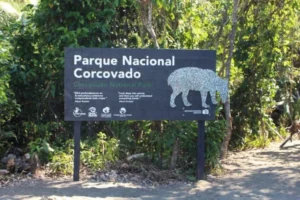
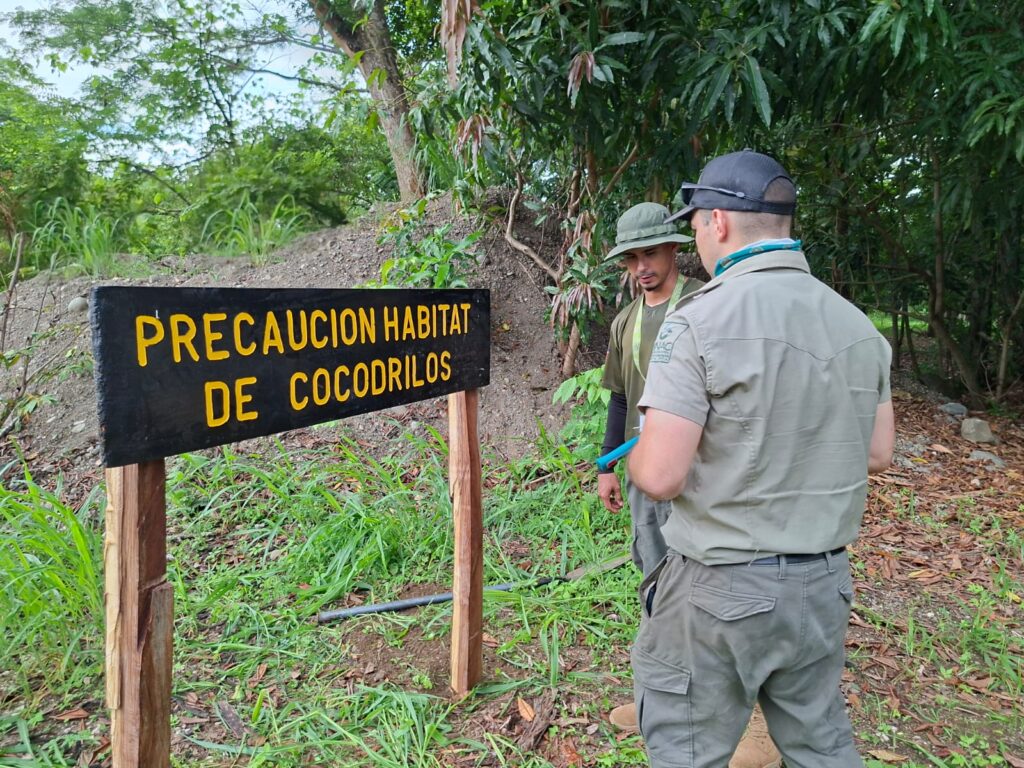
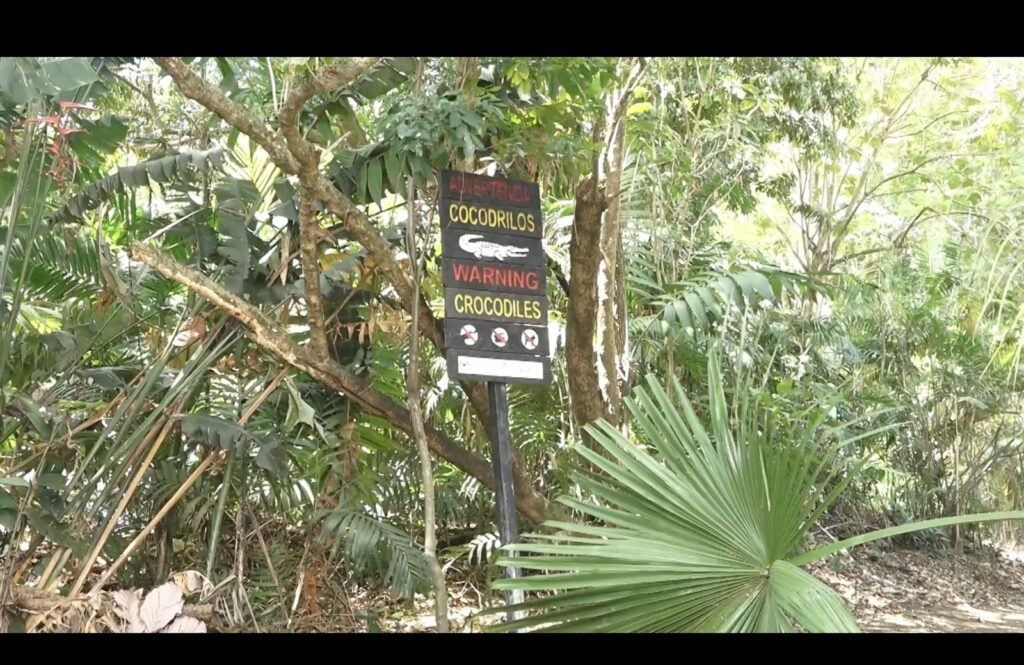
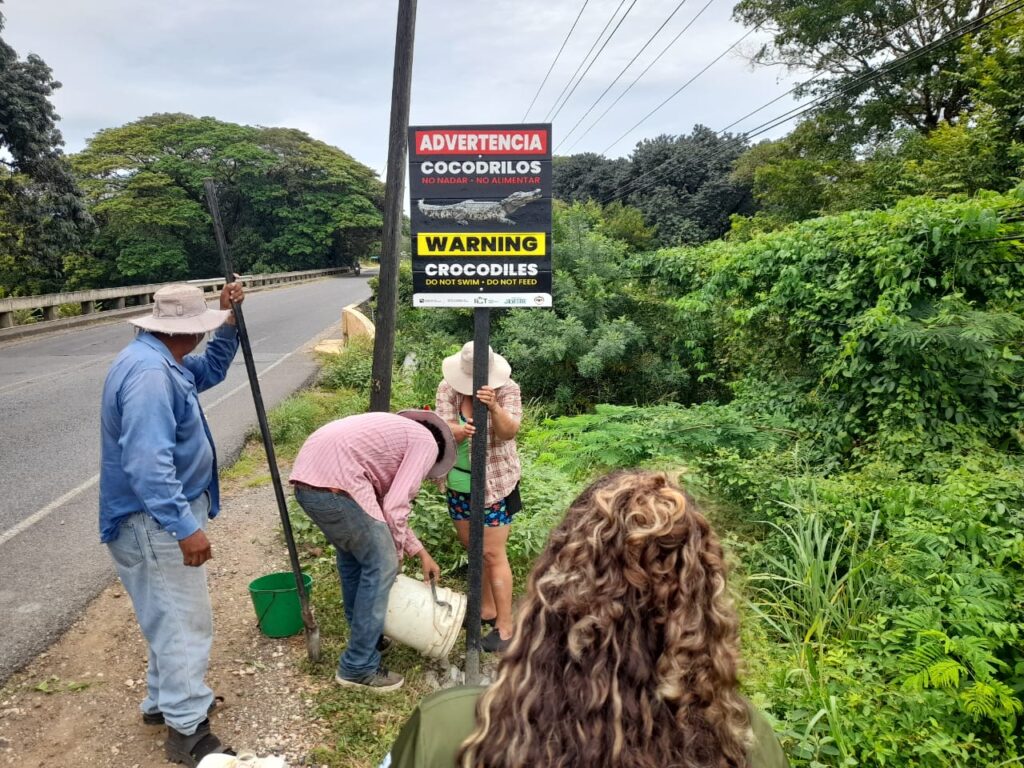
- A total of 55 large warning signs aimed at preventing interactions between people, crocodiles, and caimans have been installed in areas identified as having a high presence of these reptiles.
- The signage will be complemented by a preventive information campaign with advice and recommendations about these wild animals commonly found in rivers and coastal areas.
San José, July 3, 2026. Ahead of the start of Costa Rica’s mid-year school holidays, authorities began installing more than 55 large warning signs designed to reduce interactions between people, crocodiles, and caimans. The signs are being placed near beaches, rivers, national parks, and conservation areas where these wild reptiles are commonly found.
One of the main objectives of the initiative is to inform both national and international visitors about the presence of crocodiles and caimans in specific locations, where they may pose a safety risk if their natural habitat is disturbed.
The initiative reflects Costa Rica’s commitment to tourism that coexists harmoniously with biodiversity while reinforcing the country’s reputation as a safe travel destination. The effort will also include technical training provided by SINAC to tourism professionals and digital awareness campaigns throughout the July holiday period and during the rest of the year.
According to wildlife experts, the primary goal is to prevent any type of interaction between people and these unpredictable wild animals. As preventive measures, visitors are advised to maintain a safe distance, never approach or feed the animals, obey warning signs, and avoid entering the water in unauthorized areas.
“With the beginning of the mid-year holidays and as part of an agreement with MINAE and SINAC, we have started installing 55 warning signs in crocodile and caiman habitats to prevent any contact between people and these wild species,” explained Marcos Borges, Executive President of the Costa Rican Tourism Board (ICT).
Meanwhile, Mónica Navarro del Valle, Minister of Environment and Energy, stated that this collaboration with ICT was carried out “with tourist safety in mind and recognizing the importance of installing preventive information signs to warn visitors about possible crocodile sightings when traveling to beaches during these holidays.”
The production and installation of the signs were made possible through a cooperation agreement between the Costa Rican Tourism Board (ICT) and the Ministry of Environment and Energy (MINAE), with implementation by the ICT Tourist Assistance Department and the National System of Conservation Areas (SINAC).
The partnership will also provide funding to install additional technical and preventive signage, develop educational materials, deliver technical training by SINAC for the tourism sector and institutional staff, and carry out nationwide awareness campaigns.
Respect and prevention around crocodiles and caimans
According to MINAE data, the first priority locations for installing the warning signs include the Sixaola, Puerto Viejo, Banano, Bananito, and Matina rivers (Black Bridge), Mawamba Port, and Caño Blanco Port (Siquirres). Additional signage will also be installed in the Bribri Indigenous Territory of Kéköldi (ADITIKA).
Other locations include Manzanillo de Cóbano, the Lepanto Bridge, and the ferry terminal to Playa Naranjo.
The next phase will continue throughout Guanacaste and the Central and Southern Pacific regions, with the entire signage program expected to be completed during the first days of July.
According to official SINAC/MINAE data, Costa Rica is home to two species of crocodilians: the American crocodile, found in both freshwater and saltwater habitats, particularly in places such as the Tárcoles River, and the caiman, also known locally as cuajipal. The caiman is smaller, avoids marine environments, and mainly inhabits freshwater rivers and lagoons such as Tortuguero and Caño Negro, where warning signs will also be installed. This species is generally more tolerant of human presence and has no recorded fatal attacks.
Tourist safety recommendations
Authorities emphasized that these reptiles are not overpopulated, but rather play an essential role in maintaining healthy ecosystems. Encountering a crocodile or caiman is a real possibility in Costa Rica, making it important to dispel myths and follow these ICT and SINAC recommendations:
- Stay at least 50 meters (164 feet) away from riverbanks, mangroves, or coastal areas where crocodiles or caimans are present.
- Avoid swimming or fishing in the same location at the same time regularly, as these animals can learn behavioral patterns and anticipate human presence.
- Feeding wildlife is strictly prohibited and illegal, as it alters natural behavior, removes their fear of humans, and increases the risk of attacks.
- Closely supervise children and pets, as they may be perceived as potential prey.
- When traveling by boat or standing near the water, avoid leaning over the sides or low-hanging branches, as crocodiles can leap out of the water a distance equal to their own body length.
- If you see a crocodile or caiman, calmly move away. Never attempt to handle, harass, or approach the animal.
- If chased on land, run in a straight line. Contrary to popular belief, running in a zigzag is a myth. Crocodiles can reach speeds of 11 km/h (7 mph) on land and 32 km/h (20 mph) in the water.
- During the rainy season, avoid entering flooded rivers or stagnant waters, as rising water levels may displace animals into populated areas.
- Do not clean fish or dispose of food waste near campsites or populated areas, as odors attract these predators.
- Remember that crocodiles and caimans are active hunters that feed on crustaceans, fish, birds, and mammals. They do not normally feed on carrion and therefore actively seek live prey.
- To report dangerous situations, inappropriate wildlife handling, or animals in urban areas, contact the official 1192 hotline or use SINAC’s SITADA reporting system.