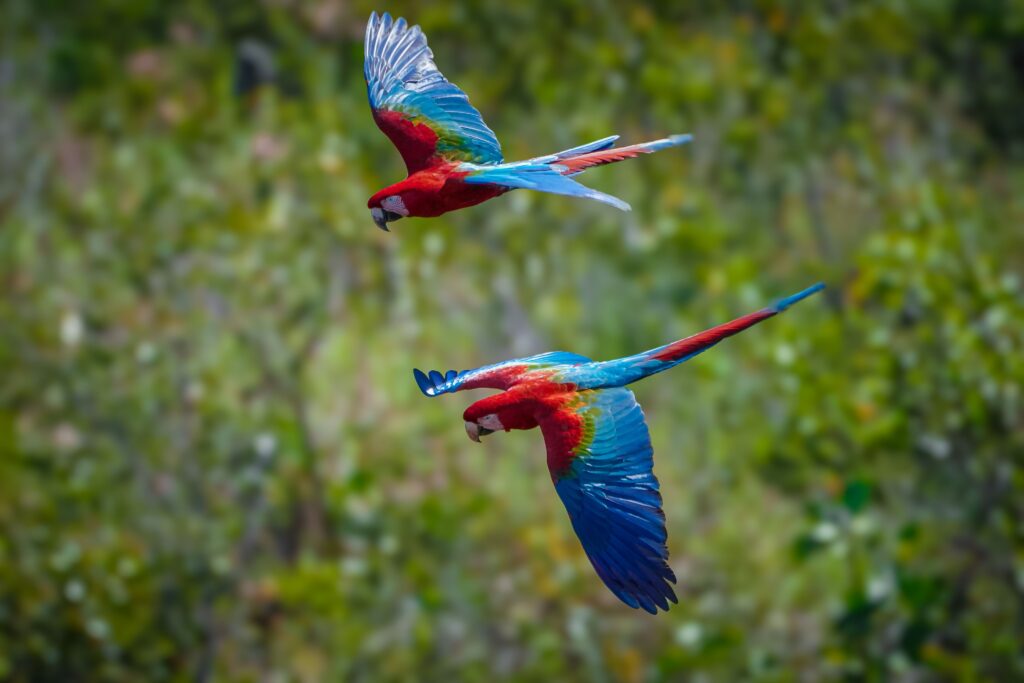
The recovery of an iconic species continues to advance
The Nicoya Peninsula has reached an important conservation milestone, with more than 250 scarlet macaws (Ara macao) successfully reintroduced into their natural habitat. This achievement is the result of a long-term conservation program carried out in the community of Cabuya, Cóbano, Puntarenas, where the species had disappeared locally due to habitat loss and illegal wildlife trafficking.
Following the ninth release of birds, the region has become one of Costa Rica’s most important refuges for scarlet macaws and is now home to approximately 15% of the country’s wild population of this iconic species.
A collaborative effort to restore wild populations
The project is led by the Association for the Conservation of the Scarlet Macaw (ASOPROLAPA), with support from public institutions, wildlife specialists, and local communities. Its objective is to breed, rehabilitate, and release scarlet macaws into areas where they had disappeared, allowing self-sustaining wild populations to become established once again.
Each bird undergoes veterinary examinations, specialized care, and adaptation training before being released, followed by continuous scientific monitoring.
Why are scarlet macaws so important?
The scarlet macaw is one of the most recognizable birds of Central America’s tropical forests. Beyond its striking red, blue, and yellow plumage, it plays an essential ecological role.
By feeding on fruits and seeds, scarlet macaws help disperse native tree species, contributing to forest regeneration and maintaining biodiversity.
Their main ecological contributions include:
- Dispersing seeds of native trees
- Supporting natural forest regeneration
- Serving as indicators of healthy ecosystems
- Promoting ecotourism and birdwatching
From local extinction to a conservation success story
For decades, scarlet macaw populations declined across several regions of Costa Rica’s Pacific coast because of deforestation, the loss of nesting trees, and illegal wildlife trade.
Conservation initiatives implemented in recent years have helped reverse this trend through habitat protection, environmental education, and carefully managed breeding and release programs.
The Nicoya Peninsula demonstrates that species restoration can succeed when conservation organizations, government institutions, and local communities work together over the long term.
Cabuya becomes a biodiversity sanctuary
The community of Cabuya, located in the district of Cóbano, has become one of Costa Rica’s leading sites for scarlet macaw recovery. Favorable forest conditions and strong community involvement have allowed new breeding flocks to establish themselves successfully.
Beyond benefiting wildlife, the project also strengthens nature tourism and birdwatching, creating sustainable economic opportunities for local residents.
Scientific monitoring ensures long-term success
Following each release, conservation teams monitor the birds to study their movements, adaptation, breeding success, and survival.
The data collected helps evaluate the effectiveness of the program while improving future wildlife reintroduction projects across Costa Rica.
Conservation that benefits both nature and people
The recovery of the scarlet macaw illustrates how biodiversity conservation can generate environmental, social, and economic benefits. In addition to restoring an iconic species, these initiatives promote environmental education, strengthen sustainable tourism, and encourage communities to actively protect their natural heritage.
The success achieved on the Nicoya Peninsula stands as a powerful example of what long-term ecological restoration can accomplish.
Official sources consulted
- National System of Conservation Areas (SINAC)
- Ministry of Environment and Energy (MINAE)
- Association for the Conservation of the Scarlet Macaw (ASOPROLAPA)
- International Union for Conservation of Nature (IUCN)
- BirdLife International
- Convention on International Trade in Endangered Species of Wild Fauna and Flora (CITES)