A key species returns to an ecosystem where it had disappeared
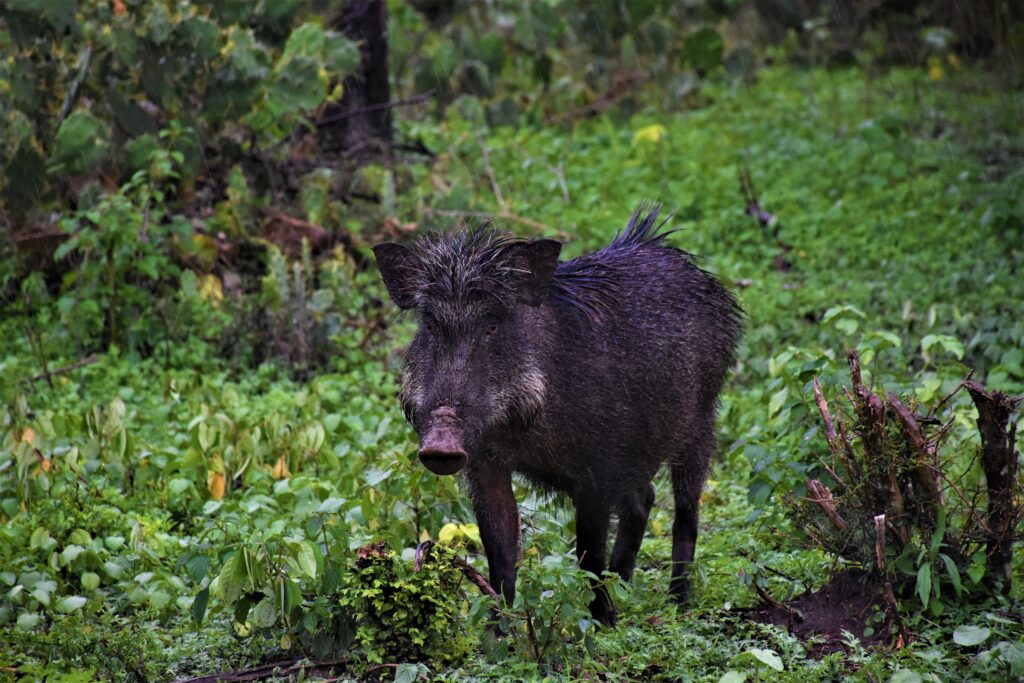
After nearly two decades of absence, the white-lipped peccary (Tayassu pecari) has been reintroduced into Piedras Blancas National Park on Costa Rica’s Osa Peninsula. This milestone represents one of the country’s most significant recent ecological restoration projects and aims to restore a species that plays a fundamental role in maintaining the health of tropical forests.
The reintroduction is the result of years of scientific planning, institutional collaboration, and wildlife monitoring involving government agencies, conservation organizations, and wildlife specialists.
Why did the white-lipped peccary disappear from Piedras Blancas?
The species disappeared locally from the park primarily due to illegal hunting and the loss of ecological connectivity over past decades. Its disappearance affected the functioning of the forest because the white-lipped peccary is essential for seed dispersal and influences the dynamics of numerous plant and animal species.
It is also one of the jaguar’s primary natural prey species, meaning its absence had consequences for the balance of the local food web.
A highly complex conservation operation
The reintroduction required careful planning and execution. The animals were located, safely captured, and transported under strict veterinary and wildlife management protocols designed to maximize their welfare and chances of adapting to their new environment.
After their release into Piedras Blancas National Park, the animals will continue to be monitored by scientists to evaluate their survival, movements, and reproduction.
The ecological role of the white-lipped peccary
The white-lipped peccary is considered a keystone species in the tropical forests of the Americas.
Its main ecological functions include:
- Dispersing seeds from numerous tree species
- Naturally regulating understory vegetation
- Providing prey for large predators such as jaguars
- Supporting natural forest regeneration
- Maintaining ecological balance within tropical ecosystems
The recovery of its population benefits many other plant and animal species.
Ecological restoration beyond a single species
Modern conservation efforts go beyond protecting endangered species; they seek to restore entire ecological processes.
The reintroduction of the white-lipped peccary is part of an approach known as rewilding, which focuses on restoring missing wildlife species to recover the natural functioning of ecosystems.
These initiatives also help increase forest resilience in the face of climate change and other environmental pressures.
Piedras Blancas National Park: a biodiversity stronghold
Located within the Osa Conservation Area, Piedras Blancas National Park protects thousands of hectares of tropical rainforest and forms one of southern Costa Rica’s most important biological corridors.
The park shelters an extraordinary diversity of mammals, birds, amphibians, reptiles, and plants, making it a key site for biodiversity conservation.
Scientific monitoring to ensure long-term success
Releasing the animals marks only the beginning of the project. Over the coming years, researchers will continue monitoring the population to study its behavior, adaptation, reproduction, and ecological impact.
The information collected will help improve future conservation strategies and serve as a model for other wildlife reintroduction projects.
A symbol of Costa Rica’s commitment to conservation
The return of the white-lipped peccary demonstrates how cooperation between public institutions, scientists, conservation organizations, and local communities can successfully restore locally extinct species and strengthen ecosystem health.
Beyond the recovery of a single animal, the project represents an important step toward restoring one of Central America’s most valuable tropical forests.
Official sources consulted
- National System of Conservation Areas (SINAC)
- Ministry of Environment and Energy (MINAE)
- Piedras Blancas National Park Management Plan
- University of Costa Rica (UCR)
- International Union for Conservation of Nature (IUCN)
- Re:wild
- IUCN Species Survival Commission