An initiative to bring the ocean closer to the public
Costa Rica recently launched an innovative digital platform focused on marine education and conservation, aiming to bring ocean knowledge closer to students, teachers, and the general public.
The project, known as Costa Rica Azul, was introduced as an interactive tool that allows users to explore the country’s marine ecosystems, biodiversity, and the environmental challenges they face. The platform provides dynamic educational content designed to strengthen environmental awareness and promote ocean protection.
A country more ocean than land
One of the key messages behind this initiative is highlighting a little-known fact: Costa Rica is largely a marine nation.
According to data from the Instituto Geográfico Nacional and the Esencial Costa Rica, approximately 92% of the national territory corresponds to marine areas, making its ocean territory nearly ten times larger than its landmass.
Additionally, the country is home to around 3.5% of the world’s marine biodiversity, giving it a significant role in global ocean conservation.
Education as a tool for conservation
The Costa Rica Azul platform was designed not only as an informational space but as an interactive learning experience.
It includes content on marine species, habitats, coral reefs, seamounts, ocean conditions, and threats such as overfishing and climate change.
The platform was developed in coordination with the Ministerio de Educación Pública (MEP), allowing it to be integrated into national education programs, particularly at the secondary level.
This approach aims to transform knowledge into a key tool for conservation, especially among younger generations.
Marine biodiversity and global responsibility
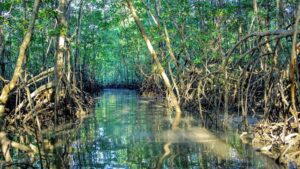
Costa Rica possesses exceptional marine biodiversity, with thousands of recorded species and many more yet to be discovered.
According to international organizations, oceans play a vital role in sustaining life on Earth: they produce around 50% of the planet’s oxygen and absorb approximately 30% of the carbon dioxide generated by human activity.
This reality underscores the importance of initiatives that promote ocean literacy as part of environmental and climate policies.
A step forward in the country’s environmental strategy
The launch of Costa Rica Azul is part of a broader set of national efforts aimed at protecting marine ecosystems.
The country has developed initiatives such as strengthening marine protected areas, blue carbon strategies, and conservation programs led by organizations like Conservation International.
Public-private partnerships, such as the Blue Fund promoted by Costa Rica por Siempre, also support sustainable resource use, responsible fishing, and climate resilience.
Expanding Costa Rica’s environmental identity
Costa Rica has traditionally been recognized for its leadership in terrestrial conservation, particularly in forests and national parks.
However, initiatives like Costa Rica Azul aim to expand that vision to include the ocean, emphasizing the importance of marine territory in the country’s environmental identity.
By making this knowledge accessible to the public, Costa Rica reinforces its commitment to sustainability and positions education as a key pillar in protecting natural resources.
Sources
- Esencial Costa Rica
- Instituto Geográfico Nacional
- Ministerio de Educación Pública (MEP)
- Costa Rica Azul platform
- Original article published by The Tico Times
- Delfino.cr – Launch of Costa Rica Azul
- Observador.cr – Ocean education platform
- Cartago Medios – Marine biodiversity data
- Costa Rica por Siempre
- Conservation International