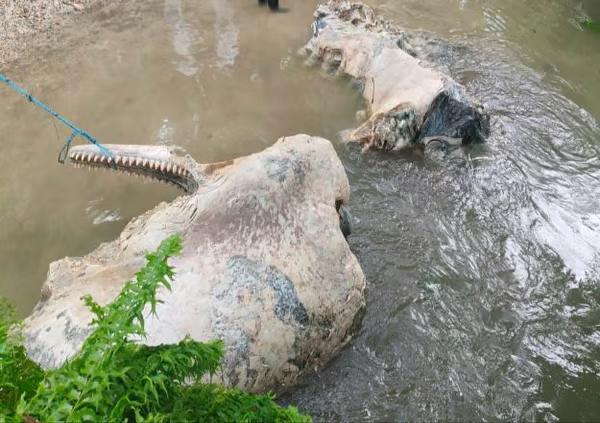
A whale was found dead along Costa Rica’s Caribbean coast
The recent discovery of a sperm whale (Physeter macrocephalus) found dead in a natural tidal pool in Cahuita, in the province of Limón, prompted a coordinated response from Costa Rican authorities responsible for environmental protection, public health, and wildlife management. The animal, measuring between eight and nine meters in length, was found in an advanced state of decomposition, requiring a specialized operation to minimize environmental and public health risks.
The response involved the National System of Conservation Areas (SINAC), the National Animal Health Service (SENASA), the Ministry of Health, the Municipality of Talamanca, local organizations, and volunteers experienced in marine wildlife response.
A complex operation in a difficult location
The whale became stranded in a hard-to-access area within Cahuita National Park, preventing the use of heavy machinery.
As a result, most of the work had to be carried out manually by trained personnel using protective equipment and following established protocols for handling large marine mammals. Some skeletal remains were removed to reduce public health risks and limit the environmental impacts associated with decomposition.
Operations involving large cetaceans require close coordination between environmental, veterinary, and health authorities due to their size and the potential effects of decomposition on surrounding ecosystems.
The sperm whale: the world’s largest toothed predator
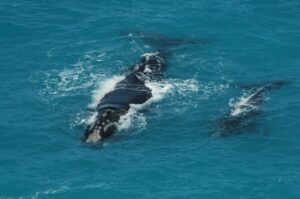
The sperm whale (Physeter macrocephalus) is the largest toothed whale and one of the most remarkable marine mammals on Earth.
Adult males can exceed 18 meters (60 feet) in length and weigh up to 50 metric tons, while females are considerably smaller. Their massive heads account for nearly one-third of their body length and contain the spermaceti organ, a unique structure involved in echolocation and buoyancy control.
Sperm whales also produce some of the loudest biological sounds ever recorded, using powerful clicks to navigate and locate prey in the darkness of the deep ocean.
A specialist of the deep sea
Unlike many whale species, sperm whales spend much of their lives in deep offshore waters.
They are capable of diving to depths exceeding 2,000 meters and remaining underwater for more than an hour while hunting. Their diet mainly consists of large squid, including giant squid, as well as deep-sea fish.
In Costa Rica, sperm whales can be found in both the Pacific Ocean and the Caribbean Sea, particularly in areas where deep waters lie relatively close to the coastline.
Why do whale strandings occur?
Scientists explain that whale strandings can result from a wide range of factors, and in many cases it is impossible to determine a single cause.
Possible contributing factors include:
- Disease or infection.
- Advanced age.
- Collisions with vessels.
- Entanglement in fishing gear.
- Underwater noise disturbances.
- Changes in ocean currents.
- Natural navigation challenges.
When the condition of the carcass allows, necropsies provide valuable information that helps researchers better understand mortality causes and improve conservation strategies.
Sperm whales play a vital role in ocean ecosystems
Beyond being apex predators, sperm whales contribute significantly to healthy marine ecosystems.
Their movements help recycle nutrients between deep waters and the ocean surface through a process often referred to as the “whale pump.” This natural cycle promotes the growth of phytoplankton, which forms the foundation of many marine food webs while also helping absorb atmospheric carbon dioxide.
Protecting large whales therefore contributes to the overall health of the world’s oceans.
The importance of an appropriate response
Every whale stranding offers an opportunity to improve scientific knowledge and better understand the condition of marine ecosystems.
Authorities remind the public that stranded marine mammals should never be touched, moved, or approached. Instead, sightings should be reported immediately to the appropriate authorities so trained specialists can respond according to established protocols.
The coordinated response to the Cahuita incident helped minimize risks to both people and the surrounding environment.
A reminder of Costa Rica’s extraordinary marine biodiversity
The discovery of the sperm whale serves as a reminder of the exceptional marine biodiversity found in Costa Rican waters. Both the Caribbean and Pacific coasts provide habitat for numerous whale, dolphin, and other marine mammal species that are an essential part of the country’s natural heritage.
Scientific research, continuous monitoring, and the protection of marine ecosystems remain essential to ensuring the long-term conservation of these remarkable animals.
Official sources consulted
- National System of Conservation Areas (SINAC).
- Ministry of Environment and Energy (MINAE).
- National Animal Health Service (SENASA).
- International Whaling Commission (IWC).
- International Union for Conservation of Nature (IUCN).
- NOAA Fisheries.