An international commitment to protect ocean ecosystems
Panama will implement an agreement aimed at strengthening the conservation and sustainable use of marine biodiversity as part of its efforts to protect ocean ecosystems and promote responsible management of natural resources.
The initiative seeks to encourage conservation actions, scientific research, and cooperation related to marine environments, which are essential for ecological balance, food security, and the economic development of coastal communities.
The agreement is part of broader international commitments focused on protecting marine biodiversity and promoting sustainable management of ocean areas.
The importance of protecting marine ecosystems
Oceans are among the planet’s most important natural systems. They host an extraordinary diversity of species and provide essential functions such as climate regulation, oxygen production, and protection of coastal areas.
Marine ecosystems include coral reefs, mangroves, seagrass meadows, and highly productive biological zones where many species find shelter and food.
Protecting these environments helps conserve marine species, maintain ecosystem services, and secure natural resources for future generations.
An agreement focused on conservation and sustainability
The new commitment aims to promote measures that improve marine biodiversity protection through coordinated actions involving institutions, scientists, communities, and other stakeholders involved in ocean management.
Key objectives include strengthening scientific research, expanding knowledge about marine ecosystems, and developing strategies to reduce threats affecting ocean life.
These actions may include initiatives related to marine protected areas, species monitoring, ecosystem restoration, and the promotion of sustainable economic activities.
Panama and its marine wealth
Panama’s strategic location between the Pacific Ocean and the Caribbean Sea gives the country a remarkable diversity of marine and coastal ecosystems.
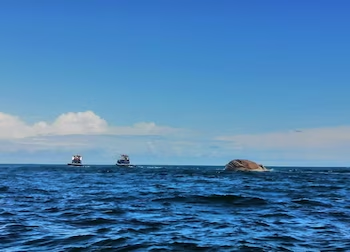
Its waters are home to species such as sea turtles, sharks, rays, whales, dolphins, tropical fish, and numerous organisms associated with coral reefs and mangrove habitats.
Beyond their ecological value, these ecosystems are economically important for sectors such as fisheries, nature tourism, and activities related to maritime transport.
Regional cooperation as a conservation tool
Protecting oceans requires efforts that go beyond national borders, as many marine species travel across different countries and regions.
International agreements make it possible to share knowledge, strengthen technical capacities, and coordinate strategies to address threats such as pollution, habitat loss, unsustainable fishing, and climate change impacts.
In Latin America and the Caribbean, regional cooperation is considered essential for conserving interconnected marine ecosystems.
Benefits for coastal communities
Marine conservation is not only about protecting species; it also aims to safeguard the well-being of communities that depend directly on ocean resources.
Coastal populations can benefit from sustainable tourism models, responsible fishing practices, and new opportunities linked to research and environmental education.
Protecting marine resources also helps preserve traditional livelihoods and strengthen resilience against environmental changes.
A step toward more responsible ocean management
The implementation of this agreement represents progress toward balancing marine biodiversity conservation with sustainable economic development.
Protecting oceans requires long-term planning, public participation, and cooperation between governments, scientific institutions, and local communities.
Through new conservation strategies, Panama aims to strengthen the protection of its marine ecosystems and contribute to global efforts to preserve the natural wealth of the oceans.
Official sources consulted
- Panama’s Ministry of Environment.
- Panama Aquatic Resources Authority (ARAP).
- United Nations Environment Programme (UNEP).
- Convention on Biological Diversity (CBD).
- Food and Agriculture Organization of the United Nations (FAO).