
1. Brief Introduction to Cartago
Cartago is one of the oldest and most emblematic cities in Costa Rica, located in the Central Valley at the foot of the majestic Irazú Volcano. Founded in 1563 by the Spanish conquistador Juan Vásquez de Coronado, Cartago is known for its rich history, colonial architecture, and deep cultural legacy. Over the centuries, it has witnessed numerous historical events that have shaped the Costa Rican identity.
Historical Importance as the First Capital of Costa Rica
Cartago, the first capital of Costa Rica, played a crucial role in the country’s history. During the colonial era, it was the most important administrative and political center, serving as the seat of the main governmental institutions. Its status as the capital allowed for the development of significant infrastructure and the concentration of economic and cultural activities, laying the foundations for the growth and prosperity of the region.
Cartago was founded in 1563 by Juan Vázquez de Coronado, who sought to establish a Spanish sphere of influence in the central part of the country. The city quickly became the seat of the colonial government and the center of Costa Rica’s political and economic life. The city had a population of around 500 inhabitants in 1600, but grew rapidly throughout the 17th century.
During the colonial period, Cartago was an important center of agricultural production. The region around the city was rich in fertile lands, and farmers cultivated a variety of crops, including corn, beans, sugar cane, and tobacco. The city was also an important commercial center, with merchants exchanging goods with other parts of Costa Rica as well as neighboring countries.
In 1821, Costa Rica gained independence from Spain, and Cartago was declared the capital of the new republic. The city continued to play an important role in the political and economic life of the country until 1823, when the capital was moved to San José.
Although it lost its status as the capital, Cartago remained an important city in Costa Rica. The city was a key agricultural and commercial center and also a significant cultural hub. The city is home to several colonial churches and buildings, as well as various museums and art galleries.
Today, Cartago is a modern and vibrant city with a population of over 150,000 inhabitants. It is an important industrial and commercial center and is also a major tourist destination. Cartago is a city rich in history and culture, making it an ideal place to visit and learn about Costa Rica’s history.
Purpose of the Article
The purpose of this article is to explore the history and legacy of Cartago, highlighting its importance as the first capital of Costa Rica. Through a journey of its origins, key historical events, and evolution to the present day, it aims to provide a comprehensive view of the relevance of this city in the formation of the country. Additionally, details about its cultural and architectural heritage will be provided, as well as recommendations for visitors interested in discovering its rich legacy.

2. Foundations and Early Years
Origins and Foundation of Cartago in 1563
The foundation of Cartago dates back to 1563, when the Spanish conquistador Juan Vásquez de Coronado established the first formal settlement in Costa Rica’s Central Valley. This foundation was part of the Spanish Crown’s expansion and colonization efforts in Central America. Coronado, known for his exploration and pacification of the region, chose the site due to its favorable geographical and climatic conditions, as well as the presence of indigenous communities that could be incorporated into the colonial system.
The city was initially named Santiago de Cartago in honor of Saint James, patron saint of Spain. Throughout its early years, Cartago served as a meeting point between Spanish colonizers and local indigenous populations, primarily the Huetares and Cabécares. This initial contact was marked by cultural exchanges, as well as conflicts and efforts at evangelization and control by the Spanish.
Reasons Behind the Choice of Cartago as the First Capital
The choice of Cartago as the first capital of Costa Rica was not arbitrary. Several geographical, political, and strategic reasons influenced this decision:
- Geographical Location: Cartago is situated in a fertile and well-irrigated valley, surrounded by mountains and near important water sources. These natural conditions were ideal for agriculture and supporting a growing population.
- Pleasant Climate: The mild and pleasant climate of the Central Valley was conducive to daily life and agricultural activities, in contrast to the warmer and more humid coastal regions, which were less habitable for the Spanish colonizers.
- Security and Defense: Cartago’s location inland offered greater security against attacks from pirates and privateers, which were common in the coastal regions of the Caribbean and Pacific.
- Access to Resources: Cartago’s proximity to natural resources such as wood and fertile land facilitated the establishment and expansion of the colony. Additionally, its location allowed relatively easy access to other parts of Costa Rican territory.
- Relations with the Indigenous People: While not completely pacified, the indigenous communities in the region presented an opportunity for labor exploitation and integration into the colonial system through evangelization and political control.
Early Settlements and Initial Development
The early years of Cartago were marked by the construction of basic infrastructure and the establishment of an agricultural economy. The Spanish settlers introduced crops such as wheat, sugar cane, and grapevines, as well as livestock. The introduction of European agricultural techniques and the exploitation of indigenous labor allowed for rapid expansion in agricultural production.
The city developed around a central plaza, following the typical model of Spanish colonial cities. Around this plaza, the most important buildings were constructed, including the church, the town hall, and the houses of the first settlers. The Church of Santiago Apostle, although not in its current form, was one of the first religious buildings and a center of the spiritual and social life of the community.
During the early decades, Cartago also served as an important center of evangelization and colonial administration. Franciscan and Dominican missionaries played a crucial role in converting the indigenous people to Christianity and educating the population. These evangelization efforts sought not only the spiritual salvation of the indigenous people but also their integration into the colonial economic and social system.
As the population grew, the city expanded beyond its initial limits. Roads were built connecting Cartago to other parts of the country, facilitating trade and communication. The city’s growth also attracted more Spanish settlers, as well as mestizos and African slaves, who contributed to the diversity and dynamism of the population.
The early years of Cartago were characterized by rapid development and consolidation as the administrative and political center of Costa Rica. Its selection as the first capital was strategic and based on geographical, climatic, and security considerations, which allowed the city to grow and thrive in the years that followed.

3. The Colonial Era
Development of the city during the colonial period
During the colonial period, Cartago consolidated itself as the vital hub of the province of Costa Rica. The city experienced steady growth in both population and infrastructure. As the colony became more established, more housing, public buildings, and religious structures were built, shaping the urban landscape of Cartago.
Economic growth was primarily driven by agriculture. The crops introduced by the Spanish, such as wheat, sugarcane, and coffee, became the pillars of the local economy. Agricultural production not only met local needs but was also used for trade with other regions. Livestock farming also played an important role, with large estates dedicated to cattle and pig breeding.
The encomienda system, in which settlers were granted the right to use indigenous labor in exchange for protection and evangelization, was fundamental in the early years. However, over time, the indigenous population decreased due to diseases and harsh working conditions, leading to the introduction of African slaves to meet the labor demand.
The construction of roads and bridges improved the connectivity of Cartago with other parts of the country, facilitating trade and administration. The city became a crucial transit point for goods moving between coastal areas and the interior of the country. This infrastructure development helped consolidate Cartago’s position as the region’s economic center.
Influence of Spanish settlers on architecture and culture
The Spanish influence in Cartago was deep and lasting, especially visible in its architecture and culture. The city adopted a colonial architectural style, characterized by adobe buildings with red tile roofs, central courtyards, and wide corridors. The churches and public buildings in the city reflected the aesthetic and values of Spanish Baroque.
One of the most emblematic examples is the Basilica of Our Lady of the Angels, a sanctuary dedicated to the patroness of Costa Rica, whose devotion began in the 17th century. Although the current structure is more modern due to later reconstructions, its origins date back to the colonial era and represent the importance of religion in the daily life of the settlers.
Cartago’s culture was also strongly influenced by Spanish traditions. Religious celebrations such as Holy Week and the Day of Our Lady of the Angels became central events in the city’s social calendar. Spanish education and customs were transmitted through schools and religious orders, which played a fundamental role in the evangelization and cultural formation of the population.
The Spanish language, Catholicism, and various Spanish cultural practices were integrated into daily life, creating a blend of indigenous and colonial traditions that defined Cartago’s identity. The arts and music also reflected this cultural fusion, with predominant Spanish influences in local artistic expressions.
Importance of Cartago as an administrative and political center
During the colonial era, Cartago was not only the economic and cultural center but also the administrative and political hub of Costa Rica. As the capital of the province, the city housed the main governmental and administrative institutions, including the governor’s office and the cabildo (town hall).
The cabildo of Cartago was responsible for local administration, including tax collection, overseeing public works, and enforcing colonial laws. This body also played a role in defending the city and managing relations with indigenous communities and other colonial settlements.
Cartago’s status as the capital also meant that it was the focal point for important political decisions and the implementation of policies from the Spanish Crown. The city served as the coordination center for evangelization and religious missions, which were essential for expanding Spanish rule and integrating indigenous territories into the colonial system.
Cartago maintained its capital status until 1823, when a devastating earthquake and the fight for independence led to the capital’s relocation to San José. Despite this change, Cartago’s historical importance as the first administrative and political center of Costa Rica left an indelible mark on the country’s history.
In summary, during the colonial era, Cartago developed as the epicenter of Costa Rica’s economic, cultural, and political life. The Spanish influence shaped the city’s architecture and culture, while its role as the administrative center consolidated its importance in the country’s colonial history.
4. Important Historical Events
The 1822 earthquake and its impact on the city
The 1822 earthquake was one of the most devastating events in Cartago’s history. The earthquake, which shook the region with great intensity, caused the destruction of a significant portion of the city, including many of its most iconic structures and public buildings. The magnitude of the damage was such that it not only affected the physical infrastructure but also had a profound impact on the social and economic life of the inhabitants of Cartago.
The adobe and tile buildings, common in colonial architecture, could not withstand the force of the earthquake, resulting in the collapse of numerous homes, churches, and government buildings. This natural disaster left many residents homeless and led to a humanitarian crisis in the city. Moreover, the loss of places of worship and administration paralyzed much of daily life and economic activities.
The immediate response to the earthquake was one of emergency and survival. Local authorities, along with the help of nearby communities, focused on rescuing those trapped under the rubble, providing shelter for the displaced, and starting efforts to clear the debris and rebuild. However, the magnitude of the disaster exposed the limitations of Cartago to recover quickly and raised doubts about its viability as the capital.
Relocation of the capital to San José in 1823
As a result of the devastation caused by the 1822 earthquake and the need for a more secure and accessible administrative center, the decision was made to relocate the capital of Costa Rica to San José in 1823. This decision was influenced by several factors:
- Geographical Conditions: San José, located in a region less prone to earthquakes, offered a more geographically secure and stable environment. Additionally, its central location made it easier to access and communicate with other parts of the country.
- Growing Infrastructure: Although less developed than Cartago at the time, San José was experiencing significant infrastructure growth, making it a viable candidate to become the new capital.
- Political and Administrative Considerations: After the earthquake, colonial and local authorities saw San José as an opportunity to centralize and modernize the country’s administration in a location that would allow for more organized and efficient development.
The relocation of the capital had profound implications for Cartago. The city lost its status as the administrative and political center, leading to a decline in its influence and resource influx. However, this change also allowed Cartago to focus on its reconstruction and redefine its role within the country.
Reconstruction and resilience of Cartago
Despite the challenges presented by the earthquake and the loss of capital status, Cartago demonstrated remarkable resilience. The local community, motivated by a strong sense of identity and determination, embarked on a reconstruction process that aimed not only to restore the damaged infrastructure but also to revitalize the city.
The reconstruction of Cartago was characterized by several key efforts:
- Restoration of Historical Buildings: The restoration of important buildings and historical monuments, such as the Basilica of Our Lady of the Angels and the Ruins of the Parish of Santiago Apostle, was carried out. These projects not only restored the splendor of these structures but also reinforced the city’s cultural heritage.
- Development of New Infrastructure: New homes, schools, and public buildings were constructed using improved building techniques that offered greater resistance to earthquakes. This development included the enhancement of roads and bridges to facilitate transportation and trade.
- Economic Diversification: Over time, Cartago diversified its economy beyond agriculture, fostering industry and commerce. The creation of small and medium-sized businesses contributed to economic growth and employment in the region.
- Cultural and Traditional Preservation: Despite the changes and challenges, Cartago kept its cultural and religious traditions alive. Festivals and celebrations, such as the famous pilgrimage to the Basilica of Our Lady of the Angels, continued to attract thousands of pilgrims and tourists each year, reinforcing the city’s cultural identity.
The spirit of resilience and adaptability of the people of Cartago has been fundamental to the city’s recovery and progress. Over the years, Cartago has managed to maintain its historical and cultural importance, becoming a symbol of perseverance and renewal in Costa Rica.
Important historical events like the 1822 earthquake and the relocation of the capital to San José in 1823 deeply impacted Cartago. However, the city showed remarkable recovery, rebuilding itself and maintaining its cultural and economic relevance over time.

5. Cultural and Architectural Heritage
Key Historical Monuments
Cartago, with its rich colonial history, is home to numerous historical monuments that reflect its cultural and architectural significance. Some of the most notable include:
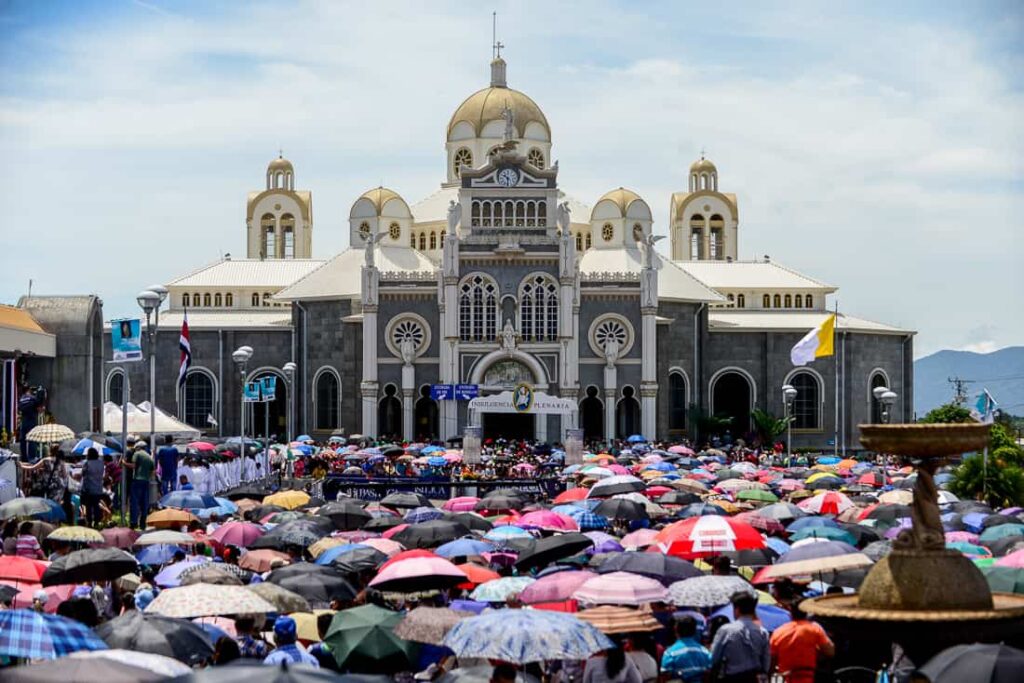
- Basilica of Our Lady of the Angels: This iconic sanctuary, dedicated to the patroness of Costa Rica, is one of the country’s most important religious sites. The basilica, built in a Neo-Byzantine style with Gothic elements, is located in the heart of Cartago and attracts thousands of pilgrims each year. Construction began in 1912 after an earthquake destroyed the original church. The basilica is famous for housing the revered image of La Negrita, a small statue of the Virgin Mary that, according to legend, was found by a young indigenous girl in 1635. La Negrita is the object of deep devotion, and the basilica has become a national pilgrimage site.
- Ruins of the Parish of Santiago Apostle: Located in central Cartago, these ruins are the remains of the original parish church dedicated to Santiago Apostle. The construction of the church began in 1575, but it was destroyed by several earthquakes over the centuries, with the final blow in 1910. The ruins have been preserved as a historical site and serve as a reminder of the city’s resilience. The site is a peaceful park where visitors can stroll and reflect on Cartago’s history.
- Orosi Temple: Though not located in the center of Cartago, the Orosi Temple, built in 1743, is one of the oldest colonial temples in Costa Rica, situated in the nearby Orosi Valley. This active temple is an exceptional example of Spanish colonial architecture and houses a small museum with religious and cultural artifacts.
- House of the City: This historic building, now a cultural center, offers insight into life in Cartago during the colonial era. The House of the City hosts exhibitions and cultural events highlighting the region’s history and culture.
Festivals and Traditions
Cartago is known for its vibrant festivals and traditions, many of which have deep roots in history and Catholic religion. Some of the most prominent include:
- Pilgrimage to the Basilica of Our Lady of the Angels: Every year, on August 2nd, thousands of people from all over Costa Rica and other countries participate in a pilgrimage to the Basilica of Our Lady of the Angels, known as “La Romería.” Pilgrims walk long distances to reach the sanctuary in Cartago, where they pay homage to La Negrita. This pilgrimage is a testament to the faith and devotion of the Costa Rican people and is one of the country’s largest religious events.
- Holy Week: The Holy Week celebrations in Cartago are particularly solemn and spectacular. The processions, which reenact the events of the Passion of Christ, attract numerous faithful and tourists. The streets of the city are filled with flower and sawdust carpets, and religious figures are carried in procession by the faithful.
- Fiestas Patronales of Santiago Apostle: Held in July, these festivities honor the city’s original patron saint, Santiago Apostle. The celebrations include masses, processions, music, dances, and community activities that celebrate Cartago’s history and culture.
Cultural and Artistic Contributions of Cartago
Cartago has been a significant cultural and artistic center in Costa Rica. The city has made notable contributions to the country’s cultural life through its traditions, arts, and education. Some of the most important contributions include:
- Education and Cultural Centers: Cartago is home to the Instituto Tecnológico de Costa Rica (TEC), one of the country’s leading universities. TEC is not only a center for higher education in science and technology but also a promoter of cultural and artistic activities in the region.
- Arts and Crafts: The city and its surroundings are known for their crafts, especially pottery and ceramics. Local artisans create pieces that reflect both indigenous traditions and colonial influences. These crafts are highly valued by both locals and tourists.
- Music and Dance: Cartago has produced numerous musicians and dancers who have contributed to Costa Rican culture. Traditional music, as well as classical and contemporary music, hold a prominent place in the city’s cultural life. Music festivals and events are common, celebrating both folk and modern music.
- Literature and History: Cartago’s rich history has inspired many writers and historians. The city has been the subject of numerous books, research projects, and documentaries that explore its role in Costa Rica’s history.

6. Cartago in Modern Costa Rica
Evolution of Cartago from Capital to Present
Since Cartago ceased being the capital of Costa Rica in 1823, the city has undergone remarkable evolution. Although it lost its status as the administrative and political center, Cartago has remained an important city for the country. Its evolution has been marked by a combination of urban growth, economic development, and cultural preservation.
In the decades following the capital’s move to San José, Cartago focused on rebuilding and diversifying its economy. The city became an important agricultural center, with coffee production and other crops playing a key role in its economic development. The construction of infrastructure, such as roads and railways, improved Cartago’s connectivity with other regions and facilitated trade.
During the 20th century, Cartago continued its urban expansion. Modernization brought improvements in education, healthcare, and public services. The founding of the Instituto Tecnológico de Costa Rica (TEC) in 1971 was a major milestone, making the city a center of excellence in science and technology. This institution has not only driven economic development but also promoted culture and the arts in the region.
Current Importance in Costa Rican Economy and Culture
In modern Costa Rica, Cartago remains a city of great economic and cultural significance. Its economy is diverse, spanning agriculture, industry, education, and tourism. Coffee, fruit, and vegetable production continue to be important, and the city hosts several industries and businesses that contribute to the region’s economic growth.
TEC, with its focus on innovation and technology, has encouraged the creation of startups and tech companies, positioning Cartago as an innovation hub in Costa Rica. Additionally, the city is known for its craftsmanship, particularly in ceramics and pottery, which remains a significant source of income and a tourist attraction.
Culturally, Cartago maintains a rich tradition reflected in its festivals, arts, and education. Religious celebrations like the pilgrimage to the Basilica of Our Lady of the Angels continue to be major events, drawing thousands of people each year. The city is also home to numerous cultural and artistic events, celebrating Costa Rican music, dance, theater, and literature.
Historical and Cultural Preservation Initiatives
Recognizing the importance of its heritage, Cartago has implemented various initiatives to preserve its history and culture. These initiatives include:
- Restoration of Historical Monuments: Restoration projects have been carried out to maintain important historical sites such as the Ruins of the Parish of Santiago Apostle and the Basilica of Our Lady of the Angels. These efforts ensure that future generations can appreciate and learn about Cartago’s rich history.
- Museums and Cultural Centers: The city has several museums and cultural centers dedicated to preserving and promoting its heritage. The Museo Municipal de Cartago, for example, features exhibitions on the region’s history and culture, while the Casa de la Ciudad organizes cultural events and exhibitions.
- Education and Cultural Outreach: Institutions like TEC and other local organizations promote education and research about Cartago’s history and culture. Educational programs and community activities help spread knowledge and appreciation for the city’s heritage.
- Festivals and Traditions: The preservation of traditional festivals, such as La Romería and the Fiestas Patronales of Santiago Apostle, is essential for keeping Cartago’s culture alive. These celebrations are not only religious events but also community gatherings and cultural expressions.
- Cultural Tourism: Cartago has developed initiatives to promote cultural tourism, highlighting its historical and architectural heritage. Tourist routes and specialized guides allow visitors to explore and learn about the city’s historical sites.
In conclusion, Cartago has evolved significantly since its time as the first capital of Costa Rica. Today, it remains a vital city in the country’s economy and culture, with a strong commitment to preserving its historical and cultural heritage. Through various initiatives and community efforts, Cartago continues to be a symbol of Costa Rica’s rich history and vibrant culture.

7. Tourism in Cartago
Main Tourist Attractions
Cartago, rich in history and cultural heritage, offers a wide range of tourist attractions that highlight both its colonial and modern aspects. Some of the top attractions include:
- Basílica de Nuestra Señora de los Ángeles: The most important religious site in Cartago and a pilgrimage destination for thousands of faithful each year. This neobyzantine basilica houses the revered image of La Negrita. Visitors can tour the basilica, attend mass, and explore its history in the small adjoining museum.
- Ruins of the Parroquia de Santiago Apóstol: Situated in the heart of Cartago, these ruins are the remains of a colonial church that was destroyed by several earthquakes. The site offers a peaceful park where visitors can walk and reflect on the city’s past.
- Lankester Botanical Garden: Managed by the University of Costa Rica, this garden is renowned for its collection of orchids and tropical plants. It’s a perfect spot for nature lovers, with well-maintained trails and an educational experience on Costa Rican flora.
- Irazú Volcano National Park: Just a short distance from the city, the Irazú Volcano is one of the most active in Costa Rica. Visitors can drive to the main crater and enjoy breathtaking views of the volcanic landscape. On clear days, both the Pacific Ocean and the Caribbean Sea are visible from the summit.
- Orosi and Ujarrás: These picturesque valleys near Cartago are home to some of Costa Rica’s oldest colonial churches, such as the Orosi Temple. The valleys also offer beautiful landscapes, hiking trails, and hot springs, making them ideal for day trips.
Recommended Activities for Visitors
In addition to the main attractions, visitors can enjoy various activities in Cartago:
- Hiking and Nature Exploration: The areas surrounding Cartago offer excellent hiking opportunities, especially in the Irazú Volcano National Park and Lankester Botanical Garden. The Orosi and Ujarrás valleys also feature trails for those wanting to immerse in the region’s natural beauty.
- Historical Tours: Taking a guided tour of Cartago’s historic center is a great way to delve into the city’s rich history. Local guides typically provide in-depth information about the monuments and key events that shaped the city.
- Museum Visits: The Municipal Museum of Cartago and other cultural centers offer exhibitions on the region’s history and culture, ideal for those wishing to learn more about the area.
- Pilgrimages and Festivals: Visiting Cartago during the pilgrimage to the Basílica de Nuestra Señora de los Ángeles in August provides a unique cultural and religious experience. Participating in local festivals also offers insight into Costa Rican traditions.
- Local Cuisine: Sampling the local dishes is a must. Cartago has a variety of restaurants and traditional “sodas” (small restaurants) that serve typical Costa Rican meals such as casado, olla de carne, and delicious desserts like tamal asado and bizcocho.
Practical Tips for Exploring Cartago’s History and Culture
To make the most of your visit to Cartago, here are some practical tips:
- Appropriate Clothing: The weather in Cartago can be cool, especially in mountainous areas like Irazú Volcano. It’s advisable to dress in layers, bring a light jacket, and wear comfortable walking shoes.
- Trip Planning: If you’re planning to visit Irazú Volcano, aim to arrive early in the morning to avoid the clouds that often cover the crater later in the day. It’s also wise to check the opening hours of attractions and museums, as they may vary.
- Transportation: Renting a car is a great way to explore Cartago’s surroundings, including Irazú Volcano and the Orosi and Ujarrás valleys. However, there are also public transportation options and guided tours available.
- Language: While many Costa Ricans speak English, particularly in tourist areas, learning a few basic Spanish phrases can enrich your experience and make communication easier.
- Safety: Cartago is generally safe for tourists, but as in any destination, it’s advisable to take basic precautions, such as keeping an eye on your belongings and avoiding deserted areas at night.
- Engage with the Community: Participating in local events and talking to residents can give you a deeper, more authentic perspective on life in Cartago. Locals are friendly and eager to share their knowledge and culture.
In summary, Cartago offers a captivating mix of history, culture, and natural beauty. With its historical landmarks, diverse activities, and the warm hospitality of its people, it promises an enriching and memorable experience for all visitors.

Summary of Cartago’s Historical and Cultural Importance
As the first capital of Costa Rica, Cartago holds a pivotal place in the country’s history. Founded in 1563, this city has witnessed and been a part of many key events that shaped the nation. From its colonial days, Cartago served as the administrative, political, and religious center of the region, with a rich heritage reflected in its architecture, traditions, and historic monuments. Despite challenges like the devastating 1822 earthquake and the relocation of the capital to San José in 1823, Cartago has demonstrated remarkable resilience and adaptability, maintaining its significance and charm over the centuries.
Reflection on Its Legacy in Costa Rican Identity
Cartago’s legacy in the Costa Rican identity is profound and multi-dimensional. The city has been a stronghold of faith and devotion, with the Basílica de Nuestra Señora de los Ángeles and the annual pilgrimage to La Negrita serving as symbols of spirituality and unity for Costa Ricans. Moreover, its cultural heritage, manifested in its festivals, arts, and education, has significantly enriched Costa Rica’s cultural landscape. Cartago is not only a living testament to the country’s colonial history but also an example of how communities can rebuild and thrive after adversity, preserving and celebrating their heritage while progressing towards the future.
Invitation to Visit and Explore Cartago
Visiting Cartago is a chance to immerse yourself in the history and culture of Costa Rica. From exploring impressive historical monuments like the Basílica de Nuestra Señora de los Ángeles and the Ruins of the Parroquia de Santiago Apóstol, to enjoying the natural beauty of the Lankester Botanical Garden and Irazú Volcano, Cartago offers a rich and diverse experience for all types of visitors. The living traditions, the warmth of its people, and its vibrant cultural scene make this city a must-visit destination. Whether you are drawn to history, nature, religion, or simply want to experience authentic Costa Rican life, Cartago has something special to offer. We invite you to discover and explore this historical and cultural gem at the heart of Costa Rica.
References
- History of Cartago: Encyclopedia of History and Culture of Costa Rica
- Institute of Costa Rican History
- National Museum of Costa Rica
- Foundation and Development: Cartago Foundation
- Ministry of Culture and Youth of Costa Rica
- Impact of the 1822 Earthquake: Earthquakes in Costa Rican History
- Basílica de Nuestra Señora de los Ángeles: Official Website
- Colonial Regions and Architecture: Colonial Architecture in Costa Rica
- Festivities and Traditions: Pilgrimage to the Basílica de Nuestra Señora de los Ángeles, Holy Week in Costa Rica
- Cartago in Modern Costa Rica: Costa Rica Institute of Technology (TEC)
- Tourism in Cartago: Municipal Museum of Cartago, Casa de la Ciudad