A community project linking conservation and local development
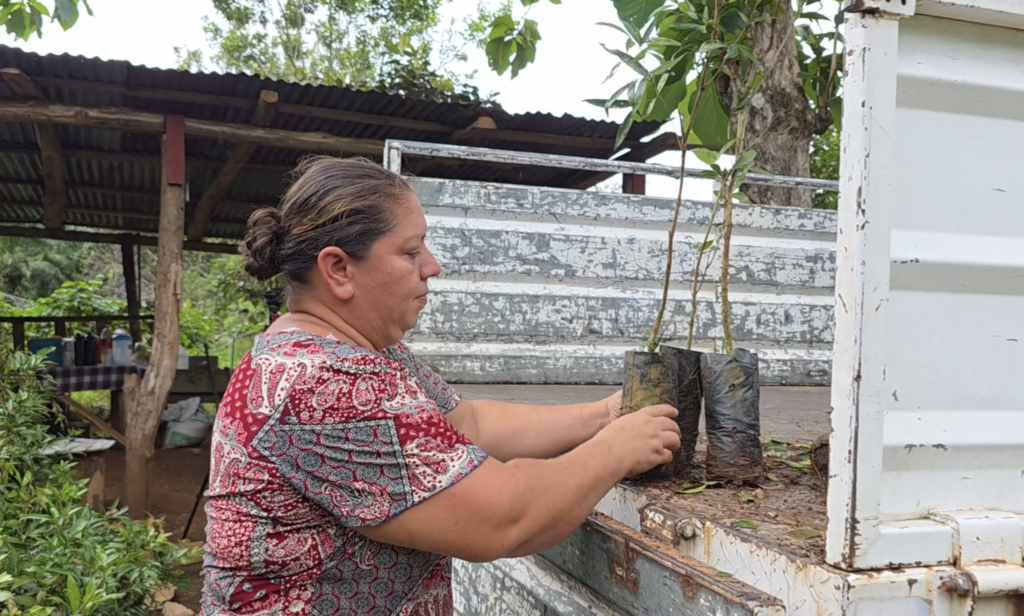
In the communities of Bijagual de Acosta and Carrizal de León Cortés, a group of women is leading an initiative that combines environmental conservation, water resource protection, and local economic development. In 2026, these producers will grow more than 7,000 trees intended for reforestation projects focused on protecting water springs and aquifer recharge zones.
This initiative is part of the Water Resource Protection Program promoted by Coopesantos, a long-standing strategy aimed at restoring ecosystems essential for drinking water supply in rural communities.
Reforestation as a tool for water protection
Trees play a fundamental role in water conservation. Forests help rainwater infiltrate into aquifers, reduce soil erosion, and maintain the quality and availability of water resources.
The species produced in community nurseries will be used to restore areas surrounding springs and recharge zones, strengthening forest cover and improving ecosystem resilience in the face of climate change.
Protecting these areas is especially important to ensure access to clean drinking water for many rural communities that depend directly on these natural sources.
Women’s leadership in environmental conservation
Beyond its ecological impact, the project also represents an opportunity for women’s economic empowerment. Tree production generates additional income and strengthens rural entrepreneurship while promoting active participation in local environmental management.
Activities include seed collection, substrate preparation, seedling care, and nursery management—skills that can be passed on to future generations and other community groups.
This model demonstrates how conservation can also serve as a tool for economic and social empowerment in rural areas.
More than two decades protecting watersheds
The Coopesantos Water Resource Protection Program began in 2002 with the goal of preserving areas that supply drinking water to communities in the provinces of San José and Cartago.
Over the years, the program has enabled the planting of tens of thousands of trees in collaboration with local water management associations (ASADAS), which are responsible for water distribution in many rural areas.
This cooperation has helped restore forests, protect springs, and strengthen water security for communities.
The importance of ecosystem restoration
Forest restoration is one of the main tools for addressing biodiversity loss and climate change impacts. According to the National System of Conservation Areas (SINAC), forest recovery supports species conservation, improves water cycle regulation, and reduces land degradation.
Costa Rica is internationally recognized for its conservation policies and for the increase in forest cover over recent decades, achieved through cooperation between public institutions, private organizations, and local communities.
A community-driven model of sustainable development
The production of more than 7,000 trees represents far more than an environmental target. It illustrates how community participation can simultaneously generate ecological, social, and economic benefits.
By protecting water sources, restoring forests, and creating opportunities for rural women, this type of project strengthens community resilience to environmental challenges and supports a development model based on sustainability.
Official and reference sources
- National System of Conservation Areas (SINAC)
- Ministry of Environment and Energy (MINAE)
- National Forestry Financing Fund (FONAFIFO)
- Coopesantos Water Resource Protection Program
- Food and Agriculture Organization of the United Nations (FAO)