The case of Tapir Valley, in northern Costa Rica, shows how scientific research, forest restoration and community involvement can help protect threatened species. At this private reserve in Bijagua, the Baird’s tapir plays a key role in the recovery of the jícaro danto, a tree endemic to the Guanacaste mountain range whose natural regeneration is closely linked to seed dispersal by this large mammal.
The initiative combines wildlife monitoring, germination experiments and habitat restoration with educational activities and a low-impact tourism model. The findings described by Mongabay Latam provide an example of how conserving one species can also benefit other forms of life that share its ecosystem.
Tapir Valley: From a Former Cattle Ranch to a Biodiversity Refuge
Located in Bijagua de Upala, in the province of Alajuela, Tapir Valley is a 104-hectare private reserve bordering Tenorio Volcano National Park. The property, which was previously used for cattle ranching and logging, has gradually been transformed into an area dedicated to biodiversity conservation and ecosystem restoration.
The transformation began in the early 2000s, when Donald Varela, the reserve’s current owner, discovered the richness of birdlife on the property. He subsequently decided to focus the project on protecting biodiversity and restoring ecosystems.
The reserve forms part of the Tenorio-Miravalles Biological Corridor, a territory intended to improve ecological connectivity between different natural areas in northern Costa Rica. This connection is important for animals that need to move between habitats to feed, reproduce and find shelter.
The Jícaro Danto, a Tree Whose Survival Depends on Wildlife
One of Tapir Valley’s most significant scientific projects focuses on the recovery of the jícaro danto (Parmentiera valerii), a tree endemic to the Guanacaste mountain range that is classified as endangered.
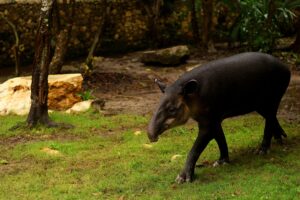
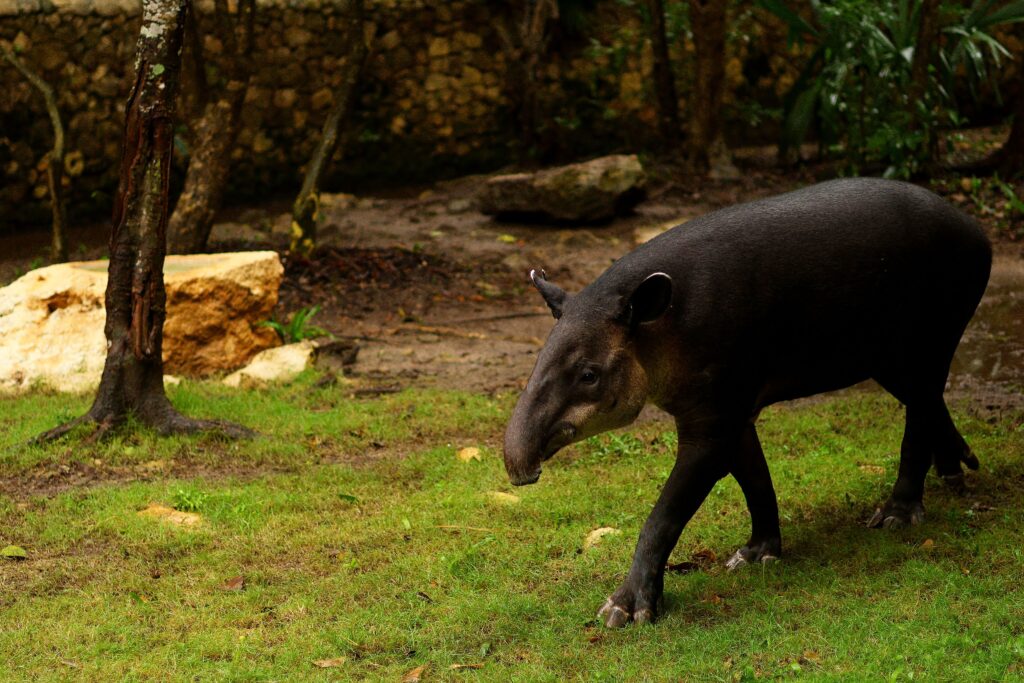
The survival of this species is closely linked to the presence of the Baird’s tapir (Tapirus bairdii). By feeding on fruit and moving through the forest, this mammal transports seeds and helps disperse them across different areas.
The reserve’s research team observed that jícaro danto seedlings frequently appeared in areas where tapir dung was present. This observation led researchers to investigate how this organic material could be used to encourage seed germination.
According to the results reported by the Tapir Valley team, the trials achieved a germination rate of up to 64% under certain experimental conditions. The process involved using seeds extracted from the fruit and a simple growing medium that incorporated tapir dung as part of the composting process.
This result represents progress for the project, although it does not mean that all seeds germinate at this rate under natural conditions. Germination depends on several factors, including moisture, light, soil and environmental conditions.
More Than 7,000 Trees Planted to Support Restoration
The research has also helped identify some of the conditions the jícaro danto needs to grow. According to the reserve’s scientific team, this tree requires shade during its early stages of development and may benefit from sandy soils near riverbanks.
This knowledge helps researchers select suitable planting locations and increases the chances that the trees will survive once established.
According to information published by Mongabay Latam in October 2026, the initiative had planted more than 7,000 jícaro danto trees in the region, including 623 growing within Tapir Valley.
Research into this species also helps expand the scientific knowledge available about a relatively understudied tree. Understanding its germination, growth and natural regeneration requirements is essential for developing long-term conservation strategies.
Recovering this species involves more than simply planting new trees. It also requires preserving suitable habitats and protecting the animals that contribute to the natural processes of forest regeneration.
Tapir Monitoring Helps Researchers Better Understand Local Wildlife
In addition to restoring vegetation, Tapir Valley participates in wildlife monitoring initiatives using camera traps. These devices make it possible to record animals that can be difficult to observe directly, particularly those with elusive habits or that are mainly active at night.
The monitoring forms part of a broader effort to understand wildlife diversity in the Tenorio-Miravalles Biological Corridor. According to Mongabay Latam’s report, research conducted in the area had identified 18 mammal species using camera traps as part of this initiative.
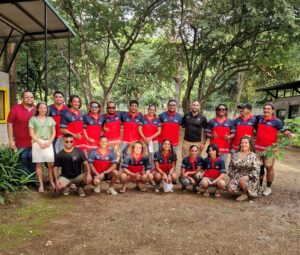
The project also involves young people from Liceo de Bijagua, who participate in setting up and monitoring the devices through the Travesía Verde program.
This participation gives students the opportunity to engage with scientific research, learn to identify species and gain a better understanding of their local ecosystems.
The resulting records can help researchers determine which animals use particular sections of the corridor, identify important wildlife areas and guide future conservation efforts. However, the number of animals detected by cameras does not necessarily correspond to the total number of individuals present in the territory.
A Tapir Population That Is Once Again Drawing Attention
The Baird’s tapir is the largest terrestrial mammal in Costa Rica and an endangered species that plays an important role in tropical forest ecosystems.
Costa Rica’s National System of Conservation Areas (SINAC) highlights its ecological role as a seed disperser and its contribution to forest regeneration. Protecting this species is important not only for its own survival but also for the natural processes that support numerous plant species.
In the Tenorio-Miravalles Biological Corridor, tapirs were rarely seen in the late 20th century. According to estimates cited by Mongabay Latam, at least 50 individuals have now been recorded in the corridor, including 11 detected in Tapir Valley.
These figures reflect the estimates reported by the project and should be interpreted as monitoring-based estimates rather than a comprehensive census of every animal present in the region.
Protecting tapirs can also benefit other species indirectly. Because they need large areas in which to move and find food, their conservation supports the protection of habitats used by many other organisms in tropical forests.
A Tourism Model Designed to Reduce Environmental Impact
Conserving an area requires resources to fund surveillance, research, trail maintenance and habitat restoration. To help cover these costs, Tapir Valley has developed an ecotourism model that limits visitor numbers and aims to minimize disturbance to wildlife.
According to information published about the reserve, visits take place in private groups of no more than eight people. A footwear cleaning and disinfection protocol is also in place to reduce the risk of introducing organisms or pathogens into the ecosystem.
The reserve has recorded remarkable biodiversity across its 104 hectares. Inventories cited by Mongabay Latam include 464 bird species, 61 reptile species, 40 amphibian species, 31 non-flying mammal species and 20 bat species.
Another notable record is Tlalocohyla celeste, a tree frog scientifically described in 2022 whose known occurrence is associated with this area.
The tourism model also has a social dimension. The reserve works with local guides and offers free access to its facilities to residents of Bijagua, with the aim of encouraging community participation in the conservation of their surroundings.
In this way, environmental protection is linked to local economic opportunities and greater involvement by people living near natural areas.
When Protecting One Species Helps Preserve an Entire Ecosystem
The Tapir Valley experience illustrates how conserving one species can contribute to protecting a wider network of ecological relationships.
In this case, the tapir helps disperse jícaro danto seeds, while vegetation restoration helps recover the conditions needed for other species to thrive. Scientific monitoring makes it possible to study these processes and adapt conservation measures according to the results.
The initiative also demonstrates the importance of combining different approaches: biological research, forest restoration, wildlife monitoring, environmental education and low-impact tourism.
Although the results from a private reserve cannot automatically be applied to every ecosystem in the country, this experience provides useful information for understanding the challenges and opportunities of conservation in Costa Rica.
The recovery of the jícaro danto and the protection of tapirs are reminders that forests depend on more than the trees that make them up. They also need the animals, microorganisms and natural processes that allow ecosystems to regenerate.
In Bijagua, research into the relationship between a tapir and a threatened tree is helping improve understanding of this connection and develop new tools to conserve biodiversity in northern Costa Rica.
Sources of Information
- Mongabay Latam. “Tapir Valley: la reserva en Costa Rica donde la conservación de la danta permite recuperar el árbol endémico jícaro danto.” October 17, 2026.
- National System of Conservation Areas (SINAC). Institutional information on wildlife conservation and the ecological role of the Baird’s tapir.
- SINAC and the Japan International Cooperation Agency (JICA). Diagnosis of Camera Trap Studies in Costa Rica (1998–May 2015).
- SINAC. Manual for Participatory Monitoring of Terrestrial Vertebrates Using Camera Traps in Costa Rica.
- International Union for Conservation of Nature (IUCN) Tapir Specialist Group. Information on tapir conservation and their habitats.
- Scientific publication from 2022 describing the tree frog Tlalocohyla celeste.