An exceptional encounter with a little-known species
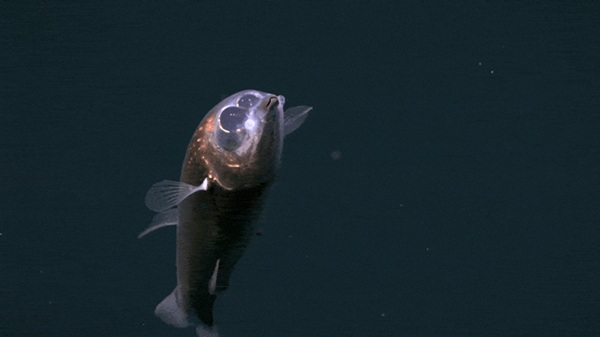
Scientists have successfully recorded the first images of a living binocular fish in the deep waters of the Atlantic Ocean, a discovery that provides new information about one of the most unusual creatures found in deep marine ecosystems.
These types of discoveries help researchers better understand how species adapted to extreme environments survive in areas where sunlight is almost completely absent and environmental conditions are very different from those at the ocean surface.
A resident of the deep ocean
Binocular fish belong to a group of species adapted to life in deep waters, where permanent darkness has led to the evolution of highly specialized biological characteristics.
These animals are named for the position and structure of their eyes, which allow them to detect the limited available light and identify potential prey or threats in an environment where vision is extremely challenging.
The deep ocean contains an enormous diversity of organisms that remain poorly studied due to the technical and financial difficulties involved in exploring these remote environments.
The importance of observing animals in their natural habitat
For decades, much of the scientific knowledge about deep-sea species came from specimens collected through nets or other research methods.
However, observing animals alive in their natural environment provides much more complete information about:
- Their behavior.
- Their movements.
- Their feeding strategies.
- Their interactions with other species.
- The way they use their biological adaptations.
Modern underwater exploration technologies, including remotely operated vehicles (ROVs) and specialized cameras, are now allowing scientists to study ecosystems that were previously almost inaccessible.
Adaptations for survival in a world without light
Organisms living in the deep ocean have developed unique strategies to survive.
Common adaptations include:
- Specialized eyes capable of detecting minimal amounts of light.
- Bodies adapted to extreme pressure.
- Slower metabolisms.
- The ability to use limited food sources efficiently.
- Highly developed sensory systems.
These characteristics demonstrate the ability of evolution to create biological solutions for survival in extreme environments.
The deep ocean remains largely unexplored
Although oceans cover most of the planet, a large portion of their depths remains unexplored.
Scientists estimate that thousands of marine species have yet to be discovered or studied in detail.
Exploring these regions helps improve our understanding of marine biodiversity and provides essential information for protecting ocean ecosystems.
A discovery highlighting the importance of marine research
The observation of a living binocular fish represents more than a rare scientific event. It also demonstrates the importance of investing in oceanographic research and technologies capable of exploring extreme environments.
Each new discovery in the deep ocean expands our understanding of Earth’s biodiversity and helps scientists learn how ecosystems respond to environmental changes.
Connections with marine conservation
Studying deep-sea species also has important implications for ocean protection.
Pollution, climate change, industrial fishing, and other human activities can affect ecosystems far beyond coastal areas.
Understanding the species that inhabit these environments is an essential step toward developing science-based conservation strategies.
Ocean exploration continues to reveal new forms of life
The discovery of this binocular fish reminds us that the oceans still hold many mysteries.
As underwater exploration technologies continue to advance, scientists are discovering species with remarkable adaptations that reveal the extraordinary diversity of life on Earth.
These discoveries highlight the importance of protecting marine ecosystems and supporting scientific research that helps us better understand our planet.
Official sources consulted
- National Oceanic and Atmospheric Administration (NOAA)
- Woods Hole Oceanographic Institution (WHOI)
- United Nations Educational, Scientific and Cultural Organization – Intergovernmental Oceanographic Commission (UNESCO-IOC)
- International Union for Conservation of Nature (IUCN)
- Census of Marine Life