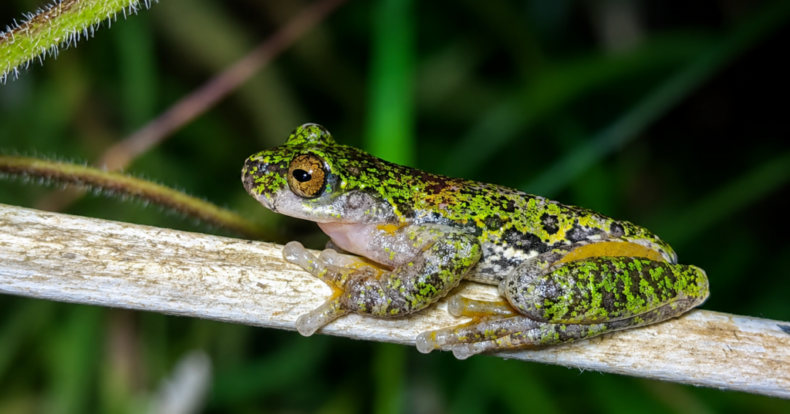
A new frog species has been identified in the mountains of Los Santos, in Costa Rica’s central Pacific region. Isthmohyla nacientes, known as the “spring frog”, is a tiny tree frog whose discovery provides new insight into the biodiversity of an area where forests and coffee plantations coexist with numerous rivers and streams.
The species was formally described in 2026 following morphological, genetic and bioacoustic studies. Researchers determined that it is a species new to science and endemic to Costa Rica.
A Discovery That Began Decades Ago
The story of Isthmohyla nacientes dates back to the 1960s, when specimens from the region had already been observed. For decades, however, these frogs were attributed to another species within the same genus.
Scientific interest resumed in 2021, when researchers found specimens again in a stream in San Lorenzo de Tarrazú. What initially appeared to be the rediscovery of a species that had not been recorded in the area for decades eventually led to the identification of a completely different species.
Further analyses compared physical characteristics, genetic information and male calls, helping researchers confirm that the frogs represented a species that had never been formally described.
A Tiny Resident of Mountain Springs
Isthmohyla nacientes measures less than four centimeters and has been found in mountainous environments at approximately 1,400 to 2,000 meters above sea level.
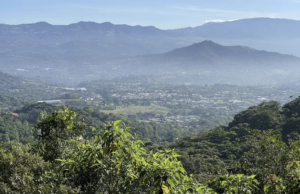
Its known distribution includes several locations in the Los Santos region, particularly in the cantons of Dota and Tarrazú.
The species has been observed both in natural environments and in modified landscapes, including areas close to coffee plantations.
Its scientific name refers to “nacientes,” the Spanish word commonly used in Costa Rica for springs and sources of rivers and streams. The name highlights the importance of these freshwater ecosystems to the species.
A Frog Closely Associated With Coffee Landscapes
One of the most interesting characteristics of this species is its ability to live in landscapes where agriculture forms part of the surrounding environment.
Researchers have found specimens in streams and riparian areas within or alongside coffee plantations. The frogs can use vegetation and structures near the waterways as shelter.
At night, males can be heard calling from vegetation or rocks near streams. Researchers have also observed individuals on coffee plants.
Its presence in these landscapes shows that certain agricultural ecosystems can continue to support biodiversity when natural elements such as riparian vegetation and waterways are maintained.
A Call That Helped Identify the Species
Male calls were one of the clues scientists used to distinguish Isthmohyla nacientes from closely related species.
The scientific study describes a single-note call, generally produced individually or in short series. Researchers also identified different types of vocalizations associated with reproduction and interactions between individuals.
The males also have a translucent, bilobed vocal sac, which expands when they produce certain calls.
These acoustic characteristics, combined with genetic and morphological analyses, were essential in confirming the identity of the new species.
A Tiny Species Facing Major Threats
Although it has also been found in modified environments, Isthmohyla nacientes faces threats linked to habitat transformation.
Among the main concerns identified are pollution of waterways by pesticides, waste disposal and the loss of vegetation along streams and rivers.
Protecting the small rivers, streams and springs where the species lives is particularly important because these environments are closely connected to its reproduction and survival.
Why Riparian Vegetation Matters
Vegetation surrounding waterways performs several important ecological functions. It provides shelter, helps maintain humidity and contributes to protecting water quality.
In the case of Isthmohyla nacientes, researchers have found individuals in both relatively preserved environments and altered landscapes. This suggests some degree of adaptability, but it does not mean the species is immune to environmental changes.
Maintaining vegetation corridors around streams can therefore help preserve the conditions required by this and other species that depend on freshwater ecosystems.
A New Addition to the Biodiversity of Los Santos
The description of Isthmohyla nacientes shows that species can still be discovered in regions where human activities and agriculture are deeply integrated into the landscape.
Los Santos is best known for its coffee production, but its mountains are also home to a remarkable diversity of plants and animals.
The discovery of this frog highlights once again the ecological value of the small streams and freshwater habitats that cross these agricultural landscapes, as well as the importance of understanding them before they can be effectively protected.
Science as a Tool for Conservation
The research used to identify Isthmohyla nacientes involved much more than giving the frog a scientific name. The study provides information about its distribution, behavior, reproduction, physical characteristics and habitat.
These findings can serve as a starting point for future research and monitoring programs aimed at determining population sizes and understanding how environmental threats may affect the species.
For researchers, discovering a species is only the first step. The next challenge is to understand its needs and develop measures to protect the ecosystems on which it depends.
A Tiny Frog With a Remarkable Story
For decades, Isthmohyla nacientes lived in the streams of Los Santos without being recognized as a distinct species.
Today, this small tree frog represents a new chapter in our understanding of Costa Rica’s biodiversity. Its story is also a reminder that forests, springs and streams crossing agricultural landscapes can harbor species that have yet to be discovered.
Protecting these small ecosystems means preserving not only a newly described species, but also part of the natural richness that makes Costa Rica one of the most biodiverse countries on Earth.
Scientific and Information Sources
University of Costa Rica (UCR): researchers from the School of Biology participated in the study and description of the new species.
National University of Costa Rica (UNA): researchers from the International Institute for Wildlife Conservation and Management (ICOMVIS) contributed to the study.
Ichthyology & Herpetology: scientific publication formally describing Isthmohyla nacientes and presenting its morphological, genetic, acoustic and ecological characteristics.
ANCAR – National Alliance for Amphibian and Reptile Conservation: information on the discovery, distribution and threats facing the species.