An Afro-Caribbean tradition will represent Costa Rica in France
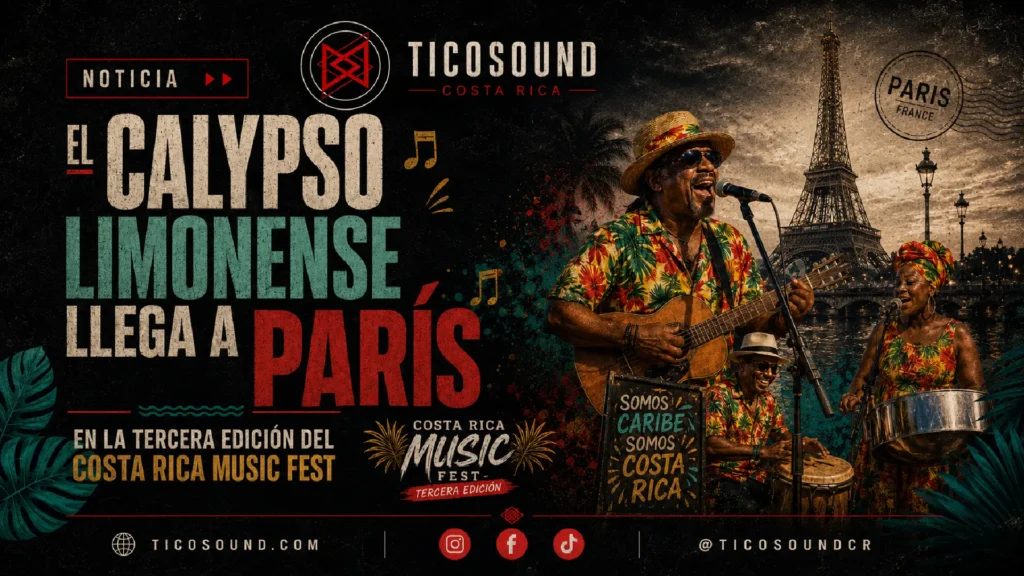
Limonese calypso, one of the most emblematic cultural expressions of the Costa Rican Caribbean, will cross the Atlantic to be presented in Paris during the third edition of the Costa Rica Music Fest 2026. The group Junior y sus Calypsonians, originally from Cahuita, will be the main representative of this musical genre, which is part of Costa Rica’s Intangible Cultural Heritage, bringing its history, identity, and rhythm to an international audience.
The festival will bring together Costa Rican artists living both in the country and in Europe, with the aim of promoting the nation’s cultural richness and strengthening the ties between the Costa Rican diaspora and its roots. The event will take place on June 27 at the cultural venue Le Hasard Ludique in the French capital.
Limonese calypso: a living heritage of the Costa Rican Caribbean
Calypso arrived in the province of Limón at the end of the 19th century with Afro-Caribbean workers mainly from Jamaica. Over time, this musical genre evolved into a distinctive style that blends Caribbean influences with local history, the Limonese Creole language, and the daily experiences of Afro-descendant communities.
More than just a musical genre, calypso is a cultural expression that transmits stories, values, humor, and collective memory from generation to generation. Its importance was officially recognized when it was declared Intangible Cultural Heritage of Costa Rica, as part of efforts to preserve Afro-Costa Rican cultural identity.
Junior y sus Calypsonians: guardians of a tradition
Originally from Cahuita, Junior y sus Calypsonians have established themselves as one of the most representative groups of Limonese calypso. Through their performances, they keep alive a repertoire that preserves traditional compositions and promotes this musical heritage both inside and outside the country.
Their participation in the Costa Rica Music Fest represents an opportunity to share with new audiences a tradition with more than eight decades of history, showing that calypso remains a living and dynamic cultural expression.
A festival promoting Costa Rican culture in Europe
The Costa Rica Music Fest was created with the goal of establishing a permanent space to promote Costa Rican music in Europe and strengthen the international projection of national artists.
The 2026 edition will bring together different musical proposals reflecting the country’s cultural diversity, including traditional and contemporary genres. In addition to Junior y sus Calypsonians, other Costa Rican musicians based in Europe and groups that blend traditional sounds with modern influences will participate.
The event is also supported by the country brand Esencial Costa Rica, reinforcing the international promotion of Costa Rican culture, tourism, and creativity.
Music as an ambassador of national identity
Artistic expressions play a fundamental role in cultural diplomacy. Through international festivals like this one, music helps showcase Costa Rica’s cultural diversity and strengthens exchange between different countries.
Limonese calypso represents an essential part of Afro-Costa Rican heritage and is an example of how local traditions can be projected globally without losing authenticity.
The importance of protecting intangible cultural heritage
Intangible cultural heritage includes traditions, knowledge, artistic expressions, social practices, and manifestations passed down from generation to generation. Its preservation is essential to maintain cultural diversity and strengthen the identity of communities.
Institutions such as UNESCO emphasize that protecting these expressions fosters intercultural dialogue, promotes respect for diversity, and contributes to the sustainable development of the communities that keep these traditions alive.
A recognition that crosses borders
The presence of Limonese calypso in Paris represents much more than an artistic performance. It symbolizes international recognition of a tradition deeply linked to the history of the Costa Rican Caribbean and the legacy of Afro-descendant communities.
By bringing this cultural expression to international stages, Costa Rica continues to strengthen the visibility of its cultural heritage and demonstrates that its musical diversity is one of the great values enriching its national identity.
Recommended official sources
- Ministry of Culture and Youth (MCJ)
- Center for Research and Conservation of Cultural Heritage
- UNESCO – Convention for the Safeguarding of Intangible Cultural Heritage
- Esencial Costa Rica
- Costa Rican Tourism Board (ICT)