Community and conservation project voice concern
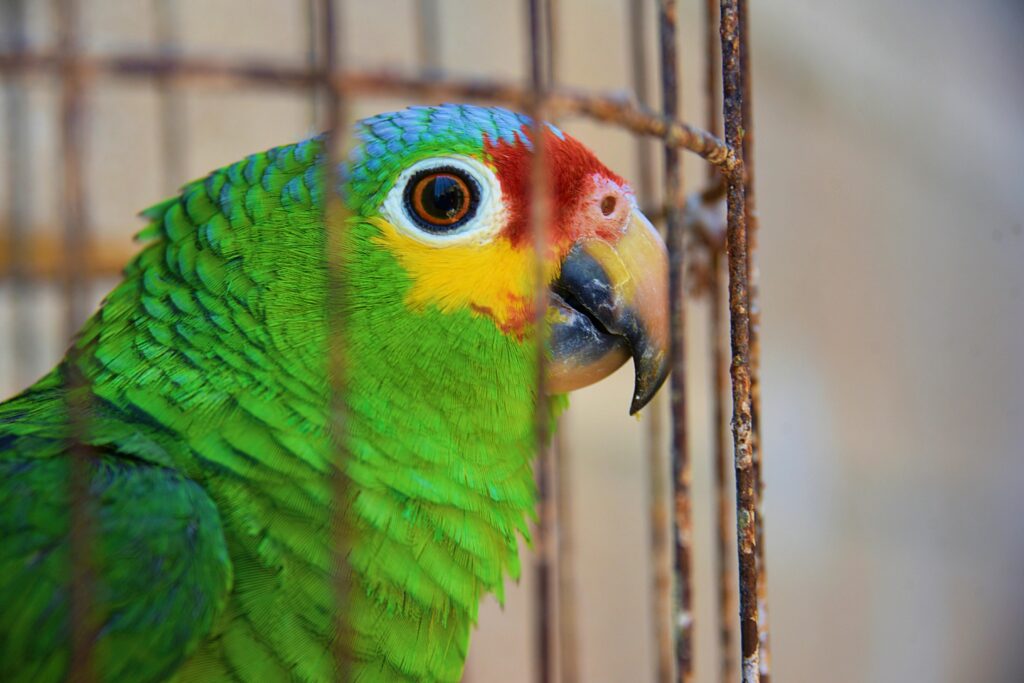
The Punta Leona Beach Club and Nature Resort publicly expressed its opposition to an initiative promoted by the Ministerio de Ambiente y Energía (MINAE) that seeks to modify the Wildlife Conservation Law to allow individuals to keep psittacine birds — including parrots, parakeets, and macaws — in captivity.
According to the organization, such a reform would threaten decades of conservation progress and could reintroduce harmful practices that previously contributed to the decline of wild bird populations. Their position is based on animal welfare concerns and scientific evidence showing that captivity can cause stress, disease, and high mortality rates in birds, as well as increase the risk of transmitting infections to wild populations if captive birds escape or are released.
History of scarlet macaw conservation in the Central Pacific
Since 1994, Punta Leona has led a protection program for the wild scarlet macaw (Ara macao) in Costa Rica’s Central Pacific region, in coordination with experts and institutions such as the Universidad Nacional de Costa Rica.
The initiative was designed to help recover a species that was once on the brink of local extinction. Actions have included habitat reforestation, environmental education in schools, and nest monitoring. These efforts have contributed to a significant recovery of the macaw population in the region over the past three decades.
Conservationists warn that allowing macaws to be kept in captivity for non-regulated purposes could revive practices such as chick poaching and undermine the sustained recovery achieved through long-term environmental work.
Technical and ecological arguments against captivity
Punta Leona argues that macaws born in captivity do not develop the essential survival skills required in the wild, such as finding food, nesting, and avoiding predators. As a result, their chances of survival after release are extremely low.
Additionally, overcrowding and contact with other species in captivity may facilitate the spread of numerous transmissible diseases among birds, posing a sanitary threat to wild populations.
The organization promotes the message: “Macaws, yes — but in freedom,” advocating for wildlife protection within natural habitats and the continuation of conservation programs that have demonstrated measurable results.
The importance of existing wildlife regulations
The debate arises within the context of recent discussions around Costa Rica’s Wildlife Law regulations, particularly concerning the possibility of keeping wild birds acquired before 2017 without clear verification and control mechanisms.
Critics argue that without strict oversight, such provisions could unintentionally facilitate illegal wildlife possession and weaken conservation enforcement efforts across the country.
Official and reference sources
• Delfino.cr — coverage of Punta Leona’s position and conservation work
• MINAE — Wildlife Conservation Law and regulatory framework
• Universidad Nacional de Costa Rica — institutional involvement in wildlife conservation initiatives