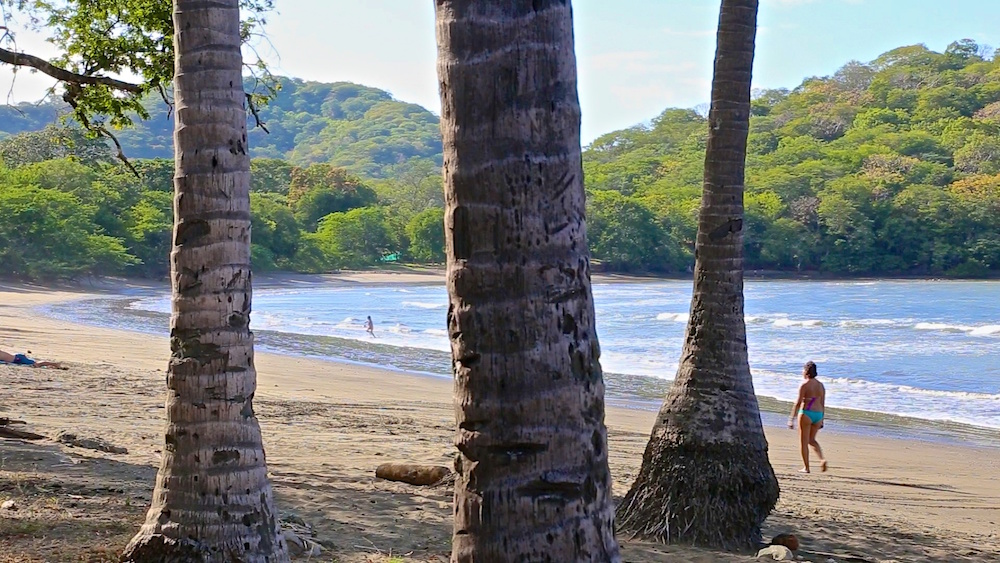
A legal request seeks to temporarily halt tree removal
A tourism development project located in Playa Panamá, in the canton of Carrillo, Guanacaste Province, has become the focus of legal proceedings concerning the protection of Costa Rica’s natural heritage. The Environmental and Agrarian Prosecutor’s Office has requested the immediate suspension of the permit authorizing the removal of 751 trees while an investigation continues into the legality of the administrative process that led to the approval.
The request was filed before the Criminal Court of the Second Judicial Circuit of San José and, at the time of the announcement, was still awaiting a judicial decision. According to the Public Prosecutor’s Office, the precautionary measure aims to prevent potentially irreversible environmental damage while the investigation is ongoing.
The importance of precautionary measures in environmental law
Precautionary measures are legal tools designed to prevent damage that could later prove difficult or impossible to repair. In environmental matters, this principle becomes especially important whenever ecosystems, forests, or protected species may be affected.
In this case, prosecutors have also requested the temporary suspension of tree removal, earth-moving activities, vegetation clearing, and any other intervention on the property until the investigation is completed.
A debate over the classification of the land
One of the central issues in the case is determining whether the land where tree removal was authorized qualifies as a protected forest under Costa Rican forestry legislation.
According to information released by the Public Prosecutor’s Office, technical reports and expert assessments suggest that the property may possess the characteristics of a protected forest. However, the permit was granted based on a forestry inventory approved by the competent authorities, an issue that is now part of the judicial investigation.
For its part, the project developer has publicly stated that all permits were obtained in full compliance with current legislation and that the National System of Conservation Areas (SINAC) carried out several technical inspections before issuing the corresponding authorizations.
Tourism development and environmental conservation
The case has renewed discussion about the balance between tourism development and the protection of natural resources. Costa Rica has earned much of its international reputation through the conservation of its forests, extraordinary biodiversity, and sustainable tourism model.
At the same time, expanding tourism infrastructure requires careful planning to ensure that economic development remains compatible with the protection of environmentally sensitive ecosystems.
Costa Rican environmental legislation establishes several environmental assessment and forest management mechanisms specifically designed to achieve this balance between investment and environmental conservation.
The role of environmental institutions
Forest protection in Costa Rica involves several public institutions. The National System of Conservation Areas (SINAC) manages the country’s forest resources and authorizes certain activities related to vegetation management. Meanwhile, the National Environmental Technical Secretariat (SETENA) evaluates the environmental impacts of many development projects before they begin.
When legal or environmental disputes arise, it is the responsibility of the judicial system to examine the technical and legal evidence presented by all parties in order to determine whether the procedures comply with existing legislation.
Forest conservation as part of the nation’s natural heritage
Costa Rica’s forests provide essential environmental services, including biodiversity conservation, water cycle regulation, carbon storage, and soil protection.
According to SINAC, protecting and restoring forest ecosystems remains one of the pillars of the country’s national conservation strategy, ensuring vital ecosystem services for both local communities and the national economy.
The outcome of this legal process could have significant implications for future development projects located in environmentally sensitive areas, reinforcing the importance of ensuring that every project complies with scientific, legal, and sustainability standards.
Official and reference sources
- Public Prosecutor’s Office of Costa Rica
- National System of Conservation Areas (SINAC)
- National Environmental Technical Secretariat (SETENA)
- Ministry of Environment and Energy (MINAE)
- Forestry Law No. 7575
- Organic Environmental Law No. 7554