A dangerous species detected in Caribbean waters
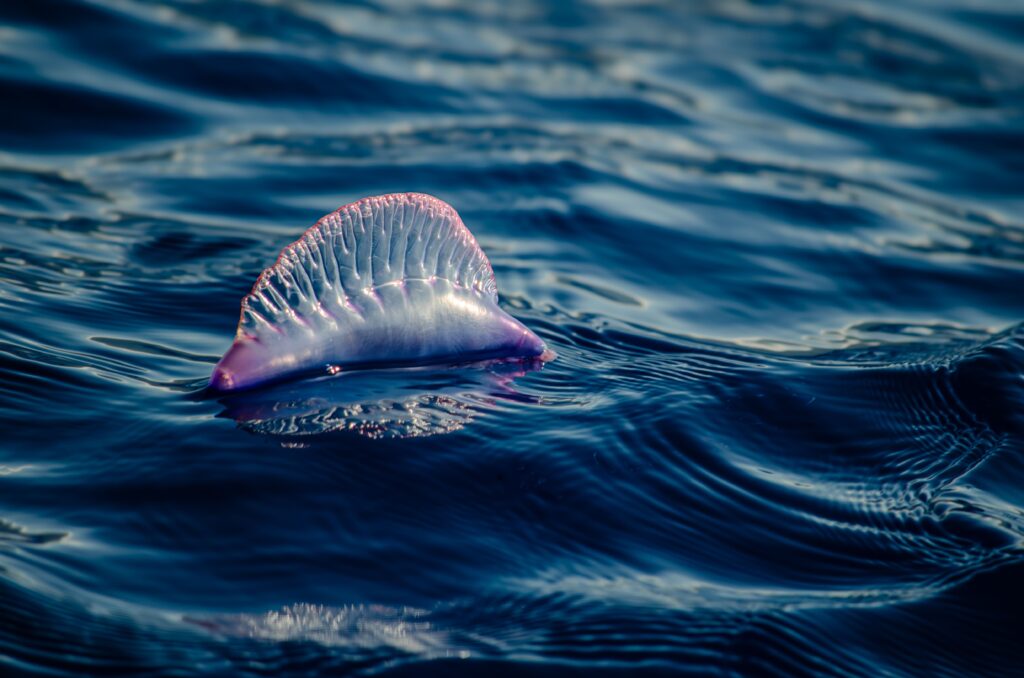
Costa Rican environmental authorities have issued a precautionary alert following the detection of Portuguese man o’ war (Physalia physalis) in the Cahuita area of Limón province. This marine species, often mistaken for a jellyfish, poses a significant risk to swimmers, fishermen, and tourists due to its highly potent venom.
The alert aims to prevent incidents along the southern Caribbean coast, particularly in areas with high tourist activity and recreational swimming zones.
What is the Portuguese man o’ war?
The Portuguese man o’ war is not a jellyfish but a colonial organism made up of specialized polyps that function together as a single biological unit.
Its floating structure, called the pneumatophore, acts like a sail, allowing it to move with wind and ocean currents. Beneath it hang long tentacles equipped with stinging cells called nematocysts, capable of causing severe pain upon contact.
Key characteristics include:
- Blue, purple, or pinkish coloration
- Tentacles that can reach several meters in length
- Ability to cause painful stings
- Movement driven by wind and ocean currents
Health risks for humans
Contact with the Portuguese man o’ war tentacles can cause an immediate skin reaction, ranging from intense pain to severe irritation.
In some cases, particularly for sensitive individuals or prolonged exposure, more serious symptoms may occur, such as:
- Allergic reactions
- Breathing difficulties
- Nausea or dizziness
- Radiating pain in the affected area
Although rarely fatal, stings require immediate medical attention, especially for children or individuals with pre-existing conditions.
Official safety recommendations
Following the presence of this species in Costa Rican Caribbean waters, authorities recommend taking extreme precautions at beaches and following official guidance.
Key preventive measures include:
- Avoid swimming in areas where sightings have been reported
- Do not touch stranded specimens, even if they appear dead
- Report sightings to lifeguards or local authorities
- Pay special attention to children and tourists
- Follow official environmental alerts
These recommendations aim to reduce the risk of incidents during the tourist season.
Oceanographic phenomena and species arrival
The presence of the Portuguese man o’ war along Costa Rican shores is linked to oceanographic factors such as changes in currents, water temperature variations, and seasonal climate conditions.
These phenomena can transport pelagic organisms toward coastal areas where they are not usually common, increasing the likelihood of human encounters.
Continuous monitoring of these conditions helps anticipate potential arrivals of hazardous marine species.
Importance of marine monitoring
Monitoring species such as the Portuguese man o’ war is part of broader environmental and coastal safety efforts in Costa Rica.
Scientific and environmental institutions regularly track marine biodiversity to detect changes and issue early warnings when necessary.
This monitoring supports both public health protection and marine ecosystem conservation.
Responsible tourism and beach safety
Costa Rica’s Caribbean coast is one of the most visited regions in the country, with high tourist activity in beaches such as Cahuita. The presence of potentially dangerous marine species highlights the importance of responsible tourism.
Environmental education and preventive information are key tools to ensure the safety of visitors and local communities.
A reminder of the ocean’s dynamic nature
The appearance of the Portuguese man o’ war in Costa Rican waters highlights the dynamic nature of marine ecosystems and the importance of respecting official warnings.
The ocean hosts a wide variety of species, some of which can pose risks if proper precautions are not taken.
Official sources consulted
Ministry of Environment and Energy of Costa Rica (MINAE)
National System of Conservation Areas (SINAC)
Costa Rican Sea and Limnology Research Center (CIMAR – University of Costa Rica)
National Oceanic and Atmospheric Administration (NOAA) – Physalia physalis
International Union for Conservation of Nature (IUCN) – marine species database