A wildlife monitoring project took first place at the Central American 5G Innovation Hackathon, held in October 2026. The PantheraID initiative aims to combine camera traps, artificial intelligence and connectivity to speed up wildlife detection in natural areas and facilitate the monitoring of species such as the jaguar.
The project was recognized for applying emerging technologies to biodiversity conservation, an environmental challenge that increasingly requires efficient monitoring and response tools.
A New Approach to Wildlife Monitoring
Camera traps are tools used by researchers and conservation teams to record the presence of wild animals without having to observe them directly. These devices capture images of species living in forests and other natural environments, including animals whose behavior makes them difficult to monitor.
However, traditional systems may require periodic visits to retrieve memory cards and review recorded images. According to the Ministry of Science, Innovation, Technology and Telecommunications (MICITT), this process may take place approximately every three months, delaying access to information relevant to wildlife monitoring.
PantheraID aims to reduce these delays through a solution that processes images directly on the device and transmits wildlife sightings to a centralized platform.
Artificial Intelligence to Detect Wildlife
The proposed system includes a camera trap called PantheraCAM, equipped with the MegaDetector 6 algorithm. This computer vision tool can detect the presence of animals in images and filter out records that do not contain wildlife, reducing the amount of material that needs to be reviewed.
Once the images have been processed, the system is designed to transmit records through 5G mobile networks or Starlink satellite connections. This would allow monitoring teams to receive information from remote locations without having to wait until memory cards can be physically retrieved.
The initiative aims to facilitate the monitoring of species such as the jaguar, an iconic American feline whose conservation depends, among other factors, on the availability of information about its presence and movements.
It is important to note that automatically detecting an animal in an image does not necessarily mean identifying the individual animal. Individual identification requires additional methods and data to distinguish one specimen from another.
What Role Does 5G Connectivity Play?
5G technology offers connectivity capabilities that can be useful for transmitting large amounts of data and connecting devices used in remote monitoring. Combined with on-device data processing, it makes it possible to design systems that detect events and communicate results without continuously sending every image to a remote server.
In the case of PantheraID, connectivity is an essential part of the proposal. The cameras would process the records and send wildlife sightings to a central platform. In areas without mobile coverage, the initiative plans to use satellite connections.
This combination could provide conservation teams with more timely information. However, its effectiveness will depend on factors such as network availability, equipment battery life, terrain conditions and the ability to interpret the information received accurately.
Recognition at the Central American 5G Innovation Hackathon
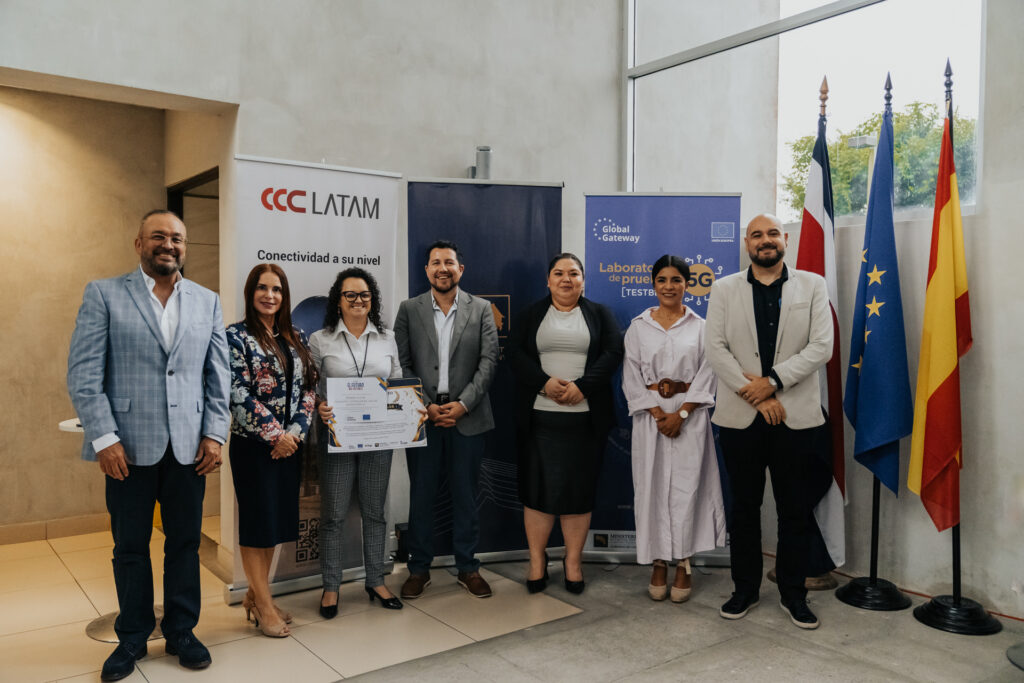
The project took first place at the Central American 5G Innovation Hackathon, whose final brought together 46 participants organized into eight teams following five days of multidisciplinary work and prototype development.
The competition also recognized initiatives related to smart agriculture. InnoBIA took second place with a proposal to optimize irrigation through sensors and automation, while AgroSenser came third with a platform designed to monitor agricultural conditions and support adaptation to climate variability.
The event was organized by the Costa Rican Innovation and Research Promotion Agency (PCII), MICITT, the European Union and the International and Ibero-American Foundation for Administration and Public Policies (FIIAPP/FIAP), with support from the National Center for High Technology (CeNAT).
According to official information, the winning and selected projects will receive further support, including mentoring, opportunities to conduct experiments at the Testbed 5G laboratory and connections with stakeholders in the innovation ecosystem.
Technology and Research in the Service of Biodiversity
Digital tools offer new opportunities to collect and analyze information about wildlife. Automated systems can help reduce the time spent reviewing records and make it easier for scientific teams to identify changes in the presence of particular species.
Projects such as PantheraID aim to use these capabilities to improve monitoring in hard-to-reach areas and provide information that can guide conservation efforts.
The award represents an important milestone for the initiative. However, its long-term environmental impact will depend on technical validation, implementation under real-world conditions and integration into wildlife research and protection programs.
The combination of science, connectivity and artificial intelligence demonstrates how technological innovation can help address specific environmental challenges. The next step will be to turn the prototype’s potential into a reliable and practical tool for those working directly to protect ecosystems.
Official Sources
- Ministry of Science, Innovation, Technology and Telecommunications (MICITT). “Wildlife Monitoring Project PantheraID Wins First Place at the Central American 5G Innovation Hackathon.” October 9, 2026.
- Costa Rican Innovation and Research Promotion Agency (PCII). Institutional information on the Testbed 5G laboratory and experimentation with 5G technologies.