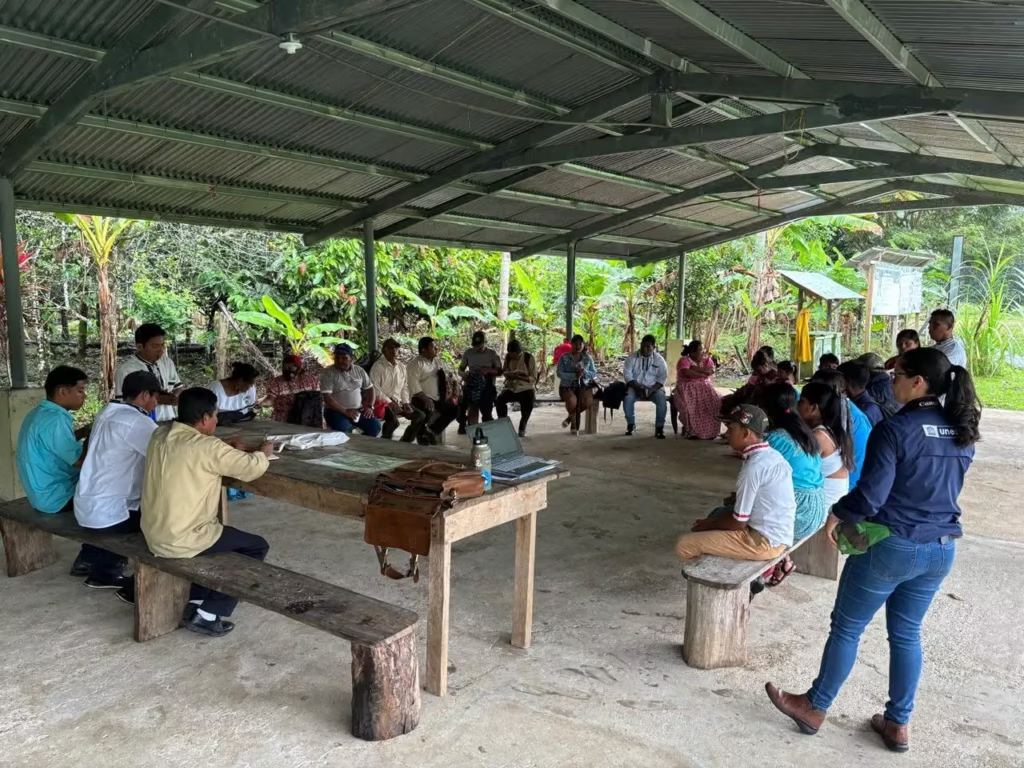
The Central American Institute for Cultural Outreach (ICECU) and the United Nations Educational, Scientific and Cultural Organization (UNESCO) have prepared a special two-part radio series exploring the ancestral knowledge of Indigenous peoples and their contribution to environmental conservation in Central America.
The broadcasts are part of the radio programme Oigamos la Respuesta and highlight experiences from Indigenous communities in Costa Rica, Honduras and Panama. The initiative aims to show how traditional knowledge and scientific research can complement one another in addressing environmental challenges such as climate change and biodiversity loss.
The programmes are scheduled to air on November 4 and 11, 2026, and focus on three biosphere reserves: Agua y Paz in Costa Rica, Río Plátano in Honduras and La Amistad in Panama.
Bringing Indigenous Knowledge and Science Together
One of the series’ main themes is the relationship between Indigenous knowledge and scientific approaches to understanding and protecting ecosystems.
Over generations, Indigenous peoples have developed extensive knowledge of their territories through observing nature, everyday practices and oral traditions. This knowledge encompasses areas such as the use of plants, local biodiversity, water management and the relationship between communities and their environment.
UNESCO recognises the importance of this knowledge for biodiversity conservation and climate change adaptation. Through its Local and Indigenous Knowledge Systems (LINKS) programme, the organisation promotes community participation in research and decision-making processes related to the environment.
The first episode introduces the Guide for Knowledge Dialogue: A Bridge Between Indigenous and Western Knowledge, a tool developed to encourage respectful exchanges between different ways of understanding and protecting nature.
Participants include Indigenous representatives Alí García from Costa Rica and Daniel Villagra from Panama, alongside specialist Cecilia Martínez Artavia.
Protecting Territories Through Community Organisation
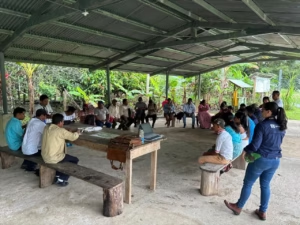
The second episode focuses on Indigenous peoples’ forms of organisation and self-governance, and their role in protecting their territories.
Drawing on experiences from the Honduran Moskitia region and the Naso territory in Panama, the programme explores how community structures and local decision-making processes contribute to the management of natural resources and biosphere reserves.
These experiences also demonstrate that environmental conservation does not depend solely on technical or institutional measures. The involvement of communities living in these territories is essential to developing initiatives that reflect their cultural, social and environmental realities.
Three Biosphere Reserves at the Heart of the Regional Initiative
The series highlights three Central American territories where environmental conservation is closely connected to the presence and knowledge of local communities.
In Costa Rica, the Agua y Paz Biosphere Reserve is one of the areas featured in the initiative. Honduras is represented by the Río Plátano Biosphere Reserve, while Panama is represented by the La Amistad Biosphere Reserve.
These territories provide an opportunity to explore different experiences involving Indigenous communities, biodiversity and natural resource management.
The initiative is part of the project Indigenous Knowledge and Nature-Based Solutions in Central American Biosphere Reserves, implemented by UNESCO with funding from Spanish Cooperation and co-financing from the European Union through the Great Forests of Mesoamerica programme.
Where and When to Listen
Both broadcasts are part of ICECU’s radio programme Oigamos la Respuesta.
The announced broadcast times are:
- Radio Nacional: 6:00 a.m.
- Radio Fides: 2:00 p.m.
- Repeat broadcast: 7:00 p.m.
The programmes will also be distributed through cultural radio stations belonging to the Costa Rican Institute of Radio Education (ICER) and will subsequently be available through the University of Costa Rica’s radio network.
Listeners will also be able to access the broadcasts through the ICECU Centroamérica YouTube channel.
Radio as a Platform for Sharing Knowledge
The programme Oigamos la Respuesta is part of ICECU’s long-standing work to make knowledge accessible to communities across Central America through communication and popular education. The institution has been carrying out this work for more than six decades.
UNESCO recognised part of this legacy in 2009 by including the ICECU Question and Answer Collection in the Regional Memory of the World Register for Latin America and the Caribbean. The archive brings together decades of questions and answers covering scientific, cultural, social and everyday topics relevant to Central American communities.
Through this new series, both organisations aim to broaden the discussion about the role of Indigenous knowledge in environmental conservation and highlight the importance of bringing different perspectives together to protect the region’s territories and biodiversity.
Sources
- UNESCO. “Local and Indigenous Knowledge Systems and the Environment.” Local and Indigenous Knowledge Systems (LINKS) Programme.
- UNESCO. “ICECU Question and Answer Collection, 1964–2008.” Memory of the World Register for Latin America and the Caribbean.
- ICECU. Institutional information about the radio programme “Oigamos la Respuesta”.
- ICECU and UNESCO. Information about the project “Indigenous Knowledge and Nature-Based Solutions in Central American Biosphere Reserves”.
- Delfino.cr. “ICECU and UNESCO to Launch Radio Series on Indigenous Knowledge and Environmental Conservation,” November 3, 2026.