A Silent Threat Affecting Thousands of Animals Every Year
Costa Rica has taken another important step in protecting its biodiversity with the implementation of a national strategy designed to reduce wildlife electrocutions caused by electrical infrastructure. The initiative responds to an environmental issue that has injured or killed thousands of animals across the country for many years.
Howler monkeys, sloths, squirrels, birds, opossums, and other arboreal species are among the most common victims of power lines and transformers that cross biological corridors, urban areas, and expanding tourism zones.
The new strategy seeks to coordinate efforts among public institutions, electricity providers, environmental organizations, and local communities to significantly reduce these incidents and strengthen the coexistence between infrastructure and conservation.
A Growing Threat to Costa Rica’s Wildlife
Urban expansion, infrastructure development, and forest fragmentation have increased risks for many wildlife species.
As animals move between trees separated by roads, neighborhoods, or deforested areas, they often use electrical cables as if they were natural branches. This behavior greatly increases the risk of fatal electric shocks.
According to data cited by the Ministry of Environment and Energy (MINAE), electricity distribution companies reported approximately 6,700 wildlife electrocutions during 2024, highlighting the scale of the problem and the need for nationwide preventive measures.
The National Strategy: Prevention, Monitoring, and Infrastructure Adaptation
The new plan includes a series of technical measures designed to reduce danger points for wildlife.
Among the actions already being implemented or planned for expansion in the coming years are:
- Insulating and protecting power lines in critical areas.
- Installing aerial wildlife crossings.
- Adapting transformers and utility poles.
- Identifying priority biological corridors.
- Developing monitoring and incident-reporting systems.
- Strengthening coordination between utility companies and environmental authorities.
Several cooperatives and electricity providers have already begun developing technical guidelines to identify high-risk zones and establish more effective mitigation protocols.
Howler Monkeys Helped Drive New Actions
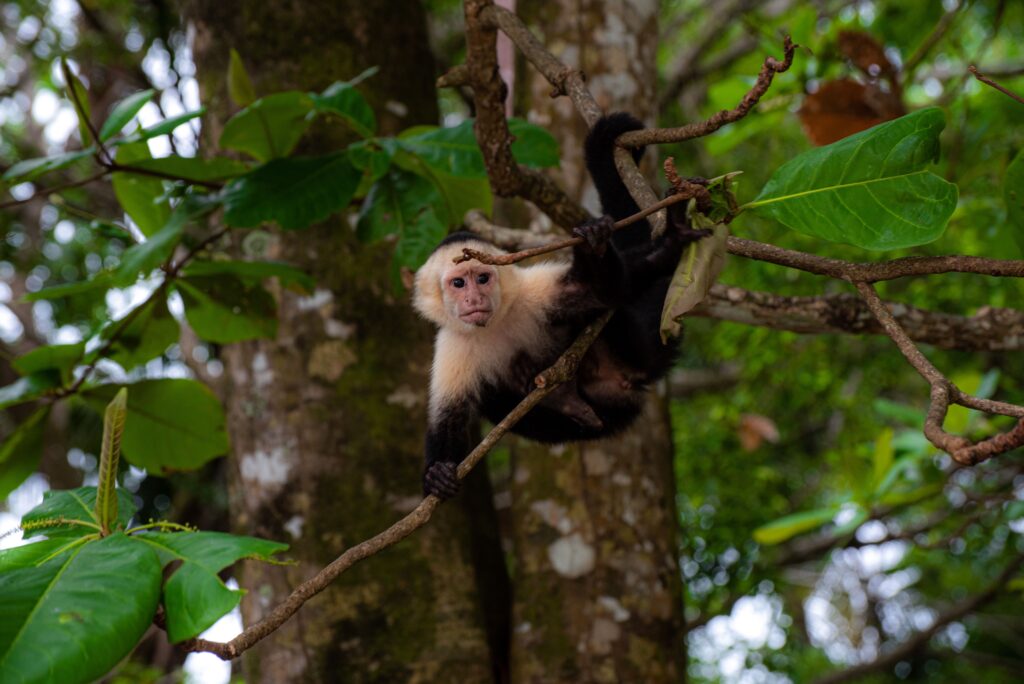
The issue has gained particular visibility due to the growing number of incidents involving howler monkeys, especially in areas where urban development has fragmented forest habitats.
Over recent years, wildlife rescue organizations and conservation groups have documented numerous electrocution cases linked to power infrastructure. The concern even led to a ruling by Costa Rica’s Constitutional Court requiring corrective measures to reduce risks in certain regions of the country.
Experts explain that for primates, electrical cables often appear to be a natural extension of the forest canopy, which helps explain the frequency of accidents when they attempt to move between forest fragments.
The Importance of Biological Corridors
One of the key elements in reducing wildlife mortality is maintaining ecological connectivity.
Biological corridors allow animals to move safely between forest areas without relying on human-made structures such as roads, bridges, or power lines.
For years, Costa Rica has developed a national network of biological corridors that plays a crucial role in species conservation and in reducing conflicts between wildlife and human development.
Conservation and Development Can Move Forward Together
The national strategy also seeks to demonstrate that economic growth and environmental protection are not incompatible goals.
Adapting electrical infrastructure represents an investment that benefits both biodiversity and local communities by reducing service interruptions, improving safety, and strengthening the country’s environmental reputation.
This approach aligns with Costa Rica’s international reputation as a leader in conservation, ecosystem restoration, and sustainable development.
An Effort That Requires Everyone’s Participation
Experts agree that reducing wildlife electrocutions cannot rely solely on government institutions.
Public participation through incident reporting, urban tree protection, support for ecological connectivity projects, and environmental education also plays an important role in addressing the problem.
Collaboration among communities, municipalities, electricity providers, and conservation organizations will be essential to achieving long-term results.
An Important Step for National Biodiversity
The launch of this strategy represents one of the most ambitious efforts undertaken in the country to address a threat that has remained relatively invisible for many years.
Beyond reducing statistics, the goal is to protect thousands of wild animals that are part of Costa Rica’s natural heritage and ensure that future infrastructure becomes increasingly compatible with wildlife conservation.
The initiative reflects a growing trend toward development models that integrate biodiversity protection as a fundamental component of national planning.
Recommended Official Sources
- National System of Conservation Areas (SINAC)
- Ministry of Environment and Energy (MINAE)
- Costa Rican Electricity Institute (ICE)
- National Commission for Biodiversity Management (CONAGEBIO)
- National Biological Corridors Program
- Costa Rican electricity distribution companies