
A new recognition of the country’s environmental leadership
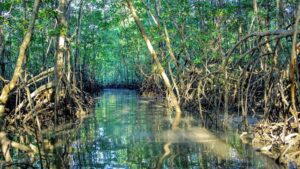
The protection of Costa Rica’s forests continues to earn international recognition. Thanks to decades of efforts to conserve its forest ecosystems and reduce emissions caused by deforestation, Costa Rica will receive US$11 million from Norway as payment for its verified achievements in carbon capture and emissions reductions.
This funding is part of international results-based climate finance mechanisms, through which countries that demonstrate verified reductions in greenhouse gas emissions receive financial support to continue strengthening their forest conservation policies.
Why is Norway financing forest conservation?
Norway is one of the world’s leading supporters of climate finance through its International Climate and Forest Initiative (NICFI). For several years, the country has provided financial assistance to nations that successfully reduce deforestation and protect their forests through measurable and independently verified conservation programs.
Costa Rica has become internationally recognized for its remarkable forest recovery model. After experiencing significant forest loss during the 1970s and 1980s, the country successfully reversed this trend through public policies focused on environmental protection, sustainable natural resource management, and its Payment for Environmental Services (PES) program.
Forests as allies in the fight against climate change
Forests play a vital role in combating climate change by absorbing carbon dioxide (CO₂) from the atmosphere through photosynthesis and storing it in trees, vegetation, and soils.
This process, known as carbon sequestration, helps reduce the concentration of greenhouse gases responsible for global warming.
Beyond storing carbon, forests protect freshwater resources, regulate local climates, conserve biodiversity, and provide habitat for thousands of plant and animal species.
The Payment for Environmental Services Program: an internationally recognized model
One of Costa Rica’s greatest environmental achievements has been the Payment for Environmental Services (PES) Program, administered by the National Forestry Financing Fund (FONAFIFO).
The program provides financial incentives to landowners who protect, restore, or sustainably manage forests, recognizing the environmental benefits their land provides to society.
The PES model has become internationally recognized as one of the world’s most successful strategies for combining environmental conservation, rural development, and climate action while benefiting thousands of families across the country.
Funding that strengthens conservation efforts
The financial contribution from Norway will help continue supporting initiatives focused on forest conservation, ecosystem restoration, and national programs aimed at reducing emissions associated with land-use change.
This international cooperation also contributes to Costa Rica’s commitments under the Paris Agreement, which seeks to limit global warming through concrete climate mitigation and adaptation actions.
In addition, these resources support projects that benefit rural communities, forest producers, and Indigenous territories actively involved in protecting natural resources.
An example of international cooperation for climate action
Results-based payment mechanisms demonstrate how international cooperation can encourage ecosystem conservation by recognizing the environmental value generated by healthy forests.
Costa Rica has become one of the world’s leading examples of this approach thanks to its robust forest monitoring systems, internationally verified emissions reporting, and public policies that have significantly increased forest cover over recent decades.
Conservation that benefits both the planet and future generations
Norway’s new financial contribution represents far more than economic support. It reinforces the global importance of Costa Rica’s forests as essential allies in addressing climate change and demonstrates that conservation can generate environmental, social, and economic benefits simultaneously.
Maintaining and expanding forest cover will remain essential for protecting biodiversity, safeguarding freshwater resources, reducing greenhouse gas emissions, and strengthening Costa Rica’s international leadership in sustainable development.
Recommended Official Sources
- Ministry of Environment and Energy (MINAE)
- National Forestry Financing Fund (FONAFIFO)
- Norway’s International Climate and Forest Initiative (NICFI)
- Forest Carbon Partnership Facility (FCPF)
- United Nations Framework Convention on Climate Change (UNFCCC)
- REDD+ Costa Rica Program