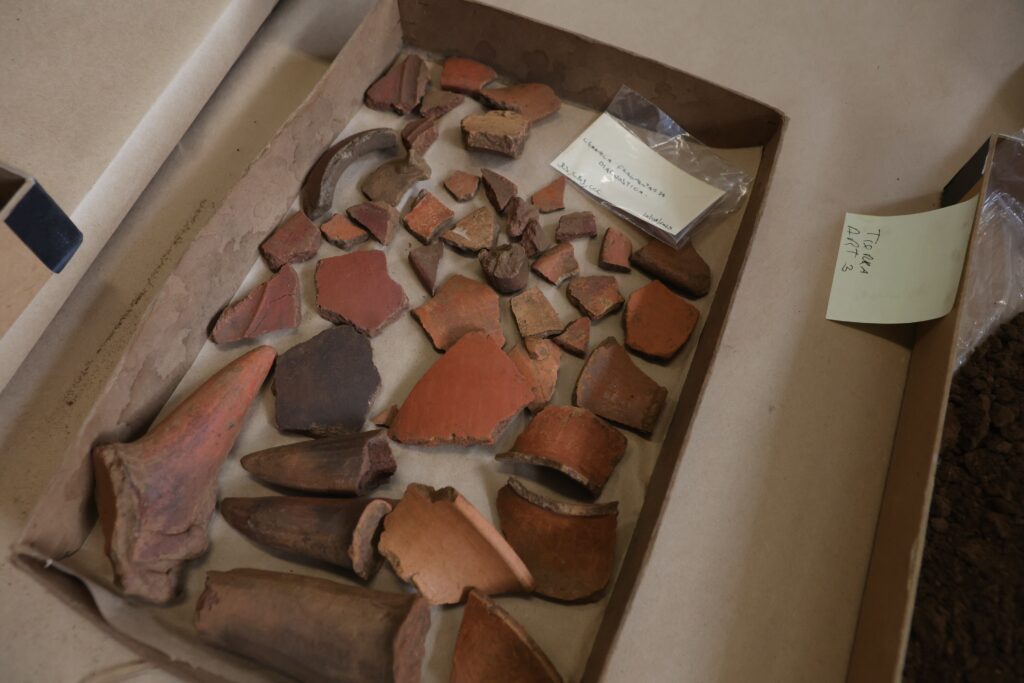
Interinstitutional operation recovers pre-Columbian archaeological assets
Costa Rican authorities took an important step in protecting the national cultural heritage after recovering 300 pre-Columbian archaeological pieces during an interinstitutional operation carried out in Pilas de San Isidro, Alajuela on April 25, 2026. The action was coordinated by the National Museum of Costa Rica together with the Ministry of Culture and Youth, the Ministry of Public Security, and judicial authorities, within the framework of the National Archaeological Heritage Law (Law No. 6703), which establishes that these assets are the exclusive property of the Costa Rican State.
The importance of archaeological pieces for historical memory
The recovered objects are part of Costa Rica’s historical and cultural memory, reflecting aspects of the life, technology, and artistic expressions of the peoples who inhabited the region before European arrival. Their value lies not only in their age but also in the information they provide about social contexts, rituals, and practices of the pre-Columbian societies that occupied the territory. The recovery and protection of these pieces help reconstruct the history of those who lived on these lands and serve as a bridge to present and future generations.
Institutional procedure and safeguarding
After being located, the pieces were seized, inventoried, and transferred under chain of custody to the Alajuela Norte Police Delegation. Later, in coordination with the Environmental Prosecutor’s Office and the technical team of the National Museum, the assets were moved to the museum’s facilities for safekeeping, conservation, and technical analysis. This process ensures that the objects are studied by specialists and preserved according to scientific and technical standards, contributing to archaeological research.
Institutional voices on heritage protection
The Minister of Culture and Youth, Jorge Rodríguez Vives, highlighted that archaeological heritage “is not a collection of old objects: it is a living part of our identity,” and that each recovered piece represents “a firm action by the Costa Rican State in defense of its memory, its history, and what belongs to us as a nation.” Meanwhile, the Director General of the National Museum of Costa Rica, Grettel Monge Muñoz, emphasized that the action reaffirms the State’s commitment to protecting collective historical heritage and reminded citizens of the importance of properly managing any archaeological discovery.
Call to citizens
Authorities called on the population to not keep, trade, or alter archaeological assets and to report any discovery or irregular possession, reminding that these objects are part of the common heritage and that their proper protection and study allow a better understanding of Costa Rica’s cultural history.
Official sources
- National Museum of Costa Rica — Institutional communication on the recovery of archaeological pieces.
- Ministry of Culture and Youth — National Archaeological Heritage Law and cultural heritage management.
- Ministry of Public Security — Participation in interinstitutional operations to protect archaeological heritage.