A nationwide initiative to strengthen access to English
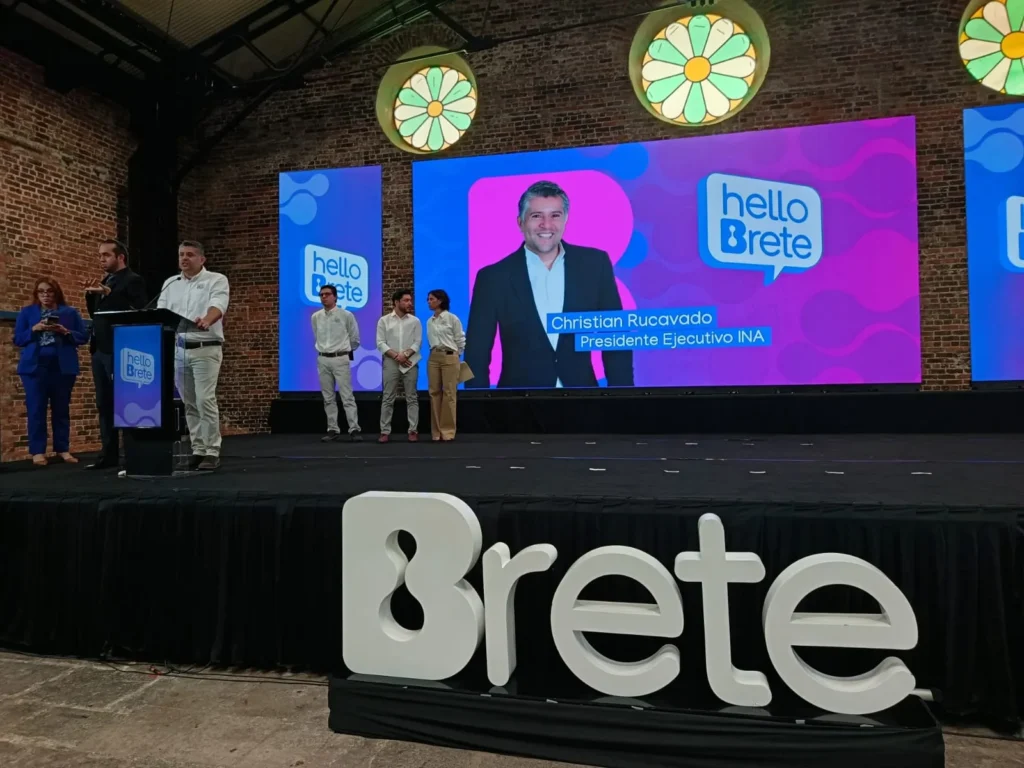
The Government of Costa Rica has launched a new educational strategy called Hello Brete, an English training program aimed at expanding job opportunities through large-scale, free access to English education.
The initiative will allow up to 2 million people to receive English training through a digital platform, in coordination with public institutions and educational technology partners. The main goal is to strengthen employability in a country where English is increasingly required in sectors such as tourism, services, and free trade zones.
A digital platform with massive access and flexible learning
Hello Brete operates as an online learning platform available 24/7, designed to adapt to different proficiency levels.
The system includes live classes, self-paced learning, AI-powered pronunciation practice, and level assessments. It is aimed at people aged 15 and older, with no prior knowledge of English required.
According to the Ministry of Public Education (MEP), the tool will enable large-scale free training and strengthen language skills across the Costa Rican population by integrating educational technology into the learning process.
A joint effort between public institutions and the technology sector
The strategy is led by the National Training Institute (INA), in coordination with the Ministry of Labor and Social Security (MTSS) and the Ministry of Science, Innovation, Technology and Telecommunications (MICITT).
The program also includes a partnership with the international platform Open English, which provides technological infrastructure and learning content.
Authorities emphasize that this public-private collaboration aims to accelerate human talent development and respond to the growing demand for English in Costa Rica’s labor market.
Impact on employment and the national economy
One of the main goals of Hello Brete is to improve employability.
Data from INA suggests that English proficiency can increase income by 20% to 38%, particularly in technical positions and internationally oriented service sectors.
The program also addresses a supply-demand gap: in 2025, INA offered fewer than 20,000 English training spots despite much higher demand, highlighting the need to expand access to language education.
A training model based on technology and artificial intelligence
The platform integrates digital tools such as voice recognition, virtual classes, automated tutors, and interactive multimedia content.
Its goal is to provide a flexible learning experience that allows users to study from any device, adapting learning to their available time.
This model seeks to modernize English education in Costa Rica, aligning it with global trends in digital education and lifelong learning.
Program access requirements
To participate in Hello Brete, applicants must meet the following requirements:
- Be 15 years or older
- Have internet access and a digital device
- Have completed at least primary education
- Be a Costa Rican citizen or foreign resident with valid DIMEX
Registration is completed online through the official platform, where users take a placement test before starting their training.
A strategic investment in the country’s future workforce
Authorities have stated that Hello Brete is part of a national strategy to improve competitiveness and strengthen human capital.
As Costa Rica consolidates its position as a destination for foreign investment in sectors such as technology, tourism, and global services, English proficiency becomes increasingly essential to meet labor market demands.
In this context, large-scale English education becomes a key tool for social mobility and economic development.
Sources
- Ministry of Public Education (MEP)
- National Training Institute (INA)
- Ministry of Labor and Social Security (MTSS)
- Ministry of Science, Innovation, Technology and Telecommunications (MICITT)
- Presidency of Costa Rica
- Original article published by Diario Extra
- Infobae Costa Rica coverage of Hello Brete
- Repretel News reports
- Teletica Channel 7 coverage