A Discovery Hidden on Costa Rica’s Pacific Coast
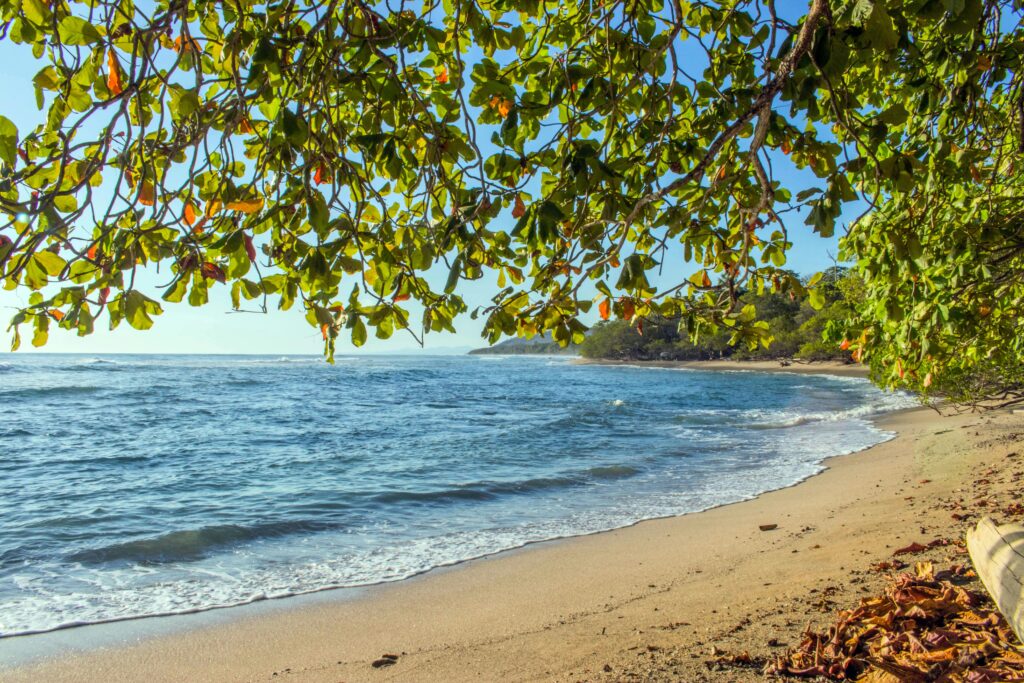
Costa Rica’s biodiversity continues to reveal remarkable surprises. A team of researchers has identified a new marine species that remained hidden beneath the sand at Playa Naranjo, located within Santa Rosa National Park in the Área de Conservación Guanacaste.
The discovery highlights how even seemingly simple ecosystems such as sandy beaches can harbor forms of life that remain unknown to science. The new species was found in the intertidal zone, where it lives buried in moist sand and goes virtually unnoticed by visitors.
The research was conducted by scientists involved in the BioMar-ACG project, an initiative dedicated to studying the marine biodiversity of the Área de Conservación Guanacaste.
The New Species: A Marine Worm Resembling a Jaguar
The species was officially described under the scientific name Sthenelais onca, a marine worm belonging to the Sigalionidae family, a group of predatory species that inhabit sandy marine environments. Researchers chose the name “onca” because the coloration patterns on its body resemble the coat of the jaguar (Panthera onca), one of the most iconic animals of the Americas.
Although relatively small, the discovery is significant because it expands scientific knowledge of the marine fauna of the Tropical Eastern Pacific, a region that still contains many poorly studied species.
Research That Spanned Several Years
Confirming the existence of this new species was not an immediate process. The first specimens were collected at Playa Naranjo during fieldwork conducted in 2016. However, additional expeditions and extensive analyses, including morphological studies and genetic testing, were required to confirm that the organism represented a species previously unknown to science.
The official description was published in 2026 in the international scientific journal ZooKeys, a publication recognized worldwide for its contributions to taxonomy and biodiversity research.
The Importance of Beaches as Living Ecosystems
Many people associate beaches primarily with recreation and tourism, but scientists emphasize that these environments host a remarkable diversity of organisms adapted to life beneath the sand.
These animals perform essential ecological functions, including oxygenating sediments, recycling nutrients, and supporting complex food webs. The discovery of previously unknown species demonstrates how much remains to be learned about these coastal habitats.
Another Example of Costa Rica’s Biological Wealth
This discovery further strengthens Costa Rica’s international reputation as one of the most biodiverse countries on Earth relative to its size. Despite its small territory, the country continues to generate important scientific findings in both terrestrial and marine ecosystems.
For researchers, every newly described species provides valuable information that helps improve our understanding of ecosystems and supports long-term conservation efforts.
Science Continues to Uncover Unknown Species
Around the world, thousands of species are discovered every year. The oceans remain among the least explored environments on the planet, and scientists estimate that a vast number of marine organisms have yet to be identified.
The discovery of Sthenelais onca demonstrates that even in well-studied protected areas such as the Área de Conservación Guanacaste, biological secrets are still waiting to be uncovered.
Official and Informational Sources
• Área de Conservación Guanacaste — Official information about the discovery and the BioMar-ACG project.
• University of Costa Rica (CIMAR) — Scientific participation through the Center for Marine Sciences and Limnology Research.
• Ministry of Environment and Energy (MINAE) — Management and conservation of protected areas and biodiversity.
• ZooKeys Scientific Journal — Official publication describing Sthenelais onca.
• Yahoo News and The Tico Times — International news coverage of the discovery.