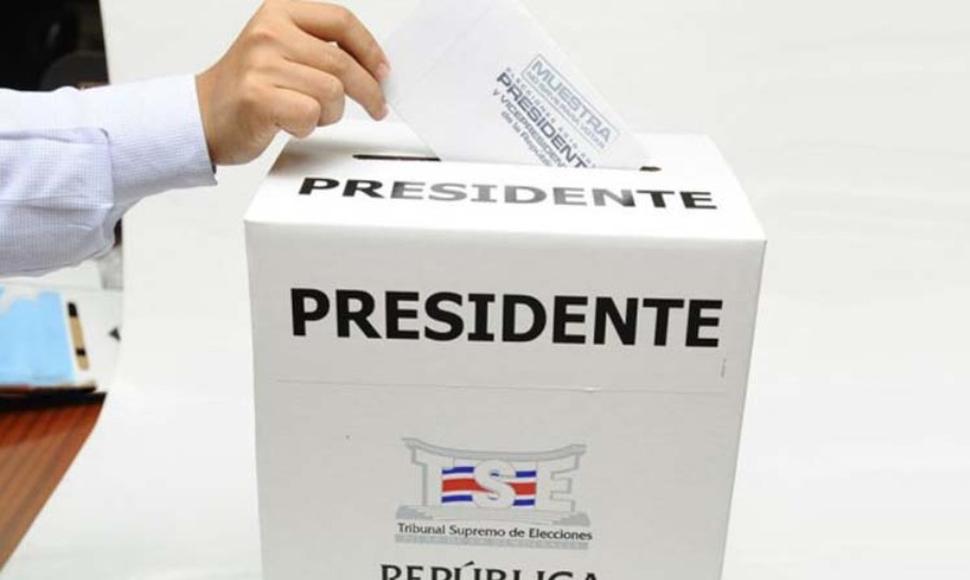
The Challenge of Voting Informed in 2025
Costa Rican democracy, one of the longest-standing and most stable in Latin America, faces a challenge at every electoral cycle that only intensifies with modernity: the overwhelming amount of information. The 2025 elections are no exception. The voter is faced with a fragmented political landscape, featuring a score of national political parties, hundreds of congressional candidates, and a long list of presidential hopefuls.
Each of these groups presents government plans that, taken together, add up to thousands of pages of technical diagnoses, promises, and visions for the country. For the average citizen, balancing work, family, and personal responsibilities, the task of reading, analyzing, and above all, comparing these proposals objectively is titanic, if not impossible.
This ocean of data is further complicated by the noise of social media, disinformation campaigns, and the prioritization of image over substance. How can a voter differentiate a robust proposal from an empty promise? How can one know which candidate truly aligns with their core values and interests, beyond the campaign slogan?
The need for a centralized, impartial, and clear tool has never been more pressing. Amidst this complex panorama, VotemosCR emerges—a civic platform designed not to tell you who to vote for, but to offer you the organized data and tools necessary for you to make that decision as consciously as possible.
In this article, we will break down what VotemosCR is, who is behind this initiative, how its main tools (like the “Votómetro”) work, and why it could become your most important ally heading into the 2025 elections.
2. What is VotemosCR?
In essence, VotemosCR is a digital civic information platform. Its fundamental design and purpose are not that of a traditional media outlet or a polling firm; it is a public service tool designed by and for Costa Rican citizens.
Its primary objective is to collect, analyze, and present key information from the electoral process in an accessible, impartial, and, above all, comparable way. Instead of relying on fragments of interviews, debates, or political advertising, VotemosCR centralizes the raw data—such as government plans and candidates’ official stances—and processes it so the voter can understand and contrast it.
Who is Behind VotemosCR?
This is perhaps the most important point in understanding the platform’s nature. VotemosCR is not a private initiative with commercial or political interests. It is a project developed and managed by the Programa Estado de la Nación (PEN), or the State of the Nation Program.
The PEN is a high-level research center, recognized for its academic rigor and objectivity. It operates under the umbrella of the National Council of Rectors (CONARE), meaning it is backed by all of Costa Rica’s public universities (UCR, UNA, TEC, UNED, and UTN). This academic and public linkage guarantees its independence from political parties and special interest groups, guiding it solely by technical and scientific criteria.
The Objective: Facilitating an Informed Vote
VotemosCR’s purpose is simple in its conception but complex in its execution: to help citizens make informed political decisions.
To achieve this, the platform focuses on three pillars:
- Provide timely and useful information about the electoral options.
- Innovate in the way this information is presented, using interactive tools and data visualizations.
- Encourage critical analysis by the voter, based on evidence and not just perception.
What VotemosCR is NOT: A Crucial Clarification
It is essential to understand that VotemosCR will not tell you who to vote for. The platform does not make recommendations, does not rate candidates as “good” or “bad,” and does not seek to influence the voter’s final decision.
Its function is that of a mirror and an organizer: it reflects the candidates’ positions (based on what they themselves express) and organizes the overwhelming amount of campaign information. At the end of the day, VotemosCR provides the “what,” “how,” and “where” of the proposals; the “for whom” remains an entirely personal and informed decision for the citizen.
3. How VotemosCR Works: The Main Tools
Beyond being a repository of information, the true value of VotemosCR lies in its interactive tools. These applications don’t just present data; they process it and transform it into digestible, actionable knowledge for the citizen.
These tools are designed to answer two of the most difficult questions in an election: first, “Which candidate best aligns with my values and stances?” and second, “Which political parties have made a serious effort to propose real solutions to the country’s problems?”
To answer this, the platform centers on two flagship features:
A. The “Votómetro” (Vote-o-meter): Finding Affinities
The “Votómetro” is likely the platform’s most popular and intuitive tool. It is an interactive questionnaire designed to measure the degree of affinity or coincidence that exists between a citizen’s personal stances and those of the presidential candidates.
How does it work?
- The Citizen Questionnaire: Upon entering, the user is presented with a series of statements (usually between 30 and 40) covering the most relevant national issues. These can range from the economy (e.g., “The State should reduce its size and influence”) to the environment (e.g., “Gas and oil exploration should be a priority”) and social issues (e.g., “Rights for LGBTIQ+ populations should be expanded”). The user responds to each statement with options like “Agree,” “Disagree,” or “Neutral/Indifferent.”
- The Candidate Database: This is the core of the tool. The State of the Nation Program team has sent this exact same questionnaire to all registered presidential candidates. Their responses (Agree, Disagree, Neutral) are what feed the platform’s database.
- The Result (The “Match”): Once the citizen completes the questionnaire, the system compares their answers with those of all the candidates. The result is not a recommendation, but a comparative graph, usually a bar chart, showing the percentage of coincidence with each hopeful. For example, you might discover you have an 85% affinity with Candidate A, 60% with Candidate B, and 20% with Candidate C.
Key Points about the Votómetro:
- It’s Anonymous: The platform does not request or store any personal identification data. The results are for the user’s eyes only.
- It’s a Guide, Not a Verdict: The Votómetro measures affinity on selected topics, but it should not be the sole criterion for a vote. It is a starting point for the citizen to investigate more deeply those candidates with whom they show greater affinity.
- It’s Based on Transparency: The tool works thanks to the willingness of candidates to respond honestly. It also exposes those who choose not to participate or not to answer the questionnaire.
B. Analysis of Government Proposals: Beyond the Promises
If the Votómetro focuses on stances, the “Analysis of Government Proposals” focuses on the quality and seriousness of the parties’ work plans. This is the most academic and, perhaps, the most revealing section of VotemosCR.
The PEN team understands that no one will read all 20 government plans, which often exceed 100 pages each. So, they do it, but they apply a consistent, scientific methodology across the board.
How does it work?
- Methodological Analysis: The PEN researchers don’t just read the proposals; they “dissect” them using objective criteria. For every proposal found in a government plan, they ask:
- Is this a real proposal or a vague statement? (“Improve education” is a wish. “Build 15 new CTPs (technical high schools) in coastal areas with a budget of X” is a proposal).
- Does it define clear, measurable goals? (“Reduce poverty” is vague. “Reduce extreme poverty by 3 percentage points in 4 years” is a goal).
- Does it explain the “how”? Does the proposal mention how it will be funded, what legal reform it requires, or which institution will be responsible?
- Data Visualization: The results of this analysis are presented in interactive graphs that allow the citizen to:
- Compare “Robustness”: See which parties have a government plan with a higher percentage of “robust” proposals (real, with goals, and with a “how”) versus parties that base their plan on diagnoses and wishes.
- See the Thematic Focus: The platform identifies which topics each party concentrates on (e.g., “Security,” “Environment,” “Economy,” “Infrastructure”) based on the quantity and quality of their proposals in each area.
- Filter by Topic: The user can select a topic of interest (e.g., “Public Health”) and see, in one place, what specifically all parties are proposing on that point, and how robust that proposal is.
The Value of this Tool: This section allows the voter to go beyond the debate and advertising. It makes it easier to discover which parties have “done their homework” and presented a structured plan, versus those who have improvised a document to meet a requirement.
4. Other Sections of Interest in VotemosCR
While the “Votómetro” and the “Proposal Analysis” are the central interactive tools, VotemosCR supplements its informational offering with contextual sections that are crucial for understanding the complete electoral picture. These sections provide the “who” and “why” of the electoral process.
A. Party and Candidacy Fact Sheets
For many voters, the sheer number of flags and names on the ballot can be confusing. This section seeks to bring order to that landscape.
- What it offers: VotemosCR creates a detailed profile for each political party participating in the national election.
- Content: These fact sheets are not promotional material; they are data sheets. They include fundamental information such as:
- Party History: When it was founded, its ideological roots, and its previous electoral participation.
- Candidate Information: Who leads the presidential tickets and, in many cases, the top spots for congressional lists by province.
- Key Stances: A summary of their ideological positions on major axes (economy, society, environment), extracted directly from their statutes or government plans.
This section is especially useful for voters to quickly place emerging parties or differentiate between factions that may seem similar.
B. Voter Profile (Data and Analysis)
Just as important as understanding those who are competing is understanding those who vote. Based on data from the Supreme Electoral Tribunal (TSE) and the State of the Nation Program’s own research, this section offers a look at the Costa Rican electorate.
- What it offers: It presents analysis on the demographic and behavioral trends of voters.
- Common topics: It often includes data on abstentionism (who votes and who doesn’t), vote volatility (the percentage of people who switch parties between elections), the weight of the youth vote, or the geographical distribution of preferences.
This information helps the citizen understand the context in which their own vote is cast and how broad national trends may be influencing the results.
C. Blog and In-Depth Analysis
Finally, VotemosCR functions as a dissemination platform for PEN researchers. This section is similar to an analysis blog or a technical opinion column, but always from an academic and non-partisan perspective.
- What it offers: In-depth articles, essays, and short analyses on specific topics of the electoral process that are not covered in the other tools.
- Examples of topics: Researchers might write about the impact of campaign financing, the challenges of gender parity on congressional lists, the use (and abuse) of social media in politics, or the status of the “deuda política” (public campaign financing).
This section is ideal for the citizen who not only wants to know what the candidates propose but also seeks to understand why the electoral system works the way it does and what the structural challenges of Costa Rican democracy are.
5. Why Trust VotemosCR?
In an era defined by disinformation, “fake news,” and hidden political interests, the most important question a citizen must ask of any new source of information is: Why should I trust it?
In the case of VotemosCR, its credibility is not based on self-proclamations, but on solid, transparent institutional and methodological pillars that guarantee its independence and seriousness.
A. Academic Backing and Independence
The main pillar of VotemosCR’s trustworthiness is its origin. As mentioned earlier, the platform does not belong to any media group, business, or political party. It is a project of the Programa Estado de la Nación (PEN), which is part of the National Council of Rectors (CONARE), uniting the country’s five public universities (UCR, UNA, TEC, UNED, UTN).
This academic backing means VotemosCR operates under the same standards of rigor, objectivity, and scientific methodology that characterize high-level university research. Its commitment is not to an ideology, but to the veracity of the data.
B. Methodological Transparency
VotemosCR does not hide how it reaches its conclusions. Unlike an opinion poll, which might keep part of its “recipe” secret, the platform openly explains its methodology:
- For the Votómetro, it clarifies that the answers come directly from the candidates.
- For the Proposal Analysis, it publishes the exact criteria it uses to define a proposal as “robust,” “vague,” or “diagnostic.”
This transparency allows anyone (including academics, journalists, or other parties) to review the process. Furthermore, the platform is duly registered with the Supreme Electoral Tribunal (TSE), complying with all electoral regulations for the dissemination of political information.
C. Civic and Non-Partisan Focus
The objective of VotemosCR is not profit or political influence. Its ultimate goal is the strengthening of Costa Rican democracy. You will not find invasive commercial advertising on the site, nor biased headlines seeking to generate “clicks.”
The platform positions itself as a public service tool, financed with funds earmarked for research and social well-being. Its impartiality is guaranteed because its only “interest” is ensuring that citizens have the best available information to exercise their right to vote freely and consciously.
In summary, VotemosCR is trustworthy because it replaces opinion with evidence, speculation with data, and partisan interest with academic rigor.
An Informed Citizen Strengthens Democracy
The 2025 elections, like any democratic process, present a complex challenge that goes beyond simply casting a ballot. In a political environment saturated with noise, polarization, campaign promises, and the constant risk of disinformation, the responsible citizen’s task is to seek clarity.
Tools like VotemosCR, born from the academic rigor and independence of the State of the Nation Program, are not a luxury, but a civic necessity. They do not offer easy answers nor do they claim to tell you who to vote for. Their value, which is much deeper, lies in providing the data, methodology, and context so that you can build your own decision on a solid foundation.
The platform transforms the chaos of thousands of pages of proposals and hours of debate into comparable and accessible information. It allows you to move from “what they say” to “what they actually propose.”
Therefore, this article is a call to action. Costa Rican democracy is strengthened not only by high participation but by conscious participation.
We invite you not to settle for just the slogan, the advertisement, or the viral clip. Explore the VotemosCR platform. Take the time to complete the Votómetro, not as a game, but as an exercise in introspection. Compare the robustness of the government proposals and ask yourself which candidates have made the effort to present a serious plan for the country.
The future of Costa Rica is decided at the ballot box. An informed citizen does not just exercise their right; they exercise their power.