
The Mesoamerican Biological Corridor (MBC) represents one of the most ambitious and successful ecological conservation initiatives globally. Stretching from southeastern Mexico to Panama, this corridor integrates strategic ecosystems that ensure the biological connectivity of species in one of the most biodiverse regions on the planet. Recent scientific studies have revealed a fascinating fact: despite decades of research, the MBC continues to harbor species previously unknown to science, confirming its critical importance for global biodiversity.
These discoveries not only enrich our knowledge about Mesoamerican fauna and flora but also present new challenges and urgent needs for the conservation of these fragile ecosystems.
1. What is the Mesoamerican Biological Corridor?
a. Definition and Geographical Extension
The Mesoamerican Biological Corridor is an international initiative that seeks to interconnect protected natural areas from southeastern Mexico through Guatemala, Belize, El Salvador, Honduras, Nicaragua, Costa Rica, and all the way to Panama. With over 768,990 km² of extension, its main goal is to guarantee species mobility, conserve biodiversity, and promote sustainable development in the region (MBC Official).
The central idea behind the MBC is to prevent natural ecosystems from becoming isolated due to human activities, which would cause genetic fragmentation of animal and plant populations, reducing their resilience to threats such as climate change.
b. Ecological Importance
The MBC harbors approximately 7% of the world’s biodiversity, including numerous endemic species and endangered species such as:
- The jaguar (Panthera onca).
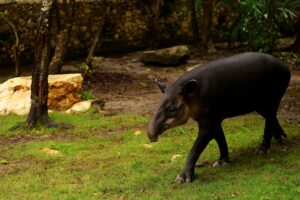
- The Central American tapir (Tapirus bairdii).
- The scarlet macaw (Ara macao).
Moreover, the region is an essential migratory corridor for neotropical birds and constitutes an ecological “hotspot” according to the classification by Conservation International.
The ecological integrity of the MBC is fundamental to the balance of Mesoamerican ecosystems and for the environmental services on which millions of people depend daily.
2. Recent Methodologies for the Discovery of New Species
Technological advances in recent decades have revolutionized biodiversity discovery techniques in the MBC, allowing scientists to identify previously unknown species even in already explored habitats.
a. Research Techniques Used
- Environmental DNA (eDNA) Analysis:
This technique allows for the detection of organisms by analyzing genetic traces left in water, soil, or air, without physically capturing the organisms (Taberlet et al., 2012). - Camera Traps:
Equipped with motion sensors, camera traps have revolutionized the monitoring of elusive mammals and birds, enabling the discovery of new species or unexpected records in remote areas (Rowcliffe et al., 2008). - Intensive Herpetological and Botanical Explorations:
Especially in hard-to-access areas, these expeditions allow the collection of specimens that are later analyzed morphologically and genetically. - LIDAR (Light Detection and Ranging):
This laser scanning technology has enabled the identification of hidden ecosystems beneath dense forest canopies, revealing critical habitats for still-unknown species (Fisher et al., 2017).
3. New Species Discovered in the MBC (Last 5 Years)
Recent discoveries in the MBC are not limited to new invertebrate or plant species; they also include vertebrates of considerable size and ecological significance.
a. Fauna
In 2021, researchers from the University of Costa Rica and the Smithsonian Tropical Research Institute (STRI) described a new species of glass frog (Hyalinobatrachium sp.) in the cloud forests of Costa Rica, characterized by its translucent skin and unique call patterns (Arteaga et al., 2021, Zootaxa).
A new small rodent mammal was identified in 2023 in Nicaragua, belonging to the genus Oryzomys, highlighting the still-hidden diversity of terrestrial mammals in the region (Salazar-Bravo et al., 2023, Journal of Mammalogy).
b. Flora
- In 2022, botanists from the Lankester Botanical Garden discovered three new species of epiphytic orchids in the South Pacific of Costa Rica, belonging to the genus Epidendrum, expanding the catalog of high-mountain species in protected areas like the Hitoy-Cerere Biological Reserve.
c. Insects and Other Invertebrates
- New species of butterflies from the genus Diaethria and tropical beetles have been described in Panama and Costa Rica, highlighting the importance of biological corridors for speciation processes in invertebrates (Neotropical Entomology, 2022).
These findings reaffirm the premise that the MBC remains one of the most dynamic frontiers of global biodiversity.
4. Relevance of the Discoveries
a. Implications for Conservation
The discovery of new species in the Mesoamerican Biological Corridor is not simply an isolated scientific event: it has profound consequences for conservation.
Each newly identified species represents:
- An additional piece in the ecological puzzle of Mesoamerican ecosystems.
- A new argument for the protection of habitats that are still little studied or threatened by agricultural expansion, deforestation, or infrastructure projects.
According to an analysis by Brooks et al. (2006) in Science, the discovery of endemic species in specific regions is often associated with the urgent need to establish new protected areas or expand buffer zones around existing reserves (Brooks et al., 2006).
For example, the discovery of new amphibian species in high-humidity zones of Costa Rica has led to the creation of micro-reserves within the MBC to protect critical altitudinal corridors against climate change.
Additionally, these newly discovered species can act as umbrella species: protecting them implies the conservation of entire ecosystems where multiple species of flora and fauna coexist.
b. Scientific Implications
From a scientific standpoint, the new findings in the MBC have several notable implications:
- Redefinition of Phylogenies:
The discovery of genetically distinct species is forcing evolutionary biologists to revise the family trees of various taxonomic groups, such as tropical amphibians and Mesoamerican orchids (Padial et al., 2010). - Understanding Biodiversity Patterns:
Many new findings occur in underexplored “hotspots,” providing valuable insights into how historical factors (such as Pleistocene climate changes) and geographical factors (such as the formation of the Isthmus of Panama) have shaped current diversity. - Applications in Bioprospecting and Ecological Resilience:
Several new plant and microorganism species have potential for future biomedical, agricultural, or climate-adaptation research. The biodiversity discovered today may be crucial for future innovations.
In sum, each new discovery strengthens the scientific and ethical argument for continuing the exploration, monitoring, and active protection of the Mesoamerican Biological Corridor.
5. Main Institutions and Scientists Involved
The success in identifying new species in the Mesoamerican Biological Corridor is due to collaboration among multiple scientific institutions, research centers, and regional and international conservation organizations.
a. Leading Institutions
- Smithsonian Tropical Research Institute (STRI):
Based in Panama, STRI has been leading tropical biodiversity research for decades and has recently documented new species of mammals, reptiles, and plants in the region (STRI). - University of Costa Rica (UCR):
Through its School of Biology and centers such as the Lankester Botanical Garden, UCR has played a central role in the taxonomy of new plant, insect, and amphibian species in Costa Rica. - National Biodiversity Institute (INBio):
Although now integrated into the National System of Conservation Areas (SINAC), INBio laid foundational work for biodiversity inventories in Costa Rica and remains a reference in bioprospecting and biological data management. - Conservation International and The Nature Conservancy:
These international NGOs support field research and applied conservation programs, especially in remote areas of the MBC.
b. Notable Scientists
- Dr. Gerardo Chaves (University of Costa Rica):
A specialist in tropical herpetology, he has described several new species of frogs and reptiles in Costa Rica and Panama (Chaves et al., 2022, Zootaxa). - Dr. Melissa Marchán (Smithsonian Tropical Research Institute):
An entomologist specialized in neotropical butterflies, her work has led to the discovery and classification of new Lepidoptera species in the MBC.
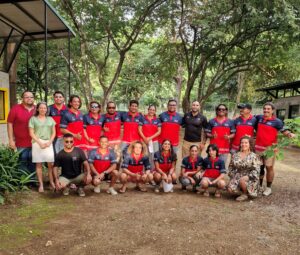
Collaboration between these researchers, local organizations, and indigenous communities has been essential to advancing scientific knowledge and promoting evidence-based conservation strategies.
6. Challenges for Research and Conservation in the MBC
Despite recent successes, the Mesoamerican Biological Corridor faces major challenges that threaten both its existing biodiversity and the possibility of future discoveries.
a. Habitat Fragmentation
The expansion of agricultural frontiers, uncontrolled urbanization, and poorly planned infrastructure projects continue to fragment essential ecological corridors.
According to a study by Ponce-Reyes et al. (2017) in Biological Conservation, up to 30% of critical habitats in the MBC could be lost if land-use planning policies are not strengthened (Ponce-Reyes et al., 2017).
b. Climate Change Impacts
Increasing temperatures and changing rainfall patterns are shifting the altitudinal ranges of many species.
This requires the development of vertical connectivity corridors (altitudinal corridors) to allow species to migrate to cooler areas, as highlighted by the Convention on Biological Diversity (CBD) report.
c. Insufficient Funding
Biodiversity research requires constant investment in field explorations, genetic analyses, and habitat conservation, resources that are often limited in the region.
Reliance on international funding makes many projects vulnerable to continuity uncertainty.
d. Need for Alliances and Community Participation
To secure the future of the MBC, it is necessary to:
- Strengthen alliances among governments, NGOs, universities, and local communities.
- Promote conservation programs based on citizen science.
- Integrate traditional indigenous knowledge into environmental management strategies.
Active participation of local communities is key to achieving long-term effective conservation, as demonstrated by success stories in Costa Rica and Panama.
The Mesoamerican Biological Corridor continues to reveal itself as a true treasure trove of biodiversity, even in the 21st century.
The constant discovery of new species of fauna and flora demonstrates not only the biological richness of the region but also how incomplete our knowledge still is about the planet’s most dynamic tropical ecosystems.
These recent findings, documented through modern techniques such as environmental DNA, LIDAR, and camera trap monitoring, reinforce the urgent need to protect the natural habitats of the MBC.
Each new species discovered is a scientific argument for conservation and a warning about the risks of fragmentation and climate change.
The contributions of institutions like the Smithsonian Tropical Research Institute, the University of Costa Rica, INBio, and international conservation organizations have been crucial to these advances, but the future of this extraordinary diversity will depend on the continuity of research and the political and social commitment to protect life corridors.
Today more than ever, the Mesoamerican Biological Corridor teaches us that conserving biodiversity is conserving the future. Each newly discovered species reminds us how much there is left to learn—and how much we stand to lose if we do not act decisively and cooperatively on an international scale.