A scientific discovery in one of the country’s richest biodiversity regions
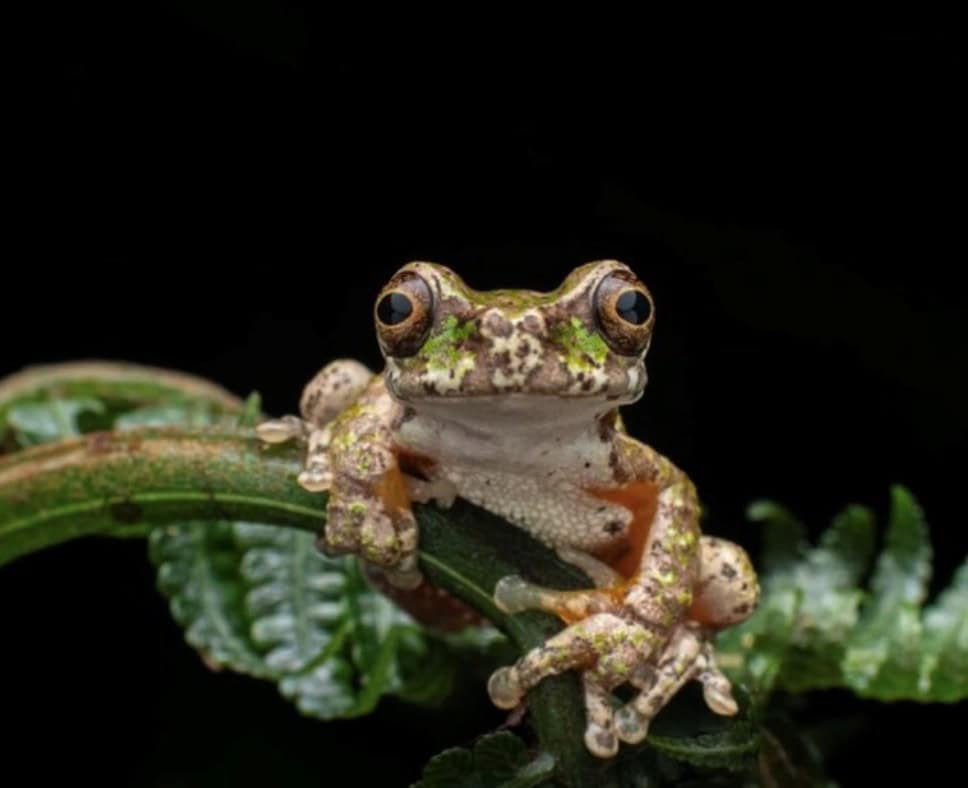
A team of Costa Rican researchers has identified a new frog species in the Los Santos mountain region, highlighting the country’s extraordinary biological richness and the remarkable potential of its forests to reveal species still unknown to science.
The discovery is the result of several years of fieldwork, morphological analyses, and genetic studies that confirmed the collected specimens belong to a previously undescribed species. The research represents another important contribution to the understanding of amphibian diversity in the Talamanca Mountains and further strengthens Costa Rica’s leadership in biodiversity research.
Los Santos: a refuge for unique species
The Los Santos region forms part of the Talamanca Mountain Range, one of Central America’s most important biodiversity hotspots due to its exceptional variety of ecosystems and high number of endemic species.
Its cloud forests, streams, and high-altitude habitats provide ideal conditions for numerous amphibians, many of which occur nowhere else in the world. These characteristics make the region a natural laboratory for biological research and conservation.
Why discovering new species matters
Every newly described species improves our understanding of evolution and the functioning of ecosystems.
Amphibians are especially valuable because they are considered excellent indicators of environmental health. Their highly permeable skin makes them particularly sensitive to habitat degradation, pollution, emerging diseases, and climate change.
As a result, the discovery of a new frog not only expands Costa Rica’s biological inventory but also provides valuable information for future conservation efforts.
Costa Rica continues to be a global biodiversity leader
Although Costa Rica occupies only a tiny fraction of the Earth’s land surface, it is home to approximately 5% of the world’s known biodiversity.
Over the past decades, national and international scientists have described numerous new species of plants, insects, fish, amphibians, and other organisms, demonstrating that many discoveries remain to be made within the country’s ecosystems.
Amphibians are among the most diverse groups, particularly in the humid mountain forests of the Talamanca Range, where environmental conditions have favored the evolution of unique species.
Scientific research supporting conservation
Identifying a new species requires a rigorous scientific process that combines field expeditions, anatomical studies, DNA analyses, and comparisons with specimens preserved in national and international biological collections.
This work allows researchers to determine with confidence that an organism possesses sufficient characteristics to be recognized as a distinct species, providing essential information for future research and conservation planning.
The data also help scientists evaluate the conservation status of the species and identify the threats it may face within its natural habitat.
Amphibians face growing challenges
While Costa Rica continues to make important scientific discoveries, many amphibian species face increasing environmental pressures.
The main threats include:
- Habitat loss and forest fragmentation
- Climate change
- Water pollution
- Emerging diseases such as chytridiomycosis
- Disturbance of mountain ecosystems
These challenges make scientific research an essential tool for designing effective conservation strategies.
A discovery that opens new research opportunities
The discovery creates new opportunities to study the distribution, ecology, behavior, and evolution of this newly identified species while improving our understanding of amphibian diversity in the Los Santos mountains.
It also demonstrates the importance of maintaining long-term biological research and monitoring programs, as even relatively well-studied regions continue to yield species previously unknown to science.
A reminder of Costa Rica’s extraordinary natural heritage
The discovery of this new frog highlights the remarkable scientific value of Costa Rica’s mountain ecosystems.
Each newly identified species enriches the country’s natural heritage and reinforces the importance of protecting cloud forests and other conserved areas that shelter globally unique biodiversity.
Official sources consulted
- University of Costa Rica (UCR)
- Museum of Zoology, University of Costa Rica
- UCR Office of the Vice President for Research
- National System of Conservation Areas (SINAC)
- International Union for Conservation of Nature (IUCN)