Biography of José Figueres Ferrer (“Don Pepe”)
1. Historical and Geographical Context: Costa Rica in the 1940s: Between Reforms and Polarization
At the beginning of the twentieth century, and especially toward the 1940s, Costa Rica was a predominantly agrarian and rural country whose economy and social structure revolved around coffee production. During this era, Costa Rican society displayed profound inequalities: while a select coffee-growing oligarchy dominated politics and the economy, a large portion of the population lived in conditions of poverty or destitution. Testimonies from the period recount that half of the inhabitants went barefoot, dental health problems were widespread, and rural homes lacked basic services such as running water or electricity.
Against this backdrop, in 1940 the physician Rafael Ángel Calderón Guardia assumed the presidency of the Republic. Strongly inspired by the social doctrine of the Catholic Church, Calderón set out to improve the conditions of the working classes and put an end to misery. To achieve his ambitious reforms and overcome the rejection of the oligarchy that had brought him to power, the president forged an unprecedented political alliance with the Communist Party (renamed Vanguardia Popular) led by Manuel Mora Valverde, and with the Catholic Church, represented by Archbishop Víctor Manuel Sanabria. From this pact emerged historic institutions and laws that cemented the Welfare State in Costa Rica, such as the creation of the University of Costa Rica in 1940, the founding of the Costa Rican Social Security Fund (Caja Costarricense de Seguro Social) in 1941, the incorporation of a Social Guarantees chapter into the Constitution, and the enactment of the Labor Code in 1943.
However, the international context of World War II profoundly impacted the country’s internal dynamics. The Calderón Guardia government aligned itself unconditionally with the United States, going so far as to declare war on Japan and Germany in December 1941, even before the American government itself did. This stance led to the persecution of German, Italian, and Japanese citizens, many of whom were sent to concentration camps and had their properties confiscated or looted. The wartime tension reached Costa Rican soil on July 2, 1942, when a German submarine torpedoed and sank the United Fruit Company ship “San Pablo” in Puerto Limón, leaving 24 workers dead. This tragic event inflamed passions and provoked, two days later, a massive demonstration in San José that ended in riots and the destruction of businesses belonging to foreigners.
Despite the undeniable social advances, the 1940s became a period of extreme political upheaval. Rumors of corruption, the squandering of public funds, and accusations of electoral fraud began to drastically undermine the government’s popularity. The opposition, made up of conservative sectors, displaced economic elites, and groups of young intellectuals, grew alarmed at the growing influence of the communists in power.
It was precisely in this crucible of international tensions, social ferment, and political polarization that the conditions for an institutional rupture were forged. In this climate of discontent, the figure of José Figueres Ferrer would burst onto the scene — a farmer and businessman until then untouched by traditional politics, who would find in this crisis the catalyst to begin his transformation into the architect of the Second Republic.
2. Childhood and Formation: Catalan Roots and the Forging of a Pragmatic Idealist
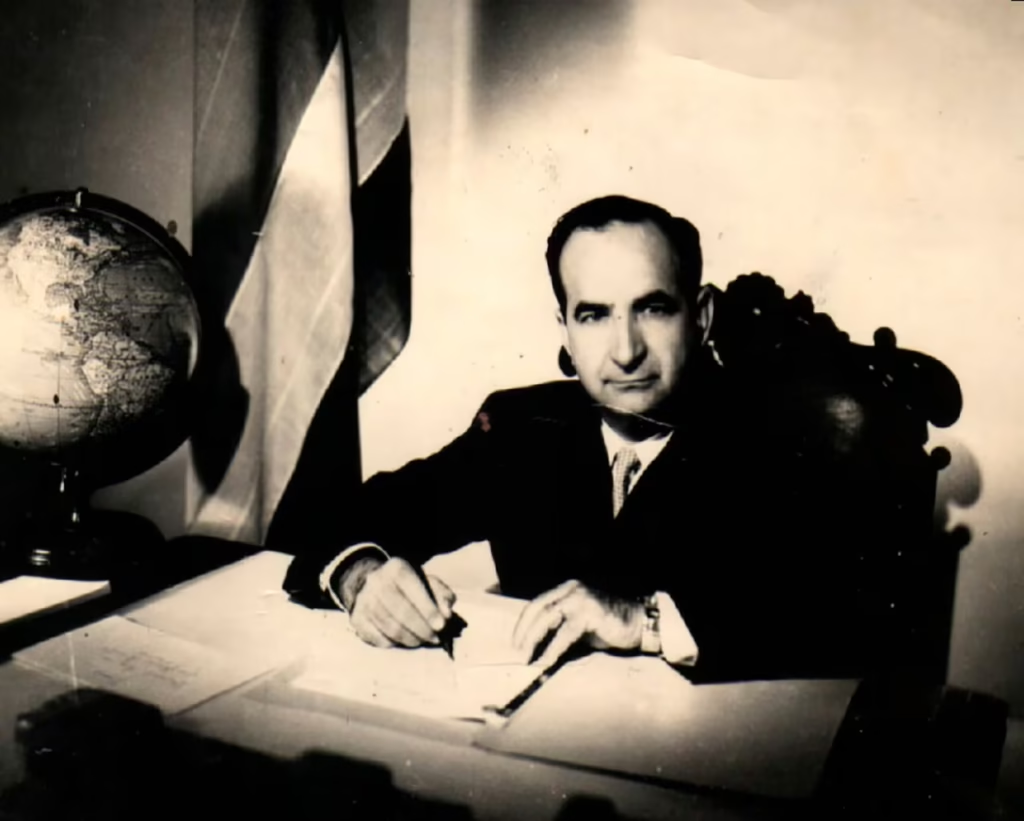
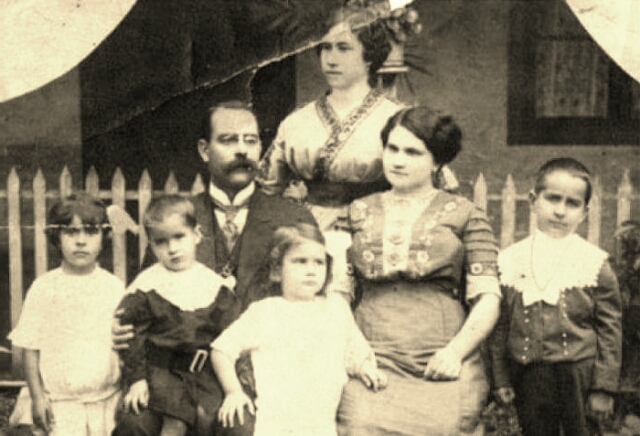
José María Hipólito Figueres Ferrer was born on September 25, 1906, in the canton of San Ramón, province of Alajuela. He was the eldest son of the marriage between the physician Mariano Figueres Forges and the educator Francisca (Francesca) Ferrer Minguella, both Spanish immigrants of Catalan origin. This cultural heritage profoundly marked his early identity, to the point that Catalan was his mother tongue. Note on sources: Although historical documents detail his public life and professional trajectory extensively, there is a gap regarding intimate anecdotes about his childhood psychology or early family dynamics; to reconstruct this emotional and private aspect, future research should ideally consult family correspondence or intimate biographies of the Figueres family.
His primary education took place at the Boys’ School of San Ramón. He subsequently moved to the capital to pursue secondary education, alternating as a boarding student between the Colegio Seminario and the Liceo de Costa Rica. It was during this formative period that he met and forged close ties with figures who would later be fundamental to his political and business life, such as Francisco “Chico” Orlich and Alberto Martén. From a young age he demonstrated a remarkable intellectual restlessness; alongside his high school studies, he took correspondence courses in electrical engineering from a school in Pennsylvania and learned English by reading authors such as Spencer and Darwin.
In 1924, eager to broaden his horizons, Figueres traveled to Boston, United States, on a journey that combined work with study. There he enrolled at the prestigious Massachusetts Institute of Technology (MIT) to study hydroelectric engineering, though he never graduated. To support himself, he worked as a checker of electric scales at the Salada Tea Company, and later moved to New York, where he worked as a translator. This North American phase was crucial: beyond formal education, Figueres became a regular nighttime visitor to the public libraries of Boston and New York, building a vast and eclectic self-taught education. He devoured works of philosophy, literature, and politics, reading thinkers ranging from Shakespeare, Rousseau, and Kant to Tolstoy, Emerson, and José Martí.
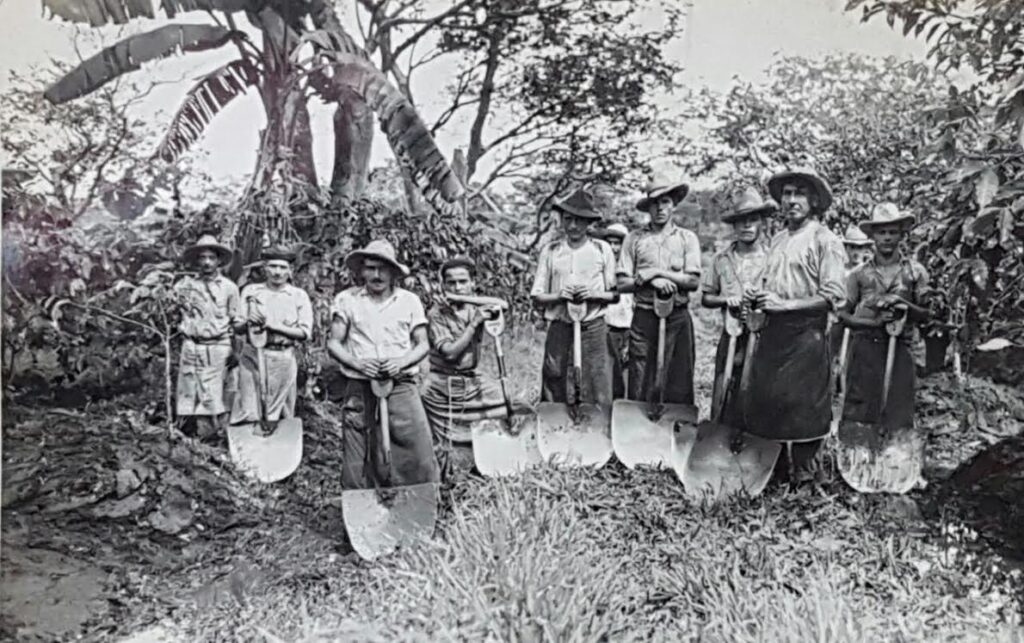
After four years of immersion in American technical culture and intellectual debate, he returned to Costa Rica in March 1928. He initially worked for a few months as a Ford automobile sales agent, but soon pooled capital with his friend Francisco Orlich to acquire agricultural properties. In 1929, he took a step that would define his adult life: he purchased a farm in San Marcos de Tarrazú (San Cristóbal de Desamparados) which he baptized with the eloquent name “La Lucha sin Fin” (The Endless Struggle). For twelve years, removed from traditional politics, he devoted himself to agriculture and industrial projects, focusing on the production of hemp sacks and cords (cabuya), coffee cultivation, and later, the manufacture of wooden articles.
It was at “La Lucha” that Figueres combined his engineer’s pragmatism with his social ideals. On his property he implemented a model of social and productive organization that was highly innovative for Costa Rica at the time, sharing profits with his workers by providing them with housing, schools, and health services. This experiment, described by some as an “almost socialist” or “utopian socialist” model, allowed him to materialize his vision that economic progress must go hand in hand with equity. During these years, the farmer and entrepreneur began publishing articles on agricultural topics and national regeneration, frequently meeting with Orlich and Martén to debate the country’s problems, thus laying the foundations of the political leader who was about to awaken.
3. First Steps and First Important Role: The 1942 Speech and the Transformative Exile
The spark that definitively transformed the farmer into a political figure of national reach was ignited by the arrival of World War II’s blows on Costa Rican territory. On July 2, 1942, the United Fruit Company ship “San Pablo” was torpedoed and sunk in Puerto Limón, presumably by a German submarine, claiming the lives of 24 workers. This event unleashed collective hysteria and, two days later, a demonstration in San José descended into violent riots in which the crowd looted businesses belonging to German, Italian, and Spanish citizens, including a warehouse belonging to “Sociedad Agrícola Industrial San Cristóbal,” a property owned by Figueres and Francisco Orlich. Faced with the authorities’ inaction, which permitted the destruction under the pretext of patriotic fervor, Figueres was seized by civic indignation and decided to act.
On July 8, 1942, Figueres rented airtime at the “Radio América Latina” station to deliver a speech that would change his life. In his address, he harshly accused the government of Rafael Ángel Calderón Guardia of incompetence, of failing to preserve public order, of squandering state funds, and of corruption. The message was so forceful that the authorities did not allow him to finish; in mid-broadcast, the Director General of Police interrupted the speech, seized the radio station, and arrested Figueres, making him the first political prisoner in the country since the Tinoco dictatorship. The official circles attempted to minimize his standing, and the then-Secretary of the Interior justified the censorship by arguing that they would not allow a “poor devil” or “unknown individual” to tarnish the name of the Republic.
The arrest triggered a historically revealing anecdote: the government, under pressure from the United States, intended to send Figueres to an American concentration camp on the false accusation of being a Nazi sympathizer. Ironically, it was the communist leader Manuel Mora Valverde — at that time an ally of the government — who intervened energetically to prevent this banishment, arguing that Figueres had been a well-known defender of the Spanish Republic and that the accusation was an infamy. Following this intervention, on July 11, 1942, Figueres was put on a plane and exiled to El Salvador, subsequently moving to Guatemala and finally settling in Mexico City.
Far from silencing him, the exile was the crucible in which his political thought and revolutionary strategy matured. In Mexico, while earning a living building fireplaces, he attended courses at the National Autonomous University of Mexico (UNAM) and observed firsthand the results of the Mexican Revolution. The fruit of this exile was the 1943 publication of his essay Palabras gastadas (Worn-Out Words), a foundational document in which he outlined his reformist ideology and what he himself called “utopian socialism.” In this work, Figueres captured his vision of a democracy in which the State must guarantee social well-being without destroying individual freedom or private property, distancing himself from both unregulated capitalism and communism.
Alongside his intellectual formation, Figueres began studying military logistics and forging tactical alliances with other Latin American exiles. In July 1943, he met with the Nicaraguan opposition figure Rosendo Argüello, and they agreed to create an international armed force to overthrow the region’s dictators, such as Anastasio Somoza in Nicaragua, Tiburcio Carías in Honduras, and Rafael Leónidas Trujillo in the Dominican Republic. This project, which years later would crystallize in Guatemala as the “Caribbean Pact” and give rise to the celebrated “Caribbean Legion,” established that the democratizing crusade should begin in Costa Rica. When Figueres finally returned to his homeland in May 1944, protected by an amnesty from the new president Teodoro Picado, he was no longer merely an indignant farmer, but the leader of a revolutionary project already in motion.
4. Key Moments in his Public Life: The War of ’48 and the Birth of the Second Republic
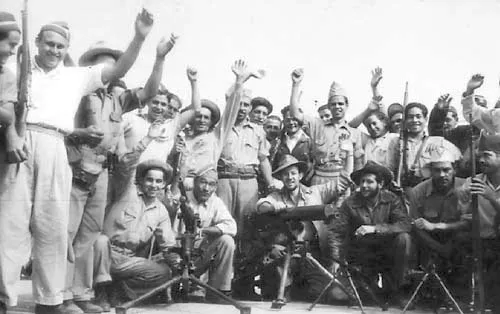
The political effervescence of the 1940s reached its boiling point in the presidential elections of February 8, 1948, in which opposition candidate Otilio Ulate Blanco faced the incumbent-backed Rafael Ángel Calderón Guardia. Although the initial results declared Ulate the winner, a mysterious fire that destroyed a large portion of the electoral ballots served as a pretext for the Congress, with its Calderonist majority, to annul the presidential elections on March 1, 1948. Faced with this decision, viewed as a rupture of the democratic order, José Figueres Ferrer moved from words to arms: on March 12, he rose up at his farm “La Lucha,” leading the newly formed National Liberation Army (Ejército de Liberación Nacional — ELN).
This outbreak ignited a bloody five-week civil war, considered the most violent event in twentieth-century Costa Rican history, with an estimated toll of more than 2,000 dead. The insurgent forces, armed with weapons brought from Guatemala and backed internationally by the “Caribbean Legion,” rapidly seized strategic positions such as San Isidro del General, Cartago, and Puerto Limón. With Figueres’s army at the gates of the capital, it became imperative to prevent a bloodbath in San José. In a crucial diplomatic and tactical maneuver, Figueres met with the communist leader Manuel Mora Valverde — whose militias were sustaining the government’s defense — at Alto de Ochomogo. In the historic “Pact of Ochomogo,” Figueres guaranteed that the social guarantees and the Labor Code achieved during the Calderón administration would not only be respected but improved, which led to the surrender of the communist forces. Hostilities formally concluded on April 19, 1948, with the Pact of the Mexican Embassy, which stipulated the departure of President Teodoro Picado.
With military victory secured, Figueres did not immediately hand power over to Otilio Ulate. Both signed the “Ulate-Figueres Pact” on May 1, by which it was agreed that a Revolutionary Junta would govern the country without a Congress for a period of eighteen months to reform the State, after which Ulate would assume the presidency. On May 8, 1948, the Founding Junta of the Second Republic was installed, a de facto government presided over by Figueres that assumed both Executive and Legislative powers, suspended the 1871 Constitution (with the exception of individual and social rights), and set about radically transforming the country.
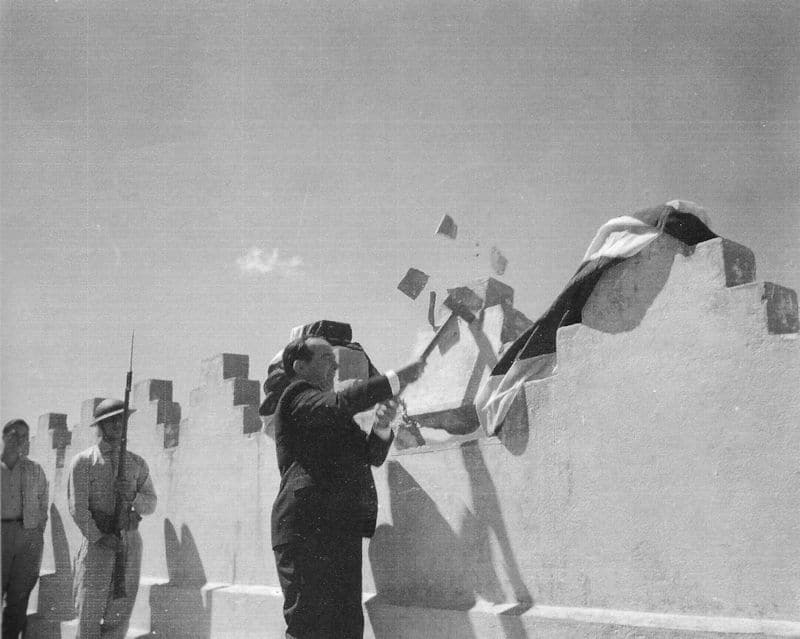
The most transcendent and globally impactful act of this period occurred on December 1, 1948. In a ceremony at the Bellavista Barracks, Figueres struck a wall of the tower with a sledgehammer and officially declared the abolition of the Costa Rican army. He handed over the keys to the barracks so that it could be converted into the National Museum, and justified that the country’s security required nothing more than a police force. This pioneering decision combined civic idealism with a pragmatic vision of the State: it eliminated the danger of future military coups and allowed the defense budget to be redirected toward education, health, and infrastructure. The mandate was given constitutional status shortly thereafter.
During his 18 months in government, the Junta implemented an ambitious and controversial institutional architecture. Particularly notable were the nationalization of private banking (December 1948) to direct credit toward development and combat the traditional oligarchy, as well as the creation of the Costa Rican Electricity Institute (Instituto Costarricense de Electricidad — ICE) in April 1949, which would resolve the energy crisis and modernize the country. Additionally, a National Constituent Assembly was convened, endowing the country with the new Political Constitution of 1949. True to the established pact, on November 8, 1949, Figueres handed power over to Otilio Ulate, closing the transitional government but leaving the irrevocable foundations of the modern Welfare State firmly in place.
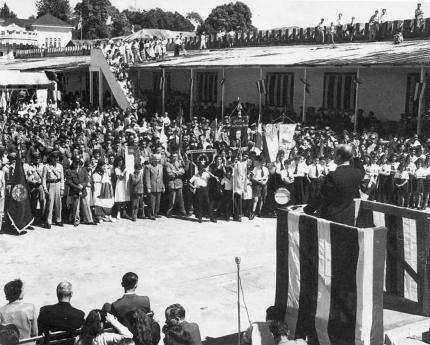
5. Conflicts, Decisions, and Challenges: Light and Shadow: Repression, Invasions, and Controversies
Despite the peace agreements reached at the end of the Civil War, the beginning of the Second Republic was marked by deep polarization and the persecution of the losing factions. Although in the Pact of Ochomogo Figueres had committed to the communist leader Manuel Mora to respect the lives and rights of his adversaries, the Junta acted with severity. Through Decree-Law No. 105, the Vanguardia Popular party and the Confederation of Workers of Costa Rica were outlawed, unleashing a wave of dismissals in the public sector, imprisonments, and forced exiles, including those of Manuel Mora and the renowned writer Carmen Lyra.
The darkest episode of this repression occurred on December 19, 1948, in what is known as the “Codo del Diablo” murders. Six political prisoners linked to Vanguardia Popular — Federico Picado, Tobías Vaglio, Lucio Ibarra, Octavio Sáenz, Narciso Sotomayor, and Álvaro Aguilar — were removed from the Limón command post and extrajudicially murdered on the banks of the Reventazón River by police authorities loyal to the new government. This crime stained the legitimacy of the peaceful transition, and its perpetrators managed to evade justice by fleeing abroad.
On the domestic front, Figueres’s bold economic reforms also earned him enemies within his own ranks. The decision to nationalize private banking and apply a 10% tax on capital provoked discontent among economically powerful sectors. This tension detonated on April 3, 1949, in what became known as the “Cardonazo,” an attempted coup d’état led by his own Minister of Public Security, Edgar Cardona Quirós. The rebels seized the Bellavista Barracks and the Artillery Barracks, demanding the reversal of the economic measures, but Figueres, demonstrating his iron authority, quickly managed to suppress the uprising.
During his first constitutional presidency, Figueres was forced to confront threats to national sovereignty. In January 1955, Calderonist forces backed by the Nicaraguan dictator Anastasio Somoza — and with the support of other dictators such as Pérez Jiménez of Venezuela and Trujillo of the Dominican Republic — invaded Costa Rica. Without a standing army, Figueres successfully turned to civilian militias and, above all, to international diplomacy. He invoked the Inter-American Treaty of Reciprocal Assistance (TIAR) before the Organization of American States (OAS), managing to repel the invasion and demonstrating that an unarmed country could defend itself effectively under the protection of international law.
In foreign policy, Figueres was a complex and at times contradictory figure. During the Cold War, he positioned himself as an anticommunist ally of the United States, but did not hesitate to criticize American imperialism when it supported military dictatorships in the region (which he called the “International of the Swords”). Paradoxically, during his third term (1970-1974), he broke with the paradigms of the era by promoting the “universalization” of international relations, establishing diplomatic and commercial ties with the Soviet Union and other Eastern European countries, in a pragmatic approach to opening new markets for Costa Rican products.
However, the final years of his public life were overshadowed by ethical controversies that undermined his image as an upright reformer. The most serious scandal was his relationship with the American financier Robert Vesco, who arrived in Costa Rica in 1972 fleeing justice in his home country for a fraud of 224 million dollars. Figueres granted him refuge and defended his presence by arguing that the country needed his massive investments, which triggered harsh criticism and investigations. To this period belongs the famous anecdote of the “confites” (candy) case: after receiving a dubious donation of 60,000 dollars for the Youth Symphony Orchestra from a bank linked to Vesco, Figueres responded to the press sarcastically, saying: “Say that I spent the $60,000 on candy.”
6. Achievements and Legacy: The Architect of Institutional Modernity
After peacefully handing power to Otilio Ulate in 1949, Figueres did not retire from public life, but instead focused on giving a lasting political structure to his reformist ideals. On October 12, 1951, at a meeting held in his native San Ramón, he founded the National Liberation Party (Partido Liberación Nacional — PLN) alongside key figures such as Francisco Orlich, Daniel Oduber, and Luis Alberto Monge. Conceived as a permanent ideological school rather than a mere electoral vehicle, the PLN established itself as the driving force of social democracy in Costa Rica. Propelled by this new political machinery, Figueres consolidated his leadership by winning elections decisively and serving two constitutional presidencies through popular vote: from 1953 to 1958, and from 1970 to 1974.
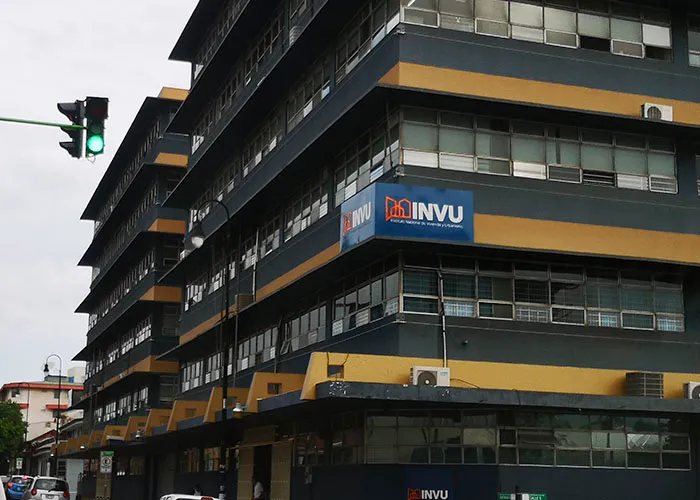
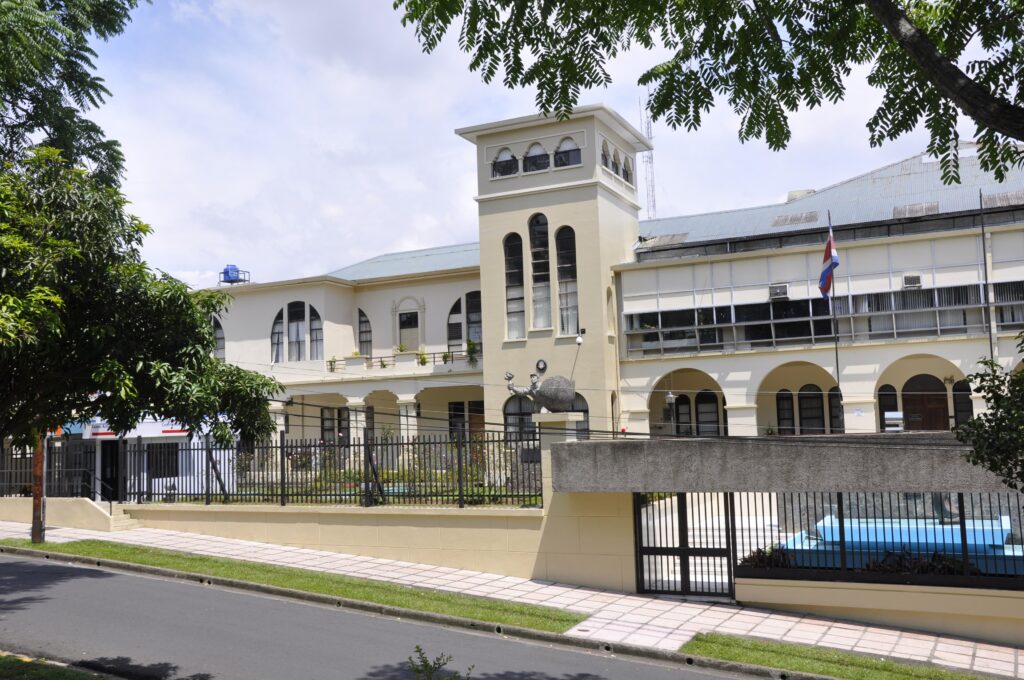
During his terms in office, “Don Pepe” became the principal architect of the Costa Rican Welfare State. His pragmatic vision led him to create a vast network of autonomous institutions designed to intervene in the economy and guarantee social mobility. To the banking nationalization and the creation of the Costa Rican Electricity Institute (ICE) achieved during his de facto government, he added transcendental foundations during his constitutional periods. In 1954 he created the National Housing and Urban Planning Institute (Instituto Nacional de Vivienda y Urbanismo — INVU) to facilitate access to adequate housing, and in 1955, the Costa Rican Tourism Institute (Instituto Costarricense de Turismo — ICT). Later, in the 1970s, he reinforced the social fabric with the creation of the Mixed Social Welfare Institute (Instituto Mixto de Ayuda Social — IMAS) and the Ministry of Culture, Youth, and Sports (1971), faithful to his conviction that economic progress was meaningless without spiritual enrichment, summarized in his celebrated phrase: “What good is a developed country, if it is vulgar?”


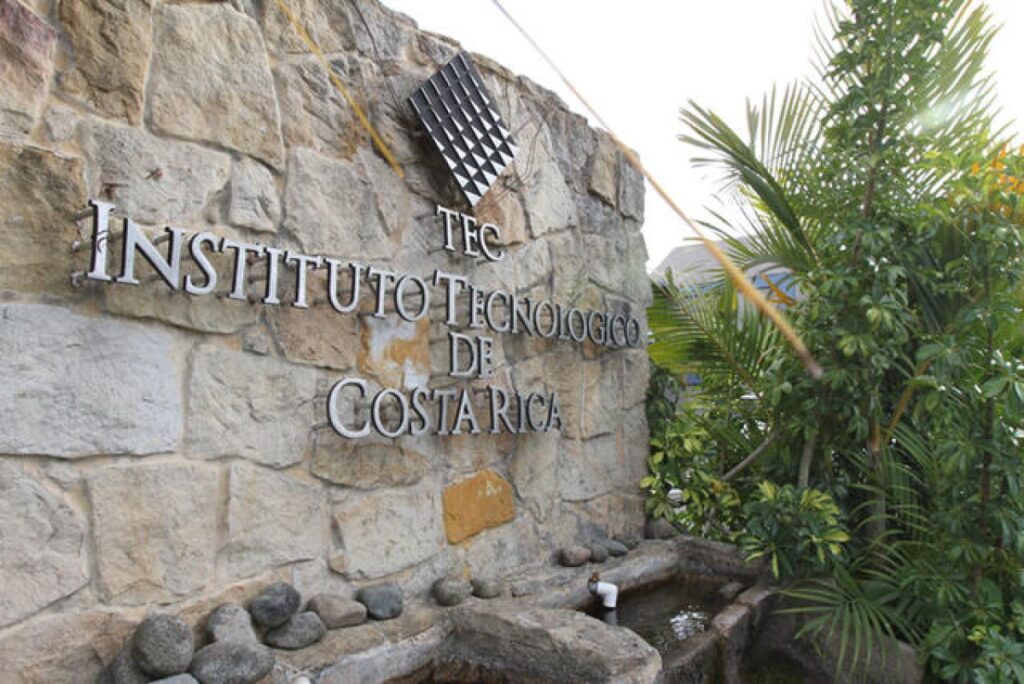
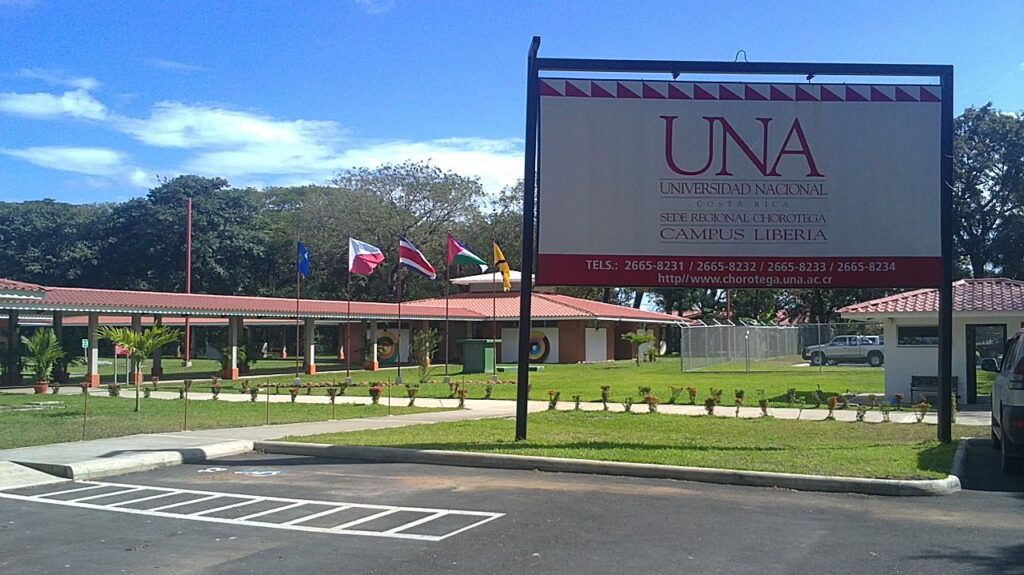
In keeping with his maxim of replacing the military army with an “army of educators,” Figueres championed a massive investment in education. An undeniable milestone of his legacy was the expansion and decentralization of public higher education during his third term. In an effort to provide the country with the professionals and technicians needed for industrialization and modern development, he decreed the creation of the Costa Rica Institute of Technology (Instituto Tecnológico de Costa Rica — ITCR) in 1971, and the founding of the National University (Universidad Nacional — UNA) in 1973.
The modernization driven by Figueres also profoundly transformed the landscape of civil rights and civic equality. The 1953 elections that brought him to his first constitutional presidency marked a historic turning point, being the first national elections in which women — whose suffrage had been approved under his transitional government in 1949 — were able to exercise their right to vote. Additionally, Figueres fulfilled his promise to eradicate the racial segregation prevalent in the country, lifting the restrictions on movement that prevented Afro-descendant and Asian citizens from leaving the coastal provinces and entering the Central Valley, and granting them full citizenship.
Decades later, reaffirming his commitment to civil rights, he enacted the Family Code in 1973, a revolutionary piece of legislation for its time that established legal equality between spouses. Through these measures, Figueres not only transformed the material and institutional infrastructure of Costa Rica, but redefined its human and democratic fabric.
7. Impact on Costa Rica and Current Projection: The Peace Dividend and the Myth of “Don Pepe”
The historical significance of José Figueres Ferrer cannot be measured solely by the wartime events or his presidential terms, but by the profound structural impact his decisions left on contemporary Costa Rica. The decision to abolish the army on December 1, 1948, generated what economists call a “peace dividend,” irreversibly altering the country’s development trajectory. Recent research demonstrates that before the abolition (1920-1949), Costa Rica’s GDP per capita grew at an average annual rate of 1.31%; after the elimination of the armed forces, this rate nearly doubled, reaching an average of 2.44% between 1951 and 2010.
This economic leap was made possible through a radical reorientation of state resources. The budget historically allocated to public security, which hovered around 10% in the 1940s, was redirected toward social investment and infrastructure. As a result, public investment in education, which averaged 15% before 1949, climbed steadily to nearly 35% of total government spending by 1969. The impact on health was equally dramatic: social insurance coverage rose from protecting 21% of the economically active population in 1949, to 66% in 1978.
At the international level, the abolition of the army completely reconfigured Costa Rica’s identity, endowing it with a civic and pacifist projection unprecedented in the world. While during the Cold War the rest of Latin America suffered dozens of coups d’état and military dictatorships, Costa Rica managed to consolidate one of the most stable and solid democracies on the continent, resolving its political differences at the ballot box rather than through arms. This reputation as a peaceful nation attracted investment, fostered ecotourism, and led the country to be chosen as the seat of prestigious global bodies, such as the Inter-American Court of Human Rights and the United Nations University for Peace.
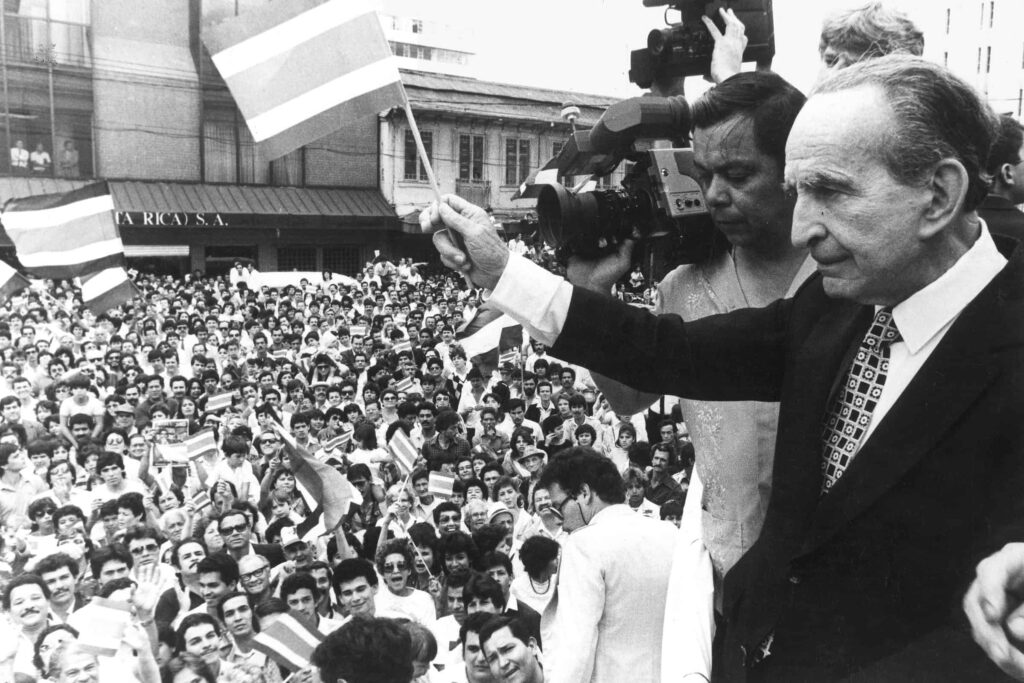
José Figueres Ferrer died in San José on June 8, 1990, at the age of 83, leaving behind an indelible legacy. His immense influence in building the modern State earned him almost immediate official recognition; on November 12 of that same year, the Legislative Assembly declared him a Distinguished Son of the Homeland (Benemérito de la Patria). Decades later, further affirming the global magnitude of his demilitarizing vision, the Costa Rican parliament honored him as a Hero of Peace in 2021.
The final assessment of “Don Pepe” reveals a pragmatic, bold, and profoundly complex leader. He was a statesman full of apparent contradictions: a staunch anticommunist who implemented deep socialist reforms, an ally of the United States who sharply criticized its imperialism, and a military caudillo who, after winning a war, decided to destroy his own army and hand power over to a civilian government. Although his figure does not escape the shadows of history — marked by the political repression of the postwar period, the unresolved murders of “Codo del Diablo,” and controversial associations in his later years such as the “Vesco Affair” — it is undeniable that Figueres was the master architect of the Second Republic. His vision replaced rifles with books and trenches with institutions, laying the foundations of the paradigm of peace, equity, and human development that defines Costa Rica before the world today.
For the elaboration of the biography of José Figueres Ferrer (“Don Pepe”), information was consulted and synthesized from the following list of sources and references — historical, documentary, and academic — provided in your notebook:
Biographical Profiles and Encyclopedias
Wikipedia, the free encyclopedia: Articles on José Figueres Ferrer, detailing his life, exile, political work, marriages, institutional achievements, and declarations as Benemérito de la Patria and Hero of Peace. Enciclopédia Latinoamericana: Article Figueres Ferrer, José, which contributed details about his Catalan roots, his studies at MIT, the founding of “La Lucha sin Fin,” and his vision of a mixed economy and social democracy. Museo Nacional de Costa Rica: Gallery of Former Presidents: José Figueres Ferrer, which highlights his role as a great institutional reformer and creator of entities such as INVU, IMAS, UNA, and the museum itself at the Bellavista Barracks. Partido Liberación Nacional (PLN): Official profile of José Figueres, used to list his main achievements during his administrations and the founding of the party. Municipalidad de Desamparados and Municipalidad de Heredia: Biographical summaries of José María Hipólito Figueres Ferrer covering his life, early career, and national impact.
Academic Articles, Reports, and Historical Essays
The Political Architecture of the Second Republic: A Comprehensive Analysis of José Figueres Ferrer and the Institutional Modernization of Costa Rica: A key document that analyzes in depth his thinking (utopian socialism), banking nationalization, the long-term effects of the abolition of the army, and the Robert Vesco scandal. Una lectura crítica de don José Figueres Ferrer (Revista Diálogos, Universidad de Costa Rica): Essay by Gerardo Contreras offering a critical perspective on the 1948 Civil War, the Pact of Ochomogo, the decree proscribing the Vanguardia Popular (communist) party, and the repression during the Junta government. La abolición del ejército y su entorno: una revisión de las circunstancias y personajes de la crisis del 48 (Poder Judicial): Article by Carolina Rojas-Fonseca contextualizing the ferment of the 1940s, the impact of World War II (including the sinking of the “San Pablo”), Figueres’s 1942 speech, and the strategic justifications for eliminating the army. José Figueres Ferrer: El hombre, el político, el estadista (El Espíritu del 48): Document describing his extensive participation in foreign policy, his fight against dictatorships (Caribbean Legion), the publication of Palabras gastadas, and his leadership.
Abolition of the Army and its Economic Impact
Ministerio de Planificación Nacional y Política Económica (Mideplan): Article Abolición del ejército aumentó un punto el crecimiento del PIB per cápita de Costa Rica, essential for documenting the “peace dividend,” the increase in economic growth (from 1.31% to 2.44%), and the reallocation of budgets toward health and education. Wikipedia: Article Abolición del ejército de Costa Rica.
Civil War of 1948 and the Founding Junta of the Second Republic
Wikipedia: Articles on the Costa Rican Civil War of 1948 and the Founding Junta of the Second Republic, providing dates, the armed uprising, the pacts, and the reforms of the 18 months of de facto government, such as banking nationalization, the creation of ICE, and women’s suffrage. Tribunal Supremo de Elecciones (TSE — YouTube): Transcript of the forum 75 años de la Guerra Civil de 1948 y del Pacto de la Embajada de México en Costa Rica, providing context on social guarantees and the agreements to prevent further bloodshed.
Controversies (Codo del Diablo and the Vesco Affair)
Wikipedia: Articles on the Asesinatos del Codo del Diablo (in Spanish and English), used to document the extrajudicial murder of Vanguardia Popular leaders in December 1948. Asociación Nacional de Empleados Públicos y Privados (ANEP): Article Robert L. Vesco y José Figueres Ferrer, providing details on the refuge granted to the American financial fugitive, his large-scale investments, and the criticism of the Figueres administration. YouTube (Guillermo Carvajal Alvarado): Transcript of the video Robert Lee Vesco el hombre que compró una república, expanding on the controversy surrounding the funds that entered Costa Rica in the 1970s (including the famous “confites” anecdote).