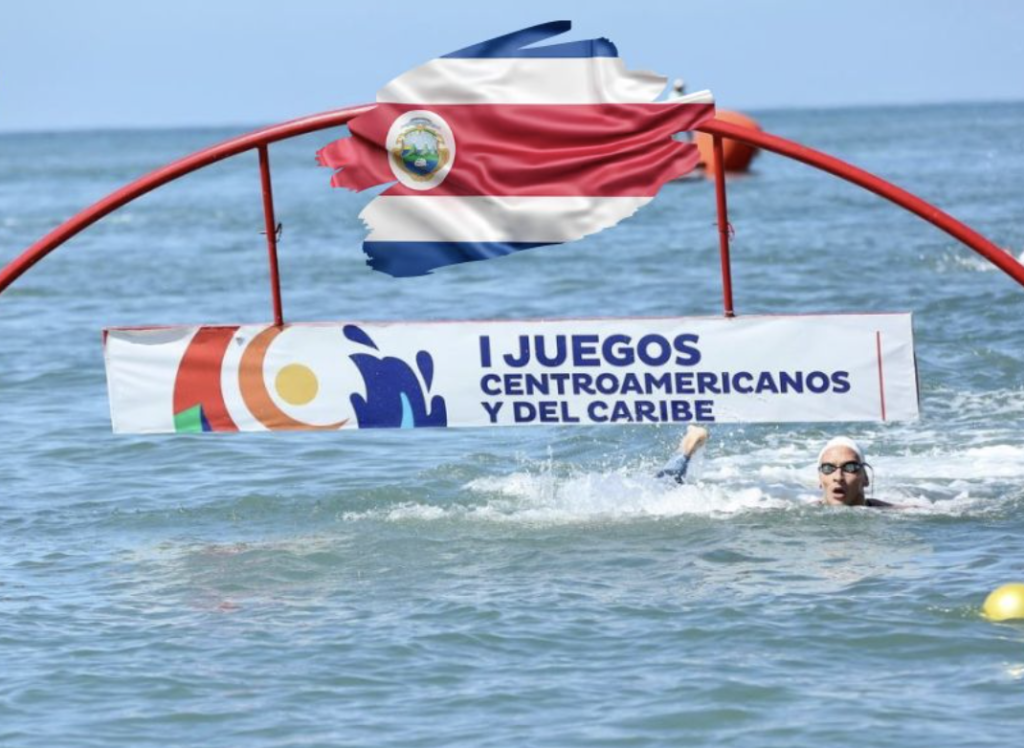
The Costa Rican delegation concluded its participation in the 2026 Central American and Caribbean Games in Santo Domingo with one of the strongest performances in its history.
Costa Rica finished the competition with 26 medals: five gold, six silver, and 15 bronze, once again placing the country among the region’s most competitive sporting delegations.
The Games took place in the Dominican Republic from July 24 to August 8, bringing together thousands of athletes from Central America and the Caribbean across 40 sports. The 2026 edition was particularly significant as it marked the centennial of the creation of these regional Games.
Five Gold Medals for a Historic Delegation
Costa Rica’s five gold medals matched the country’s second-best historical record in this competition.
The mark had previously been achieved in Ponce, Puerto Rico, in 1993. Costa Rica’s record remains the 11 gold medals won at the 1986 Games in Santiago de los Caballeros. Swimmer Sylvia Poll played a remarkable role in that achievement, winning 10 of those titles.
In Santo Domingo, Costa Rica’s five gold medals came from different sports, reflecting the diversity of the country’s sporting talent.
The champions were Jaycee Bassett, in the under-47 kg taekwondo category; Neshy Lindo, also in taekwondo, in the under-57 kg category; Rachel Agüero, in women’s shortboard surfing; Alondra Ortiz, in the 200-meter butterfly; and the mixed doubles pair of Andrés Acuña and Larissa Faeth, in racquetball.
Racquetball Became the Country’s Biggest Medal Contributor
One of the delegation’s biggest successes came from racquetball.
The sport contributed seven medals: one gold, one silver, and five bronze, making it the discipline that brought Costa Rica the most medals during the Games.
Among its standout athletes was 16-year-old Larissa Faeth, who finished the Games with four medals: one gold and three bronze.
Andrés Acuña, one of Costa Rica’s leading racquetball players, also delivered an outstanding performance. He won four medals: one gold, one silver, and two bronze.
Acuña and Faeth’s mixed doubles victory was particularly significant. The Costa Rican pair defeated Mexico in the final to claim one of the delegation’s most important titles.
Taekwondo Produced Two Champions
Taekwondo was the discipline that delivered the most gold medals for Costa Rica.
Jaycee Bassett became champion in the under-47 kg category, while Neshy Lindo secured Costa Rica’s second taekwondo title in the under-57 kg category.
These results confirm the growth of a discipline that has become one of the country’s important sources of international sporting success.
Beyond the gold medals, the competition in Santo Domingo gave Costa Rican athletes the opportunity to face some of the region’s strongest competitors and gain valuable experience at the international level.
Rachel Agüero Makes History in Surfing
Surfing once again played an important role for Costa Rica.
Rachel Agüero won the gold medal in women’s shortboard surfing, becoming the first Costa Rican woman to win a surfing title in the history of the Central American and Caribbean Games.
The victory carries particular significance for a country whose sporting and cultural identity is closely connected to its coastlines.
Costa Rican surfing has gained increasing international recognition in recent years, and the results in Santo Domingo highlight the emergence of a new generation of athletes.
A Gold Medal from the Pool
Swimming also contributed one of Costa Rica’s five gold medals.
Alondra Ortiz Román won the 200-meter butterfly in a time of 2:13.73, adding another gold medal to the national delegation’s total.
The result once again placed Costa Rican swimming at the center of the country’s performance at Games that have historically featured important national swimming champions.
Athletics and Gymnastics Also Made Their Mark
Costa Rica’s medal haul was not limited to gold.
In athletics, Iván Sibaja won silver in the men’s 800-gram javelin throw and set a new Central American record.
Gymnastics also delivered strong performances.
In artistic gymnastics, Costa Rica won three medals: Rachel Rodríguez took silver in the uneven bars, Ariel Villalobos won bronze on the rings, and Samantha Marín earned another bronze on the floor exercise.
In rhythmic gymnastics, Gloriana Sánchez added two bronze medals, in the hoop and ribbon events, despite competing after suffering a knee injury.
A Performance That Confirms the Growth of Costa Rican Sport
The result becomes even more significant when compared with Costa Rica’s previous performance.
At the 2023 Games in San Salvador, Costa Rica won 33 medals, including four gold, nine silver, and 20 bronze, establishing what was then the country’s best-ever performance at the Central American and Caribbean Games.
Although the total medal count was lower in Santo Domingo 2026, the number of gold medals increased from four to five.
The 2026 delegation was also considerably smaller. Costa Rica competed with approximately 268 athletes across 28 sports and disciplines, compared with a delegation of around 350 athletes in San Salvador 2023.
The result therefore cannot be measured solely by the total number of medals. The number of titles and the range of sports represented on the podium also demonstrate the competitiveness achieved across different disciplines.
A New Generation Takes the Spotlight
One of the most interesting aspects of Santo Domingo 2026 was the presence of young athletes among the delegation’s leading performers.
Larissa Faeth, at just 16 years old, was one of the major revelations after winning four medals. Her performance highlights the emergence of a new generation of athletes beginning to compete at the highest regional level.
The combination of young athletes and established competitors allowed Costa Rica to maintain a consistent presence on the podium.
These results are also part of a broader sporting cycle, with several disciplines using Santo Domingo as an important stage for preparation and qualification for future international competitions.
A Participation That Leaves New Benchmarks
The 2026 Central American and Caribbean Games officially concluded on August 8 after two weeks of competition. The organizing committee reported the participation of thousands of athletes from 37 countries and territories across a program featuring 40 sports.
For Costa Rica, the final balance was five regional champions, 26 medals, and several notable records and individual performances.
Beyond the medal table, the results highlight several sports that currently represent particular strengths for the country. Racquetball, taekwondo, surfing, swimming, and gymnastics were among the delegation’s strongest performers.
A Medal Haul Looking Toward the Future
Santo Domingo 2026 has now become part of Costa Rica’s sporting history.
The five gold medals matched the country’s second-best historical total at the Central American and Caribbean Games, while the 26 medals confirm that Costa Rica continues to find opportunities for success in sports that extend far beyond football.
The next challenge will be to build on this generation of athletes, strengthen development programs, and turn regional success into new opportunities at world championships, Pan American Games, and eventually the Olympic Games.
For now, Santo Domingo leaves behind a clear figure: 26 medals and five regional champions who carried Costa Rica’s name to the podium.
Sources
Santo Domingo 2026 Central American and Caribbean Games: Official event website, results, medal table, and organizing committee information.
La República: Coverage of Costa Rica’s final performance, medal count, and leading individual results.
ICODER — Costa Rican Institute of Sport and Recreation: Institutional information on Costa Rican sport and athlete development programs.
Costa Rican National Olympic Committee: Institutional reference for the Costa Rican delegation and its participation in the Olympic cycle.
Delfino / La Jornada: Coverage of Costa Rican results in Santo Domingo 2026, including racquetball, surfing, swimming, and equestrian sports.