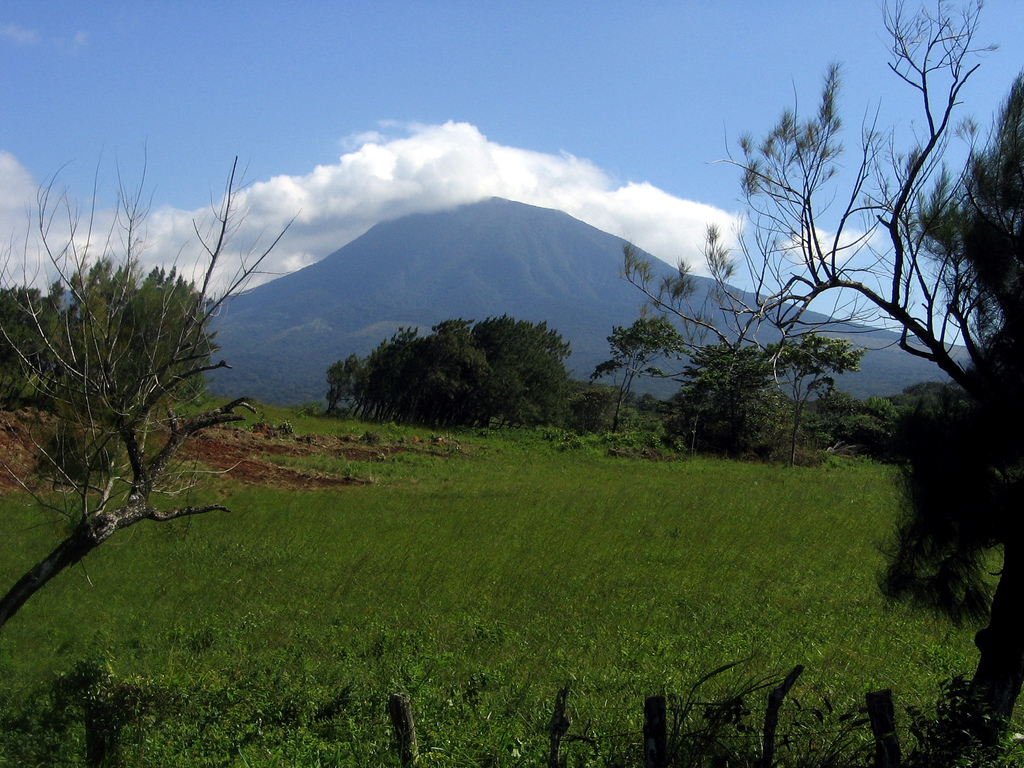
Rincón de la Vieja Volcano, located in Guanacaste Province, has experienced a notable increase in activity during the first days of September, with multiple eruptions occurring over a short period and lahars generated in connection with some of these events.
The activity has been continuously monitored by the Observatorio Vulcanológico y Sismológico de Costa Rica of the National University (OVSICORI-UNA), which is responsible for monitoring volcanic and seismic activity across the country.
A Series of Eruptions Within Just a Few Days
According to reports released in early September, Rincón de la Vieja recorded at least 20 eruptions between Friday and Tuesday morning, within a period of only a few days. Another event was subsequently reported, bringing the number of explosions even higher during this period of increased activity.
One of the eruptions produced a column that rose approximately 1,000 meters above the crater, according to information based on volcanic monitoring.
The succession of events has drawn particular attention because of their frequency. Rincón de la Vieja is an active volcano and phreatic explosions are part of its known behavior, but a high concentration of events over such a short period requires close monitoring by specialists.
OVSICORI-UNA maintains several monitoring systems, including volcanic cameras, seismic stations, gas measurements and regular activity reports.
Lahars Are One of the Main Hazards
One of the phenomena that specialists have highlighted during this period of activity is the possibility of lahars, flows made up of water mixed with volcanic sediments and other material that can move rapidly through river channels originating on the volcano.
During the first days of September, lahars associated with eruptive activity at Rincón de la Vieja were reported. This is particularly important because the effects of an eruption are not necessarily limited to the immediate area surrounding the crater.
The volcanic massif also plays an important role in the region’s water network. According to information from the National System of Conservation Areas (SINAC), Rincón de la Vieja forms part of the watershed dividing the Caribbean and Pacific slopes in northwestern Costa Rica, and 32 rivers originate in the surrounding area.
For this reason, monitoring both the volcano and nearby waterways is essential when assessing potential impacts on surrounding communities and areas.
A Volcano Known for Frequent Activity
Rincón de la Vieja is one of Costa Rica’s active volcanoes and forms part of a volcanic complex located in the Guanacaste mountain range.
Its activity includes phreatic explosions, gas and steam emissions, and other changes associated with the volcano’s hydrothermal system. According to records compiled by the Smithsonian Global Volcanism Program from OVSICORI-UNA reports, eruptive activity at the complex has continued since 2021.
Phreatic eruptions occur when water within a volcano’s hydrothermal system becomes heated and pressure increases until an explosion takes place. These events can eject water, steam, gases, sediments and fragments of rock without necessarily involving new magma reaching the surface.
The National Seismological Network of the University of Costa Rica explains that volcanoes in the country can display different types of eruptive activity, and Rincón de la Vieja has historically experienced several forms of volcanic activity.
Monitoring Helps Track Changes in the Volcano
Volcanic activity cannot be predicted with the same precision as a weather event. Scientific monitoring therefore focuses on detecting changes in different parameters that may indicate a shift in the behavior of the volcanic system.
OVSICORI-UNA operates volcanic cameras, seismic stations, gas-monitoring equipment and other systems designed to follow volcanic activity. Its reports and bulletins make it possible to track how these processes evolve over time.
For Rincón de la Vieja, this monitoring is particularly important because of the frequency of its explosions and the possibility that certain events may generate sediment flows through nearby waterways.
A National Park Shaped by Volcanic Activity
The volcano lies within the protected area associated with Rincón de la Vieja National Park, managed by SINAC.
The park includes the Las Pailas and Santa María sectors, where visitors can find a variety of volcanic features, as well as trails, waterfalls, hot springs and other natural environments.
This combination of volcanic activity, forests and water sources makes the area one of the most distinctive natural landscapes in Guanacaste.
Volcanic activity is also part of the natural processes that have helped shape the region’s landscapes. However, conditions can change quickly, and areas near the craters and waterways associated with the volcano require particular attention during periods of increased activity.
Monitoring Continues
The succession of eruptions recorded during the first days of September is another reminder that Rincón de la Vieja remains an active volcanic system.
The evolution of the situation will depend on how the volcano behaves and on the data collected through scientific monitoring systems. OVSICORI-UNA continues to provide information through its volcanic activity reports, cameras and monitoring bulletins.
For people living or carrying out activities near the volcano, the most important recommendation is to follow official communications and respect any access restrictions established in areas considered at risk.
Sources: Observatorio Vulcanológico y Sismológico de Costa Rica (OVSICORI-UNA), National System of Conservation Areas (SINAC), National Seismological Network (RSN-UCR) and the Smithsonian Global Volcanism Program.