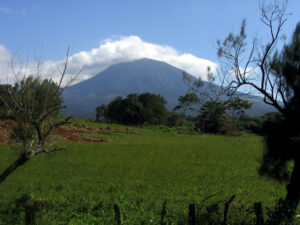
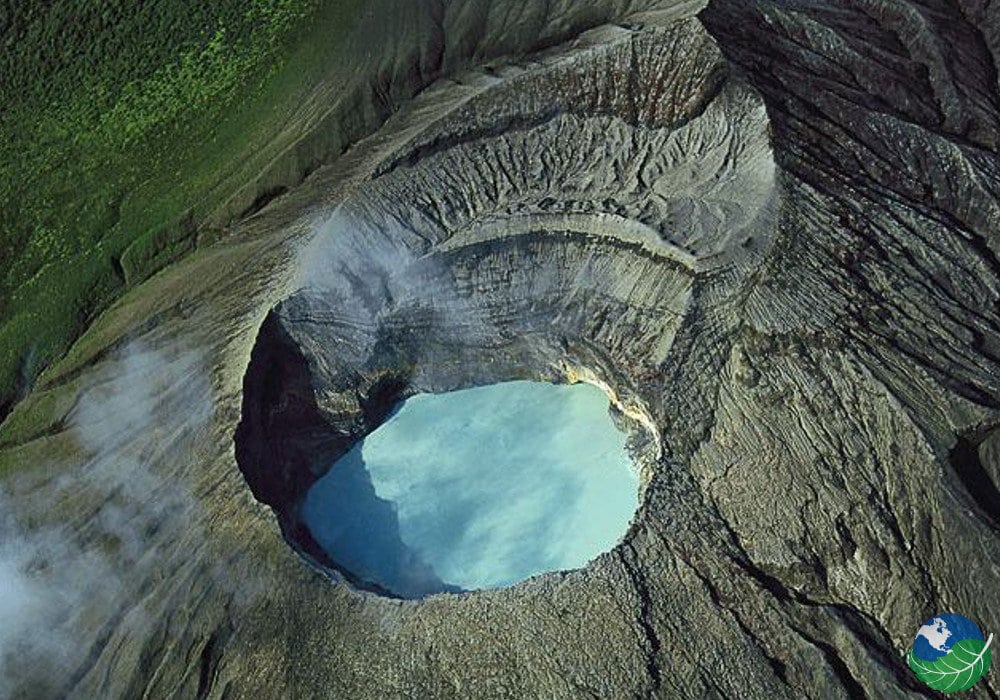
The Rincón de la Vieja volcano has entered a new phase of increased volcanic activity, prompting authorities to raise its activity level from Level 2, “Warning,” to Level 3, “Precaution.”
The change follows a sustained increase in eruptive activity during July, with monitoring data showing dozens of phreatic eruptions and several lahars descending the northern slopes of the volcano.
The Rincón de la Vieja volcanic complex is located in northwestern Costa Rica, within the Guanacaste Range, and is one of the country’s most active volcanic systems. Its activity is continuously monitored by the Volcanological and Seismological Observatory of Costa Rica of the National University (OVSICORI-UNA).
38 Phreatic Eruptions Recorded in July
According to information from OVSICORI-UNA, 38 phreatic eruptions were recorded between July 2 and July 24, 2026.
Phreatic eruptions occur when water inside or beneath a volcanic system is rapidly heated and converted into steam. The resulting pressure can cause explosions that eject water, sediments, rocks, gases and other material without necessarily involving the direct ascent of magma.
Three of the July eruptions generated lahars, fast-moving mixtures of water, volcanic mud, rocks and sediment that traveled down rivers on the northern side of the volcano.
The recent activity is not limited to isolated explosions. Scientists have also detected volcano-tectonic earthquakes, including a small seismic swarm recorded on June 28, as well as a gradual increase in sulfur dioxide emissions since mid-June.
Taken together, these observations led OVSICORI-UNA to increase the volcanic activity level to Level 3, or “Precaution.”
Recent Eruptions and Lahars
The increase in activity has been accompanied by several notable events.
Between July 16 and 22, OVSICORI-UNA reported minor eruptive activity. On July 19, a phreatic eruption lasting approximately 30 seconds generated lahars on the northern flank of the volcano.
On July 23, seismic and acoustic signals lasting around 30 seconds were also detected. Although the available webcams could not confirm whether an eruption had occurred at that moment, the signals showed two distinct acoustic pulses.
At that stage, the activity level was still classified as Level 2, Yellow, before the subsequent increase to Level 3.
These events illustrate why monitoring the volcano involves much more than simply observing visible eruptions. Scientists combine seismic, acoustic, geodetic, gas, camera and field observations to evaluate changes occurring inside the volcanic system.
Why Are Lahars a Particular Concern?
One of the main hazards associated with Rincón de la Vieja is the possibility of lahars.
Because the volcano contains a crater lake and hydrothermal systems, eruptive activity can rapidly mobilize water, mud and volcanic sediments. Heavy rainfall can also contribute to the movement of loose material down the volcano’s drainage systems.
The northern rivers, including the Pénjamo and Azul, have historically been affected by volcanic material.
The National Commission for Risk Prevention and Emergency Response (CNE) has repeatedly warned communities and visitors about the danger of approaching river channels following volcanic activity.
For this reason, an increase in volcanic activity does not necessarily mean that an eruption is imminent. It does mean that certain hazards can become more likely and that people in potentially exposed areas need to pay close attention to official instructions.
A Volcano That Is Constantly Monitored
Rincón de la Vieja is considered one of the most active volcanoes in Costa Rica.
Its behavior can change over relatively short periods, which makes continuous monitoring essential. OVSICORI-UNA uses several types of instruments to follow the volcano, including seismic and acoustic stations, geodetic equipment, gas sensors and surveillance cameras. Field observations are also incorporated into the assessment.
The CNE works alongside scientific institutions and local emergency committees to prepare communities located around the volcano.
This system allows authorities to assess changes in volcanic activity and determine whether additional preventive measures are necessary.
What Does the New Level Mean?
The increase from Level 2 to Level 3 should be understood as a precautionary measure, not as a prediction that a major eruption is about to occur.
The higher level reflects the fact that several indicators have changed simultaneously and that OVSICORI-UNA considers it possible that additional eruptions could occur, including events of similar or greater intensity than those already recorded.
For residents and visitors, the most important recommendation is therefore to follow information issued by official institutions rather than relying on social media reports or speculation.
The CNE has previously emphasized the importance of using primary official sources such as OVSICORI-UNA, the National Seismological Network of the University of Costa Rica (RSN-UCR) and the CNE itself when seeking information about volcanic activity.
The National Park Remains an Important Natural Area
Despite its volcanic activity, the Rincón de la Vieja National Park remains one of the most remarkable protected areas in northwestern Costa Rica.
The park encompasses a remarkable combination of ecosystems, ranging from dry forest to humid and cloud forests, together with numerous volcanic manifestations such as fumaroles, boiling mud pools, hot springs and areas of volcanic activity.
The park is divided into two main visitor areas, Las Pailas and Santa María, each offering different landscapes and attractions.
SINAC currently provides specific visiting schedules and access conditions for each sector. Visitors are required to remain on designated trails and follow the safety rules established by park authorities.
The volcanic landscape is precisely one of the features that makes Rincón de la Vieja so distinctive. But it is also a reminder that this is a living geological environment whose conditions can change.
What Visitors Should Keep in Mind
Anyone planning to visit the area should check the latest information from SINAC and the official volcanic monitoring institutions before traveling.
The park authorities recommend staying on designated trails, carrying sufficient water, using appropriate footwear and respecting access restrictions.
Particular caution is required around volcanic manifestations and waterways. The park’s own safety information notes that strong rainfall, thunderstorms, heavy cloud cover and strong winds can affect access and hiking conditions.
The current increase in volcanic activity makes it especially important not to approach restricted areas, river channels or the summit in search of a closer view of volcanic phenomena.
A Reminder of the Dynamic Nature of Guanacaste’s Landscape
The latest changes at Rincón de la Vieja highlight the extraordinary geological activity that continues to shape Guanacaste.
The volcano is simultaneously a protected natural area, an important source of scientific information and a landscape deeply connected to local communities.
Its current activity is being closely monitored, and the new precaution level reflects a decision based on scientific observations rather than speculation.
For residents, travelers and nature enthusiasts, the message is straightforward: Rincón de la Vieja remains a remarkable place to discover, but its volcanic environment must always be approached with respect, preparation and attention to official guidance.