A judicial ruling temporarily halting project development
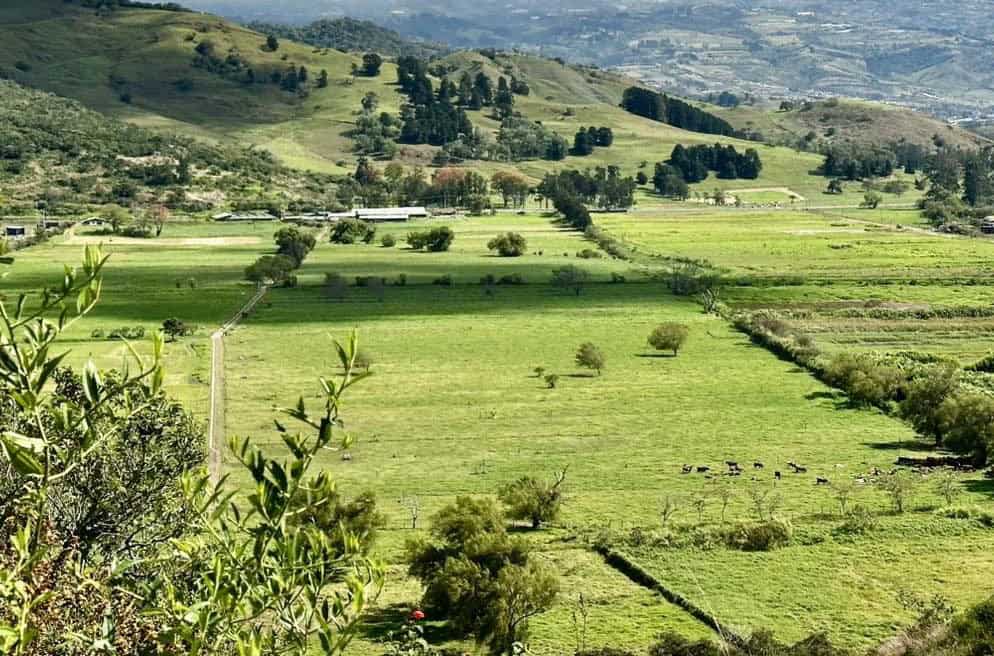
The Constitutional Chamber of Costa Rica (Sala Constitucional) has ordered the National Environmental Technical Secretariat (SETENA) to maintain the suspension of construction works for the Hybrida Farms project in Coris. The measure remains in place while the merits of the case are reviewed, in a process assessing potential environmental impacts linked to the agricultural development.
The decision reinforces the preventive nature of Costa Rica’s environmental legislation, where judicial authorities can intervene when there are reasonable doubts about a project’s environmental impact.
What SETENA is and its role in environmental assessment
SETENA is the body responsible for evaluating and approving the environmental impact of public and private projects in Costa Rica. Its main function is to ensure that productive activities comply with national environmental regulations.
Its responsibilities include:
- Evaluation of environmental impact studies
- Issuance of environmental feasibility permits
- Monitoring compliance with mitigation measures
- Coordination with other environmental institutions
In this case, the suspension indicates that the environmental review process remains under judicial scrutiny.
The intervention of the Constitutional Chamber
The Constitutional Chamber, also known as Sala IV, is the body responsible for protecting fundamental rights in Costa Rica, including the right to a healthy and ecologically balanced environment.
Its intervention in this case is based on the need to prevent potential environmental damage while determining whether the project complies with current regulations.
Such decisions are typically precautionary measures, intended to avoid irreversible impacts while the case is resolved.
The importance of the precautionary principle in environmental law
This case falls under the precautionary principle, one of the pillars of environmental law. It states that when there is scientific uncertainty about potentially serious or irreversible harm, authorities must take preventive action.
In practice, this means a project can be suspended if there are reasonable doubts about its environmental impact, even without proven damage.
Key elements include:
- Prevention of environmental damage
- Early action under uncertainty
- Protection of vulnerable ecosystems
- Priority of environmental protection in critical cases
Balancing development and environmental protection
This judicial decision reflects the ongoing balance between economic development and environmental protection in Costa Rica.
The country has historically followed a sustainable development model, where productive activities must coexist with environmental conservation.
Agricultural, industrial, and tourism projects must comply with strict regulations to minimize their impact on soil, water, and biodiversity.
Impact on rural development projects
The suspension of works may affect project planning, especially in rural areas where agriculture and real estate development are common activities.
Possible impacts include:
- Delays in private investments
- Review of environmental permits
- Increased technical scrutiny
- Strengthening of institutional oversight
However, it also reinforces environmental legal certainty by ensuring compliance with regulations.
The role of environmental law in Costa Rica
Costa Rica is internationally recognized for its advanced environmental legal framework. The Constitution guarantees the right to a healthy environment, allowing the Constitutional Chamber to intervene when this right may be at risk.
This approach has made the country a global reference in environmental protection and socio-environmental conflict resolution.
A case still under review
The suspension of works does not represent a final ruling on the Hybrida Farms project, but rather a temporary measure while its legality and environmental impact are assessed.
The case remains under review by the relevant authorities, and the final outcome will depend on technical and legal evaluations.
Official sources consulted
Constitutional Chamber of the Supreme Court of Justice of Costa Rica (Sala IV)
National Environmental Technical Secretariat (SETENA)
Ministry of Environment and Energy of Costa Rica (MINAE)
Attorney General’s Office – environmental law division
University of Costa Rica (UCR) – environmental law studies
Convention on Biological Diversity (CBD) – international environmental principles