A discovery that expands our understanding of the marine past
The discovery of ancient sea turtle fossils along the coast of Chile is providing new insights into the evolution of these remarkable reptiles and the marine ecosystems that existed millions of years ago.
The fossil remains, studied by paleontologists, are helping researchers reconstruct what the oceans looked like during different geological periods and better understand the diversity of species that once inhabited the Pacific Ocean.
This type of research highlights the importance of paleontological heritage in uncovering the natural history of our planet.
Sea turtles have a history spanning millions of years
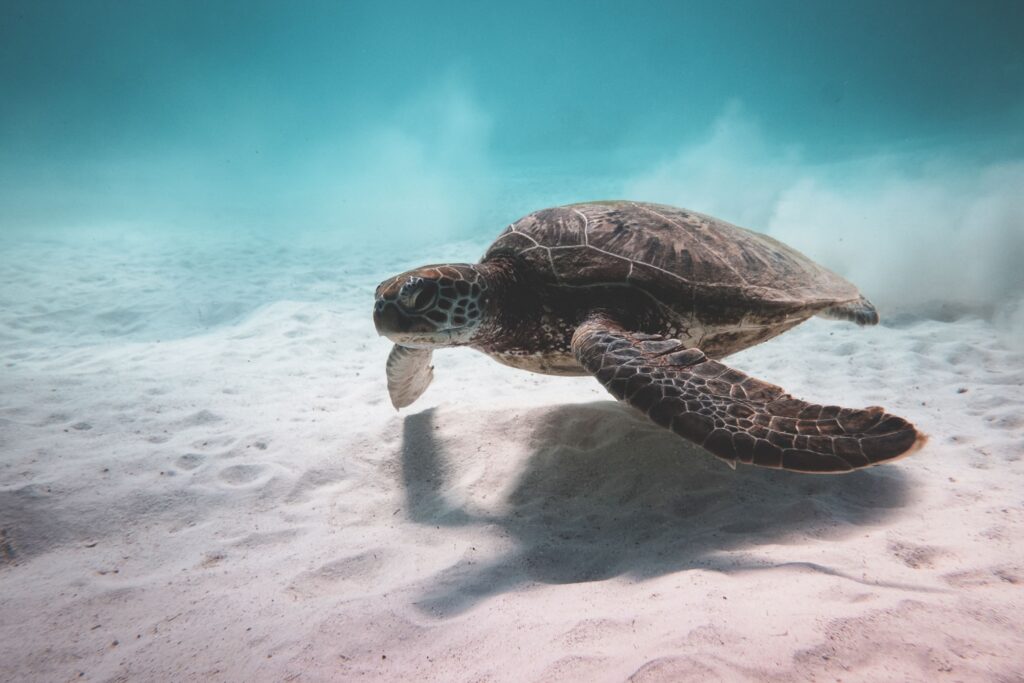
Sea turtles belong to one of the oldest groups of reptiles still living today.
Their ancestors appeared more than 100 million years ago and survived major climate shifts, continental movements, and mass extinction events that dramatically reshaped life on Earth.
Fossils allow scientists to trace the evolution of these species and understand how they developed adaptations for swimming, feeding, and reproducing in marine environments.
Today, seven species of sea turtles exist worldwide, all of which play important ecological roles.
Fossils tell the story of ancient oceans
Every fossil preserves valuable information about the environment in which an organism lived.
By studying bones, shells, and the surrounding sediments, scientists can learn about:
- The age of the specimens.
- Past climatic conditions.
- Ancient marine ecosystems.
- The historical distribution of species.
- Environmental changes over millions of years.
These studies help reconstruct the evolutionary history of numerous marine animal groups.
Paleontology helps us understand today’s biodiversity
Although paleontology focuses on extinct organisms, it also provides valuable information for conserving living species.
Understanding how animals responded to environmental changes in the past helps scientists better predict how species may react to challenges such as:
- Climate change.
- Ocean transformation.
- Sea-level fluctuations.
- Changes in food availability.
This knowledge contributes to improving marine conservation strategies.
A scientific heritage that deserves protection
Paleontological sites represent an important scientific, educational, and cultural heritage.
Illegal fossil collecting, site degradation, and unauthorized fossil trade threaten this heritage because every discovery contains unique information that cannot be replaced once lost.
For this reason, many countries have enacted laws to protect fossil resources and ensure they are studied by qualified scientific institutions.
A connection with Costa Rica’s sea turtles
Costa Rica is home to some of the world’s most important sea turtle nesting beaches, including species such as the leatherback (Dermochelys coriacea), green turtle (Chelonia mydas), hawksbill (Eretmochelys imbricata), and olive ridley (Lepidochelys olivacea).
Studying fossils helps scientists better understand the long evolutionary history of these animals while emphasizing the importance of protecting today’s populations, many of which face threats including pollution, habitat loss, bycatch, and climate change.
Scientific research continues to uncover Earth’s history
Every new paleontological discovery adds another piece to the complex puzzle of life’s evolution.
The fossils discovered along the South American Pacific coast provide valuable insights into how sea turtles evolved and how ocean ecosystems changed over millions of years.
Beyond expanding scientific knowledge, these discoveries highlight the importance of protecting both fossil heritage and the marine species that continue to inhabit our oceans today.
Official sources consulted
- National Museum of Natural History of Chile (MNHN)
- National Cultural Heritage Service of Chile
- International Union for Conservation of Nature (IUCN)
- United Nations Educational, Scientific and Cultural Organization (UNESCO)
- Convention on International Trade in Endangered Species of Wild Fauna and Flora (CITES)
- IUCN Marine Turtle Specialist Group