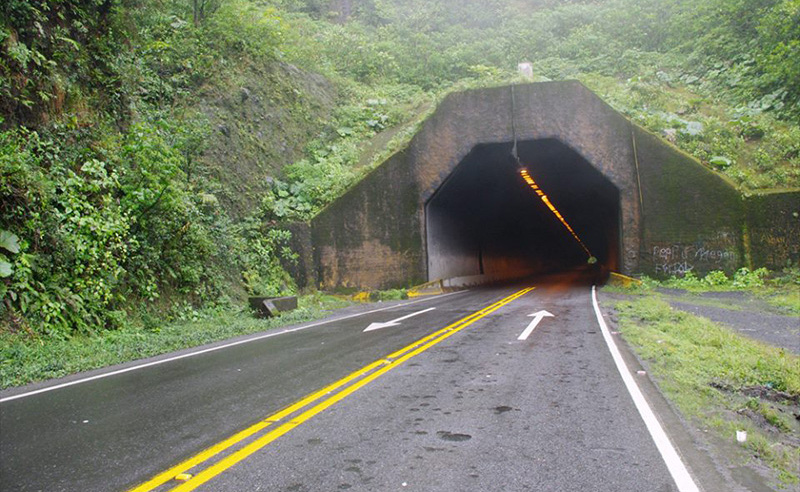
A 2,500-ton rock and severe weather have halted the Caribbean economy and tested the patience of thousands of drivers.
Route 32 is more than just a highway; it is the vital artery connecting the Central Valley to the province of Limón. It serves as the primary conduit for the country’s import and export trade and the daily passage for thousands of people.
However, this artery has now been severed for an entire week.
The pass has remained completely closed for seven days at kilometer 31. The cause is a landslide that has left a rock of gigantic proportions, estimated at 2,500 tons, in an unstable position above the road.
The most frustrating problem for drivers and producers is not just the closure, but the uncertainty. The Ministry of Public Works and Transport (MOPT) reported this Monday that a reopening date still cannot be defined. The weather, with heavy rains and strong winds in the area, has become the main obstacle to stabilization efforts.
The True Cost of the Wait
The impact of this closure is measured in millions of colones and hours of frustration. The consequences directly affect the country’s finances and people’s lives.
The Economic Blow
This is not just any road closure; it is a brake on the national economy. Official estimates place the losses for national production at ¢500 million for every day the route remains disabled.
After a week of closure, the country has already accumulated an impact approaching ¢4,000 million. This translates into containers not reaching the port, export products being detained, and a direct hit to the Caribbean’s economic engine.
The Odyssey of Travel
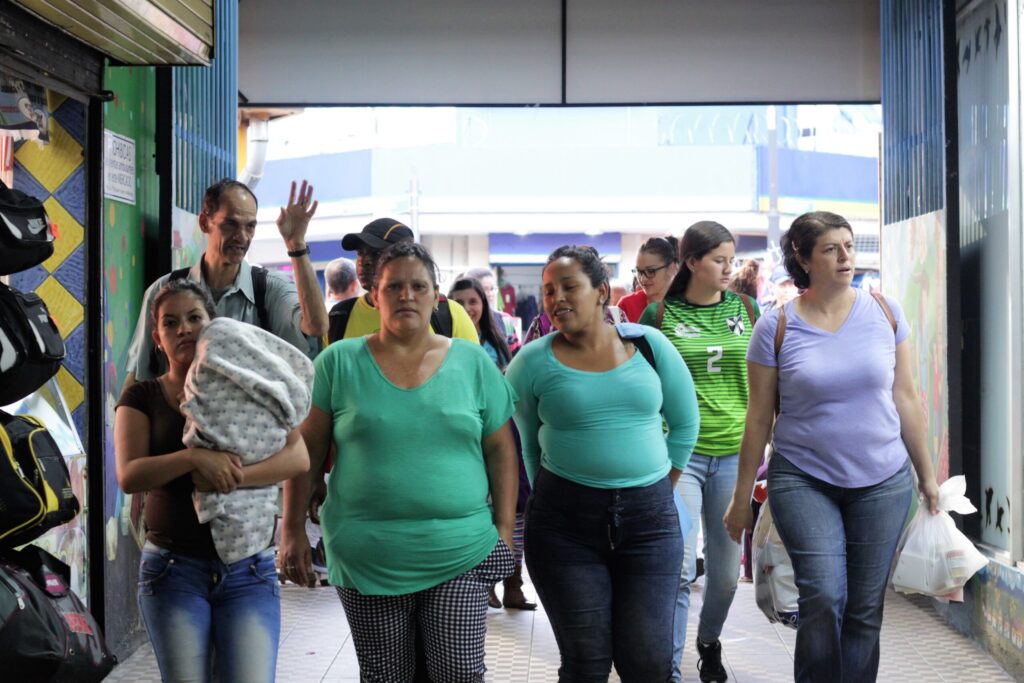
For those who depend on the route for work or to visit family, the situation is an odyssey. Alternate routes, such as the one through Turrialba, are not designed for the volume or type of heavy transport that Route 32 handles.
The result has been the collapse of these secondary roads, with reports of enormous traffic jams and journeys that are extended by more than four additional hours than usual.
Despite the warnings, authorities have also detected people from nearby communities traveling through the closed section. MOPT insists on the extreme danger of this practice, not only because of the risk of new landslides but also due to the presence of heavy machinery and operational personnel in the high-risk area.
What is Being Done? The Battle Against the Mountain
MOPT crews face a monumental technical challenge. Currently, specialized work is underway to try to stabilize the slope (the mountainside) and control the dislodged material.
However, the weekend’s weather conditions severely complicated the maneuvers. As an alternative plan, MOPT is analyzing the use of controlled explosives to fracture and safely detach part of the material, which would then allow for the road to be cleared.
Mauricio Sojo, a MOPT official present at kilometer 31, explained that the absolute priority is safety. The reopening, he indicated, will strictly depend on the weather allowing the teams to advance without putting drivers or the workers themselves at risk.
Between Patience and Urgency
The situation on Route 32 is a clear reminder of our infrastructure’s vulnerability to the climate. Today, a rock and bad weather have an entire country in suspense.
The dilemma is painful: economic urgency demands a quick solution to stop the ¢500 million daily loss, but human safety forces officials not to take shortcuts.
For now, patience is the only option, as Costa Rica’s main connection to the Caribbean remains dependent on the weather forecast.