
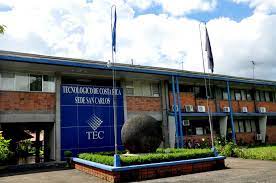
The Costa Rica Institute of Technology (TEC) is working with Tecnológico de Monterrey in Mexico to develop a microcredential model designed to strengthen the professional skills of Costa Rican workers.
The initiative aims to provide shorter and more flexible training options that can respond more quickly to labor market needs and technological changes. Unlike a university degree, a microcredential certifies that a person has acquired and can apply a specific skill.
What Are Microcredentials?
Microcredentials are digital certifications that demonstrate specific knowledge and skills. Their purpose is not to replace university degrees, but rather to complement academic and professional education through programs focused on specific competencies.
One of their main characteristics is that they can generally be obtained through relatively short programs and that different certifications can be accumulated throughout a person’s professional career. This allows people to develop new skills without necessarily having to complete an entire university program every time they need to update their knowledge.
TEC explains that these certifications can help respond more quickly to the needs of industry and society, particularly as technologies evolve rapidly.
A Collaboration with Tecnológico de Monterrey
TEC began receiving guidance from Tecnológico de Monterrey in November 2025 to advance the development of this training model.
The collaboration aims to draw on the Mexican institution’s experience with microcredentials and adapt it to the context of higher education in Costa Rica.
The project is part of a broader strategy by TEC to expand its education and professional development opportunities.
The Costa Rica Institute of Technology is an autonomous public higher education institution founded in 1971, specializing in education, research and outreach in technology and related sciences.
Eight Proposals Under Development
As part of the process, around 40 faculty members, administrative staff and employees from the Technological Foundation of Costa Rica (FUNDATEC) were organized into eight working groups.
Each group developed a microcredential proposal focused on a different area. The topics include computing, health and management processes.
The proposals will be evaluated by an institutional committee, which will determine which one is the most advanced and ready to begin implementation.
TEC intends for this process to gradually lead from the initial proposals toward a broader microcredential offering.
Training Adapted to Labor Market Needs
One of the initiative’s main objectives is to bring university training closer to the actual needs of the productive sector.
TEC already offers continuing education and specialized training programs in areas related to emerging technologies. Its Digital Talent Program, for example, provides training in fields such as artificial intelligence, machine learning, data governance, agile project management and data analysis tools.
The institution also offers specialized programs in emerging technologies, including training in artificial intelligence and cloud computing designed to develop applied skills in machine learning, natural language processing and generative artificial intelligence.
Microcredentials are intended to complement these programs with certifications focused on specific competencies.
A Cumulative Approach to Learning
Another important characteristic of the model is that microcredentials can be stackable.
This means that a person can obtain different certifications as they develop new skills, gradually building a more specialized professional profile.
For people who are already working, this format can provide an opportunity to update their knowledge without committing to several additional years of study.
The goal is also for microcredentials to gradually become part of different levels of TEC’s educational offerings.
A Proposal That Could Expand Across Different Programs
TEC does not intend to limit the project to the eight proposals currently being developed.
Once the model has been consolidated, the institution plans to incorporate new microcredentials across undergraduate and graduate programs, technical programs, diplomas and continuing education.
The offering would be aimed both at members of the university community and at professionals and other interested individuals in Costa Rica and abroad.
This would allow microcredentials to become a tool for lifelong learning, supporting people at different stages of their professional careers.
A Trend Linked to the Transformation of Employment
The initiative also responds to a context in which professional skills are changing rapidly.
The emergence of new technologies, particularly in areas such as artificial intelligence, data analysis and cloud computing, is increasing the need for continuous skills development.
TEC has already conducted research into microcredentials as a complement to its academic programs. One institutional project, CredencialTEC, examines the criteria needed to design this type of certification and studies its integration as a complement to the curriculum of Computer Engineering programs.
The project is scheduled to take place between 2025 and 2026 and includes validation of the microcredentials with students and faculty.
New Ways of Demonstrating Skills
Microcredentials also reflect a broader change in how professional skills can be demonstrated.
While a university degree confirms completion of a full academic program, a microcredential can demonstrate that a person has mastered a specific skill and can apply it in practice.
For employers, this type of certification can provide additional information about a candidate’s specific abilities beyond their general academic background.
TEC notes that microcredentials can help demonstrate skills and competencies in line with changing labor market needs.
A Commitment to Lifelong Education
The project is part of a broader vision of lifelong education, in which professional development does not end with the completion of a university degree.
People may need to acquire new skills several times throughout their careers, particularly in sectors where tools and technologies evolve rapidly.
Through this initiative, TEC aims to expand its professional development options and offer new alternatives to its students and graduates as well as people outside the university community.
The Project Is Still Under Development
The eight proposals developed by TEC teams are currently undergoing institutional evaluation. The institution will determine which proposals are ready to move toward initial implementation.
The ultimate goal is to build a model that can gradually expand and become a new pathway for certified training within TEC’s educational offering.
The collaboration with Tecnológico de Monterrey therefore represents a step toward more flexible, competency-based education designed to respond more quickly to changes in the labor market.
Official and Technical Sources
Costa Rica Institute of Technology (TEC): official information on microcredentials, its Digital Talent Program and research projects.
Costa Rica Institute of Technology – About TEC: official information about the institution, its history and mission.
Semanario Universidad: information about the collaboration between TEC and Tecnológico de Monterrey and the eight proposals currently being developed.
TEC – CredencialTEC: institutional project focused on the curricular design of microcredentials as a complement to academic programs.