A Costa Rican project earns international recognition
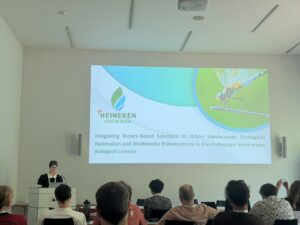
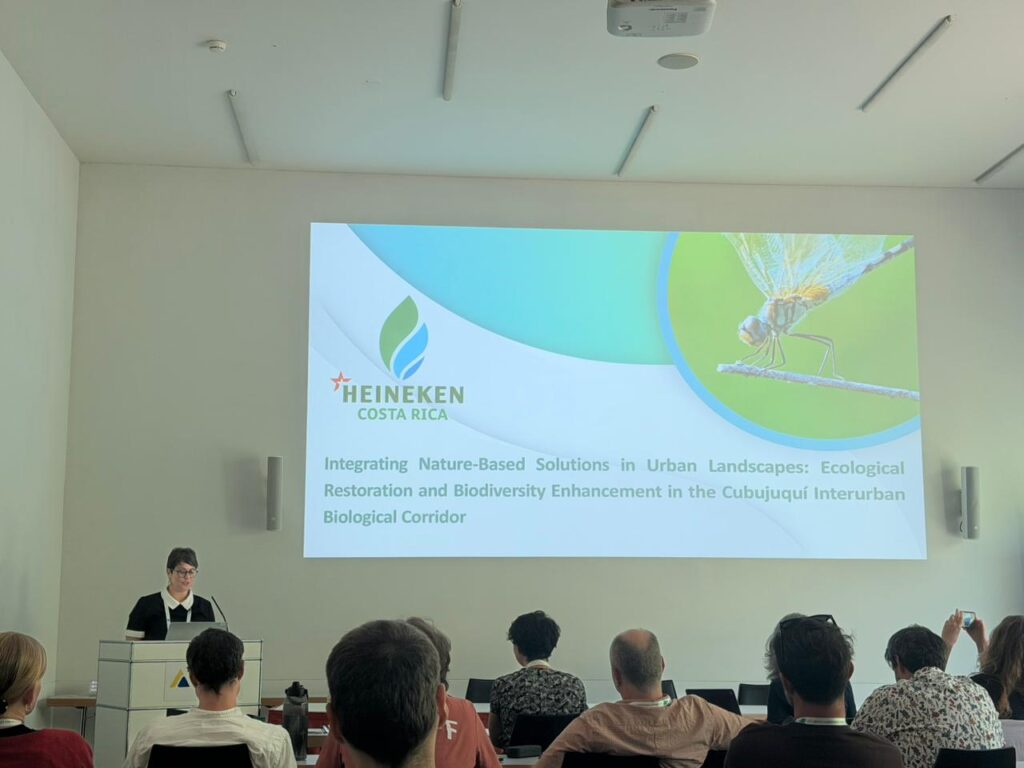
An environmental initiative developed in Costa Rica was selected from hundreds of international proposals to be presented at the World Biodiversity Forum (WBF) in Davos, Switzerland. The selection highlights the growing international recognition of projects that combine biodiversity conservation, scientific research, and sustainable urban development.
The project, known as Eco-Conexión Urbana (Urban Eco-Connection), was featured during a session dedicated to exploring how cities can better support biodiversity while improving quality of life. It demonstrated how urban and industrial green spaces can become valuable habitats for wildlife.
Cities and nature can thrive together
Eco-Conexión Urbana is being implemented within the Cubujuquí Interurban Biological Corridor, located in the province of Heredia, Costa Rica.
Researchers are studying how nature-based solutions can be integrated into urban landscapes, showing that green areas within industrial zones can provide shelter for numerous plant and animal species while strengthening ecological connectivity between fragmented habitats.
This approach reflects the international concept of Nature-based Solutions (NbS), promoted worldwide to address biodiversity loss, climate change, and the environmental impacts of urban expansion.
More than 160 wildlife species recorded
One of the project’s most remarkable achievements has been the preliminary documentation of 163 wildlife species living within the green areas of the industrial facilities involved in the study.
Among the recorded species are:
- Birds.
- Mammals.
- Reptiles.
- Amphibians.
- Insects.
These findings demonstrate that well-managed urban green spaces can play an important role in biodiversity conservation, even within landscapes heavily influenced by human activity.
Urban biological corridors are becoming increasingly important
Biological corridors are designed to connect fragmented natural habitats, allowing wildlife to move safely between ecosystems and maintain healthy populations.
In urban environments, these corridors link parks, forests, rivers, and other green spaces, helping species survive despite increasing habitat fragmentation.
Costa Rica has promoted this conservation model for many years by integrating biological corridors into both environmental protection and sustainable land-use planning.
Costa Rica shares its experience with the world
Participation in the World Biodiversity Forum provided an opportunity to showcase how collaboration between private companies, biodiversity experts, and environmental organizations can generate innovative conservation solutions.
Beyond its scientific value, the project demonstrates that ecological restoration can also benefit people by improving:
- Ecological connectivity.
- Water regulation.
- Pollination.
- Landscape quality.
- Climate resilience.
The initiative illustrates how biodiversity conservation can successfully coexist with productive and industrial activities through long-term environmental planning.
An example of environmental innovation
The World Biodiversity Forum brings together scientists, public institutions, businesses, and conservation organizations from around the world to exchange knowledge and present new research on biodiversity protection.
Being selected to present at this international event recognizes both the scientific quality and practical value of Costa Rica’s initiative while encouraging collaboration with experts from many countries.
Urban biodiversity also deserves protection
Nature conservation is often associated with national parks and protected forests, but cities also support an important variety of wildlife.
Urban planning that incorporates native vegetation, ecological restoration, and interconnected green spaces can provide habitat for birds, pollinators, amphibians, and many other species essential to healthy ecosystems.
Increasing scientific evidence shows that cities can become valuable allies for biodiversity when ecological principles are integrated into urban development.
A model that inspires future initiatives
Costa Rica’s experience demonstrates that scientific research, urban infrastructure, and environmental sustainability can work together successfully.
Projects such as Eco-Conexión Urbana not only protect local biodiversity but also generate valuable knowledge that can help other cities create greener, more resilient, and wildlife-friendly environments.
The international recognition received by this initiative reflects the growing importance of innovative solutions that conserve biodiversity while responding to the challenges of urban growth.
Official sources consulted
- World Biodiversity Forum (WBF)
- International Union for Conservation of Nature (IUCN) – Nature-based Solutions
- National System of Conservation Areas of Costa Rica (SINAC)
- Convention on Biological Diversity (CBD)
- United Nations Environment Programme (UNEP)