An important milestone for a vulnerable species
The birth of a clouded leopard cub at a zoo in Nashville, United States, represents encouraging news for international conservation programs dedicated to this species. Clouded leopards (Neofelis nebulosa) are considered one of Asia’s most elusive wild cats and face numerous threats related to habitat loss, forest fragmentation, and illegal wildlife trade.
Successful births in accredited zoological institutions provide valuable support for maintaining genetically healthy populations and strengthening conservation breeding programs under human care.
What is the clouded leopard?
The clouded leopard primarily inhabits tropical and subtropical forests across Southeast Asia, including Nepal, India, Bhutan, Myanmar, Thailand, Malaysia, and southern China.
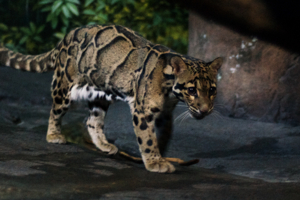
The species takes its name from the large cloud-shaped markings on its coat. It is an exceptional climber thanks to its powerful limbs, long tail, and highly flexible ankles, which allow it to move with remarkable agility through the trees.
Although it belongs to the family of big cats, the clouded leopard possesses unique characteristics that distinguish it from leopards, tigers, and jaguars.
The importance of conservation breeding programs
Breeding programs in accredited zoos play a vital role in conserving threatened species when they are based on scientific management.
These programs aim to maintain healthy genetic diversity, prevent inbreeding, and improve scientific knowledge of reproduction, behavior, and animal health.
In addition, many modern zoos actively participate in international research, environmental education, and conservation projects both within and outside the species’ natural habitats.
Threats facing the species
Despite its wide geographic distribution, the clouded leopard faces significant challenges to its survival.
Among the main threats are:
- Deforestation and the loss of tropical forests.
- Habitat fragmentation.
- Poaching and the illegal trade in skins and body parts.
- Declining populations of natural prey.
The combination of these factors has contributed to population declines in several parts of Asia.
International cooperation for conservation
The conservation of the clouded leopard depends on cooperation among accredited zoos, scientific organizations, governments, and international species management programs.
Participating institutions exchange genetic information, coordinate breeding plans, and conduct research that helps improve both animal welfare and conservation outcomes.
This collaborative work also raises public awareness about the importance of protecting Asian forests and the wildlife that depends on them.
A birth that represents hope
Every successful birth within a conservation program provides valuable scientific information and strengthens populations under human care.
Although the long-term survival of the species ultimately depends on protecting its natural habitat, these breeding programs serve as an important complementary tool for reducing extinction risk and expanding scientific knowledge of species that are difficult to study in the wild.
The birth of this cub symbolizes another positive step in international efforts to secure the future of the clouded leopard and highlights the importance of protecting global biodiversity.
Official sources consulted
Association of Zoos and Aquariums (AZA)
Nashville Zoo at Grassmere
International Union for Conservation of Nature (IUCN)
Smithsonian Conservation Biology Institute
World Association of Zoos and Aquariums (WAZA)