A key initiative for biodiversity protection
The Wildlife Crossing Bill is currently going through a decisive stage in the Legislative Assembly. Although the proposal has already passed its first legislative debate, it still risks being shelved if lawmakers fail to approve a motion extending its legislative validity for the next four years.
The initiative aims to make wildlife crossing structures mandatory in future road infrastructure projects across Costa Rica. Its main objective is to reduce wildlife deaths caused by road accidents and improve connectivity between ecosystems fragmented by highways and urban development.
Several environmental organizations, conservation specialists, and biodiversity protection groups have expressed concern over the possibility that the bill may not move forward to a second legislative debate.
What are wildlife crossings and why are they important?
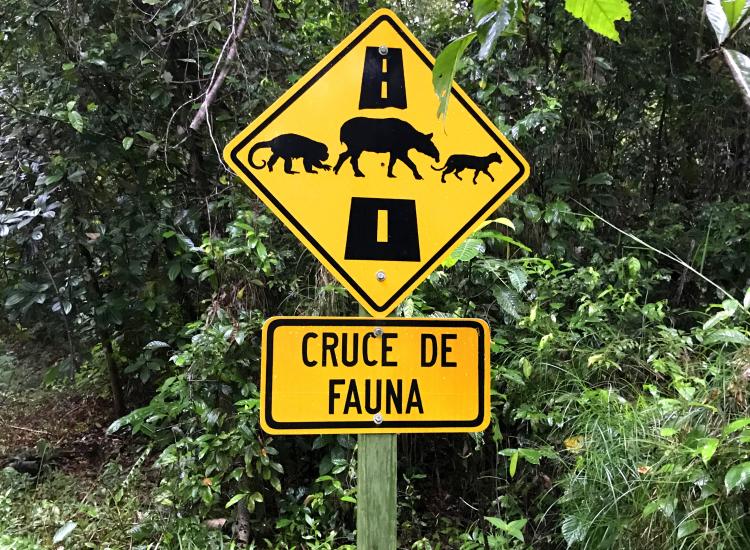
Wildlife crossings are structures designed to allow wild animals to cross roads safely. These infrastructures may include canopy bridges, underground tunnels, biological corridors, and connectivity systems adapted to different species.
According to Costa Rica’s National System of Conservation Areas (SINAC), these measures help preserve ecological connectivity between habitats fragmented by road infrastructure and significantly reduce wildlife roadkill.
In a country internationally recognized for its biodiversity, the expansion of highways and infrastructure projects represents one of the greatest threats to many species. Mammals, reptiles, amphibians, and birds are often forced to cross heavily trafficked roads in search of food, water, or breeding territories.
Thousands of animals die every year on the country’s roads
Data shared by researchers and environmental organizations indicate that thousands of wild animals are killed each year on national roads.
Studies conducted in Costa Rica have documented the successful use of wildlife crossings by dozens of species, including monkeys, coatis, wild cats, sloths, and other mammals. In addition, organizations such as Panthera and wildlife rescue centers have emphasized the need to expand this type of infrastructure in critical biological corridors.
One of the recent cases that drew significant public attention was the death of a margay in Guanacaste, which reignited discussions about the urgent need to strengthen wildlife protection measures.
Infrastructure and conservation: a growing challenge
Urban growth and road network modernization have increased ecosystem fragmentation across different regions of the country. Conservation experts believe that integrating environmental criteria into infrastructure projects is no longer optional, but essential to protecting vulnerable species.
Some national highways already include wildlife crossings as part of environmental mitigation measures. One of the best-known examples is Route 32, where aerial and underground structures have been developed to allow animals to move safely from one side of the road to the other.
Institutions such as the Ministry of Public Works and Transport (MOPT), the Ministry of Environment and Energy (MINAE), and SINAC have participated in projects focused on biological connectivity and reducing environmental impacts on strategic highways.
Environmental organizations call for support for the bill
In recent weeks, multiple environmental organizations and conservation groups have publicly urged lawmakers to move forward with the initiative in order to prevent it from being archived.
Biodiversity advocates believe the legislation would establish a stronger legal framework for incorporating wildlife protection measures into future public infrastructure projects.
Beyond its environmental impact, specialists also point out that biodiversity protection is directly linked to sustainable tourism, one of Costa Rica’s most important economic sectors.
A debate that reflects the country’s environmental future
The discussion surrounding the Wildlife Crossing Bill reflects a broader debate about balancing development and environmental impact.
As the country continues expanding its road infrastructure, scientific and environmental organizations insist that territorial planning must include concrete measures to protect biodiversity and reduce ecosystem fragmentation.
The decision made by the Legislative Assembly in the coming weeks could set an important precedent for conservation and sustainable development.
Official and informational sources
• SINAC — https://www.sinac.go.cr
• MINAE — https://www.minae.go.cr
• MOPT — https://www.mopt.go.cr
• Route 32 – Wildlife Crossings — https://ruta32.cr/ambiental/pasos-de-fauna/
• Legislative Assembly of Costa Rica — https://www.asamblea.go.cr
• Panthera — https://panthera.org
• Las Pumas Rescue Center — https://laspumasrescuecenter.org