A historic symbol returns to its emblematic place in Cartago
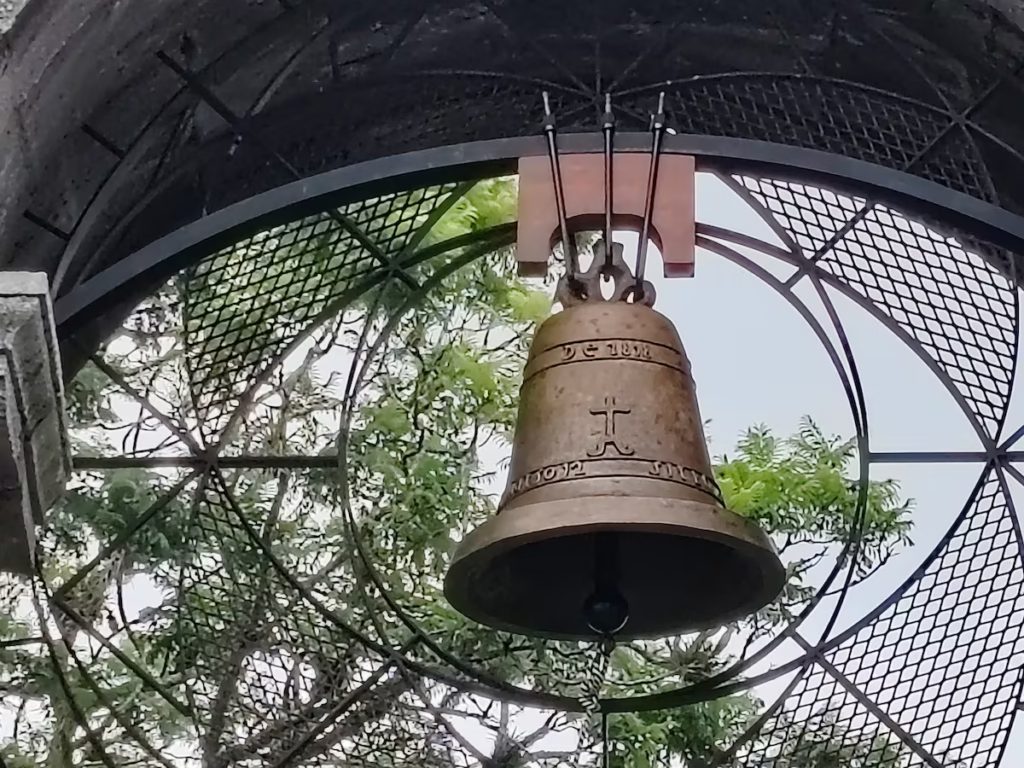
On Thursday, May 7, 2026, an exact replica of the Independence Bell was installed in the main arch of the Ruins of Santiago Apóstol, one of the most iconic heritage sites in Cartago. This bell is a national symbol representing the end of the colonial era and the beginning of Costa Rica’s independent life, and its return to this historic location reinforces its cultural and patrimonial value for the country.
History of a national symbol
The original bell was cast in Cartago in 1818 by Andrés Cartín and was declared a National Monument in 1962 due to its historical importance. Because of deterioration after decades of exposure to the elements, it was removed in February 2024 for professional restoration, as it had developed significant cracks that threatened its preservation.
Features of the newly installed replica
The new bell was cast in Costa Rica on March 13, 2026, exactly 208 years after the original was created, using bell bronze (78% copper and 22% tin), a traditional material known for its durability and sound quality. The replica weighs 290 kg, measures 81 cm in height and 76 cm in diameter, and was crafted using a process that combined traditional casting techniques with modern engineering and 3D digital modeling.
The bell was mounted in its historic location using a special iron and wood support system and includes an 8.5 kg forged steel clapper, allowing it to be rung manually with a rope, preserving the traditional historical use of the symbol.
Commemorative installation and public exhibition
As part of the commemorative ceremony, both the replica and the original bell were displayed together in the Plaza Mayor of Cartago, giving citizens the opportunity to observe and compare both pieces, reaffirming the historical continuity of this national emblem.
Cultural and heritage importance
The Independence Bell is one of the most representative symbols of Costa Rican history, associated with the proclamation of the end of colonial rule and the beginning of the republic. Its placement at the Ruins of Santiago Apóstol — a cultural site dating from the late 19th century that remains a historical landmark in downtown Cartago — helps strengthen historical memory and national identity.