1. Historical and Geographical Context: The Filibuster Threat and the Defense of Sovereignty
In the mid-nineteenth century, Central America became a point of immense geopolitical interest due to the interoceanic transit route that crossed southern Nicaragua — a strategic passage connecting the Atlantic Ocean to the Pacific at a time when the transcontinental railroad did not yet exist. In this complex scenario, the ideology of “Manifest Destiny” gained great traction, a doctrine that justified American territorial expansion and drove groups of mercenaries to organize unauthorized military expeditions in Latin America, a practice known as filibustering.
Taking advantage of a civil war in the neighboring country, the American William Walker landed in Nicaragua in May 1855. Walker quickly seized effective control of the Nicaraguan government, first through a provisional president and then by assuming dictatorial power himself. The filibuster’s ambitions went far beyond dominating the transit route: his objective was to conquer the rest of Central America, establish an empire founded on white supremacy, and restore the enslavement of the Black population, revoking for this purpose the Nicaraguan emancipation edicts dating from 1821.
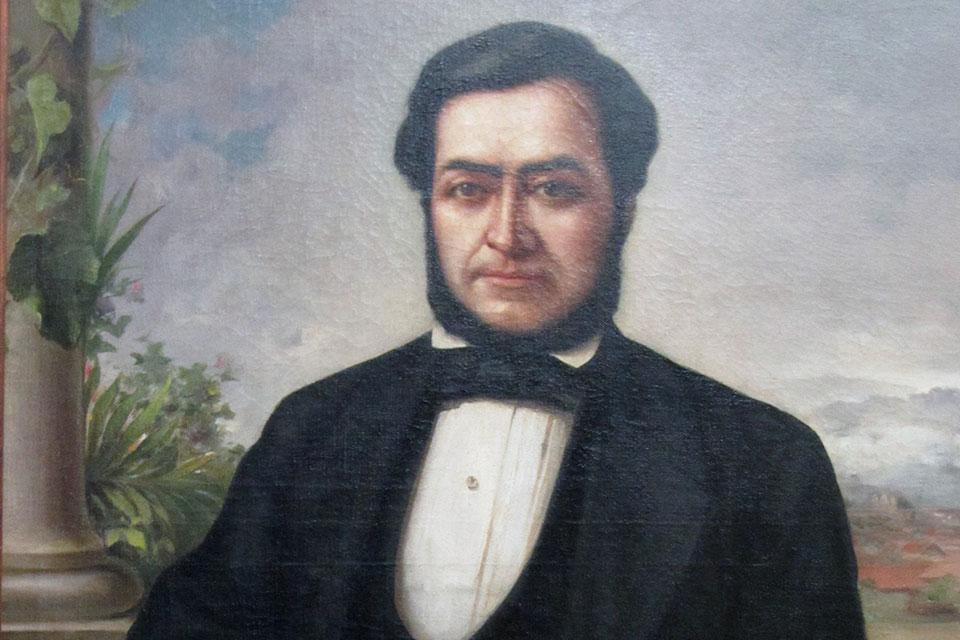
The consolidation of this regime and the “colonization” decrees promoted to attract more American fighters represented a direct threat to Costa Rica’s territorial integrity. Faced with the imminent danger, President Juan Rafael Mora Porras acted firmly. Between November 1855 and March 1856, Mora Porras issued vibrant proclamations warning Costa Ricans about the filibusters’ intentions of subjugation and making a fervent call to arms. With no remaining diplomatic alternative, on March 1, 1856, President Mora declared war on Walker’s forces.
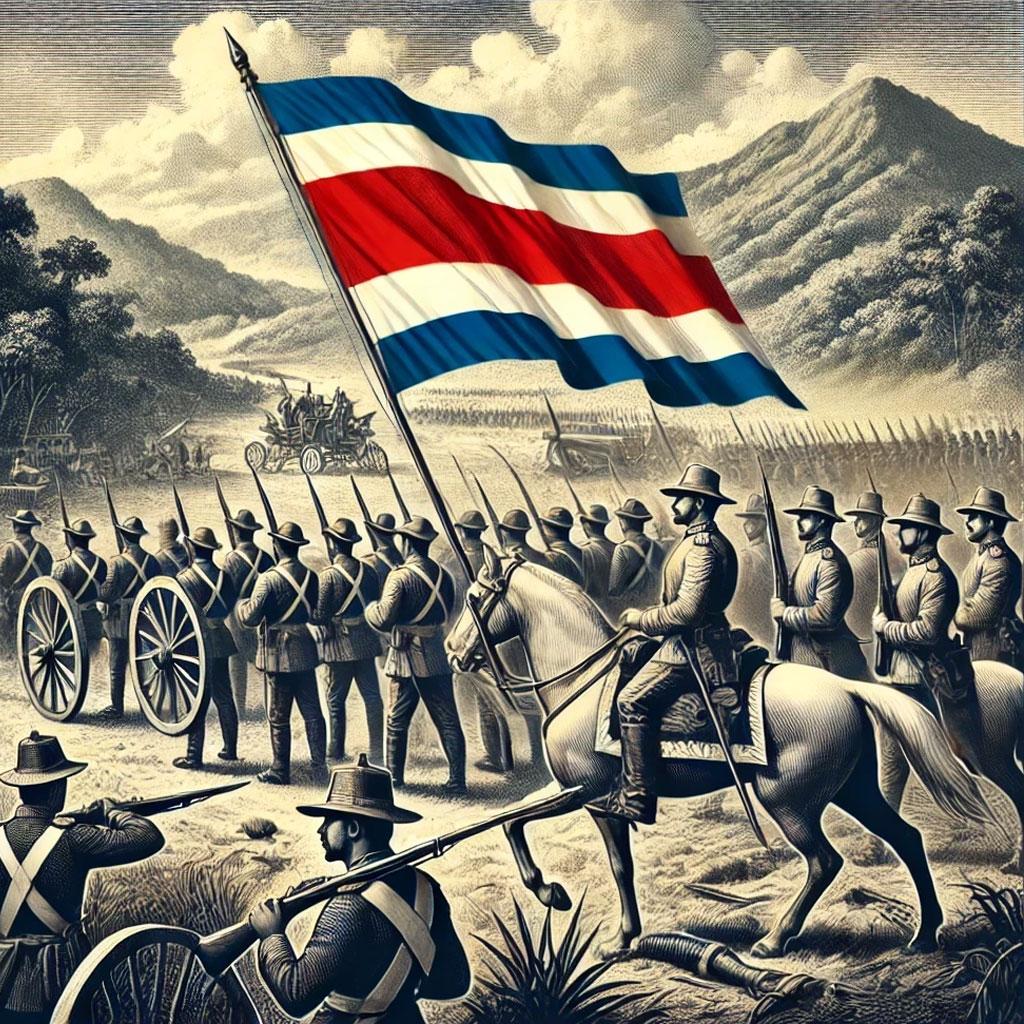
The Costa Rican nation, recognized as a pacifist and civilian people, had to transform itself to face the invasion. The response to the presidential call was the courageous mobilization of an improvised army, made up largely of laborers, artisans, and ordinary citizens. Despite being a force that set out nearly unarmed and would have to endure grueling marches along dusty roads, the troops departed toward Nicaragua on March 4, 1856, driven by the absolute determination to safeguard their existence as a free and independent Republic.
2. Childhood and Formation: The Son of Alajuela, Humble and Popular Origins
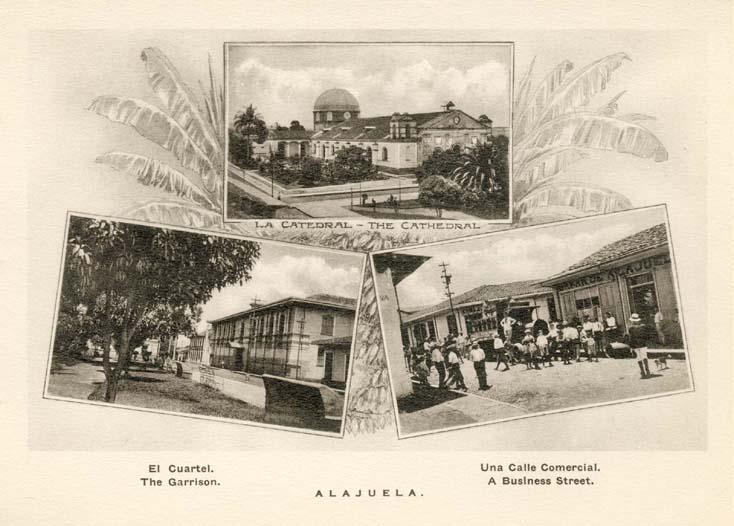
Juan Santamaría was born in the city of Alajuela on August 29, 1831. His baptismal record, kept in the registers of the Parish of Alajuela, lists him as the son of doña Manuela, a woman of humble background whom historical documents refer to interchangeably by the surnames Carvajal, Gallego, or Santamaría. He grew up in a working-class household along with his siblings, Joaquina and Rufino.
Santamaría is the living reflection of the ordinary Costa Rican people of the nineteenth century. Of mixed-race (mulato) ethnicity, he had very curly hair, a physical trait for which he earned from a young age the nickname by which he would go down in history: “el Erizo” (the Hedgehog). Despite the evident economic limitations of his family, historical evidence confirms that Juan did attend primary school, where he learned to play the drum — a musical trade that would ultimately shape his destiny.
To help support his household, “el Erizo” had to enter the working world from childhood. Throughout his youth, he developed an impressive multiplicity of subsistence trades: he was a candy vendor, a laborer, a day worker, a coffee picker, an ox-cart driver, a mason’s helper, a church sacristan, and a serenade musician. Finally, his skill with percussion led him to serve as drummer for the Military Band of Alajuela. It is precisely this humble and multifaceted origin that magnifies his figure, for it contrasts the simple Alajuelan worker with the immense dimension of the hero he would become.
Note on informational gaps: Official historical sources and his baptismal record list him as “of unknown father.” Although some texts suggest his father may have been an Afro-descendant man from the province of Guanacaste, precise biographical data about him is lacking. To fill this gap, one would need to consult in-depth genealogical studies of Alajuela in 1830 or alternative civil records; however, for purposes of his heroic narrative, his maternal family nucleus is the truly influential one.
3. First Steps and First Important Role: The “Little Drummer” of the Costa Rican Militias
The musical skill that Juan Santamaría acquired during his time in primary school was the direct bridge between his ordinary civilian life and his historic destiny. His proficiency with percussion allowed him to join as drummer for the Military Band of Alajuela, a trade that would motivate his later participation and recruitment into the Costa Rican army. In fact, historical evidence places records of a “Juan Santamaría” on the militia rolls of the province of Alajuela as early as 1843. Because of the nature of his modest but vital role, tradition and testimonies would historically remember him as the “tamborcillo” (little drummer) of the troops.
When President Juan Rafael Mora Porras officially declared war on William Walker’s filibusters on March 1, 1856, the nation had to organize itself urgently. And so it was that on March 4, at eight in the morning, Santamaría, equipped with his rifle and his drum, left his hometown to formally join the expeditionary army that would march north to fight in defense of the homeland. It is essential to highlight the enormous valor of these regular troops: it was an improvised army, made up in its great majority of brave laborers, artisans, and ordinary citizens who left their subsistence trades to defend the existence of Costa Rica as a free Republic.
The journey toward Nicaragua was far from a modern, well-supplied military deployment. The Costa Rican forces had to endure extremely rudimentary and exhausting conditions as they advanced toward the neighboring country. The march was carried out along dusty roads and under a severe and painful scarcity of water. Despite the logistical precariousness and the imminent threat of facing well-armed mercenaries, the young Alajuelan “tamborcillo” and his companions maintained a steady pace toward the front, mentally preparing themselves for the decisive and bloody combat that awaited them in the Nicaraguan city of Rivas.
4. Key Moments in His Public Life: The Redeeming Fire, the Battle of Rivas, and the Burning of the Mesón
On April 11, 1856, the fate of the National Campaign and the life of the young Alajuelan converged in a definitive manner. That day, William Walker’s filibuster troops launched a surprise attack against the Costa Rican army stationed in the Nicaraguan city of Rivas. In the first moments, the situation was chaotic for the defenders; the heavily armed enemy quickly seized the main plaza and the surrounding houses, firing from rooftops and wreaking havoc in the Costa Rican ranks. A fierce and exhausting combat broke out, fought street by street and hand to hand.
Faced with the courageous but intense response of the Costa Ricans — personally encouraged by President Mora — the filibuster forces under the command of Colonel Sanders chose to fall back. They sought refuge in the so-called Mesón de Guerra, a sturdy building with thick adobe walls located on a strategic corner of the plaza. From its windows and ramparts, mercenary snipers established a lethal wall of fire that decimated the Central American troops and made any direct advance impossible.
Understanding that the only way to dislodge the filibusters from their fortress was to set it on fire, the Costa Rican High Command ordered the building to be torched. The undertaking was almost suicidal, as it meant exposing oneself at point-blank range to enemy rifle fire in order to ignite the roof, which was built of wooden frames and dry reeds. Lieutenant Luis Pacheco Bertora from Cartago was the first volunteer to step forward; however, in his brave attempt, he fell gravely wounded after being struck by three bullets. Immediately, a Nicaraguan soldier fighting in the Costa Rican ranks, Joaquín Rosales, snatched the torch from the fallen lieutenant’s hands, but was shot dead before he could spread the flames.
It was at that critical and desperate moment that the modest “tamborcillo,” soldier Juan Santamaría, stepped forward holding the blazing torch. Tradition and documentary testimonies recount that the young Alajuelan volunteered with a single and unwavering condition: he asked his superiors and companions that, if he died, they would take care of his elderly mother, doña Manuela.
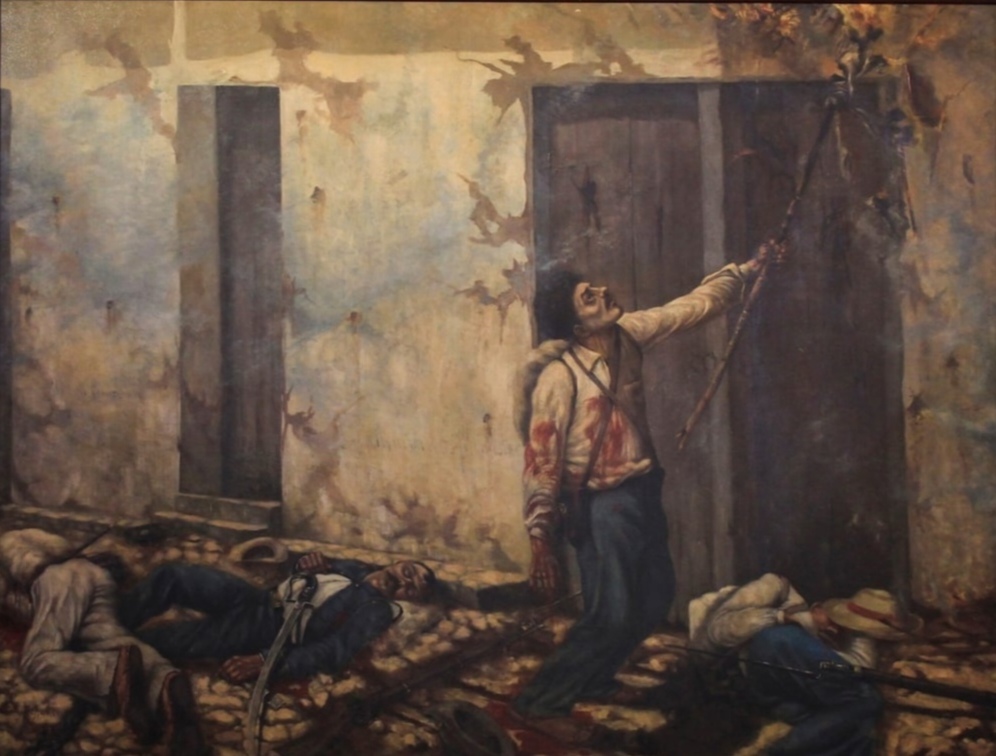
With absolute determination, Santamaría ran through a rain of bullets toward the southwest corner of the building and raised his arm to apply the flame to the dry eaves. The fire caught vigorously on the straw and reeds, spreading rapidly and forcing the filibusters to abandon their advantageous position. The tactical action was a resounding success that changed the course of the battle, but the sacrifice was consummated: the Alajuelan hero did not manage to escape the crossfire and fell struck down at the foot of the building, hit by the bullets of enemy snipers. The immolated “Erizo” thus gave his life, sealing with his blood the victory of Costa Rica and the freedom of Central America.
5. Conflicts, Decisions, and Challenges: The Man Behind the Myth — Doubts, Debates, and Historical Truths
Despite the transcendence of his sacrifice, the figure of Juan Santamaría was not exempt from questioning and debate over time. During the late nineteenth and early twentieth centuries, his existence and the veracity of his heroic act were called into question by various political and intellectual figures. The Guatemalan historian Lorenzo Montúfar, in his book Walker en Centroamérica, strongly questioned the authenticity of the little drummer’s heroic act. Decades later, in 1926, the Costa Rican priest and congressman Jorge Volio went so far as to label the deed “a myth,” even opposing the granting of a pension to some of the hero’s first cousins. To this were added statements from foreigners, such as the Chilean Julio Sanfuentes in 1901, who claimed that the immolation was an invention.
One of the greatest triggers of this historical controversy was an inaccurate record made by the chaplain of the Costa Rican army, the priest Francisco Calvo. In a death registry, the priest noted that a “Juan Santamaría” had died from the cholera morbus epidemic and not in combat. However, subsequent investigations clarified this misunderstanding. In 1926, researcher Eladio Prado demonstrated that said death registry presented serious deficiencies: it was not written on the battlefield, but rather in 1857 in a retrospective manner, and contained overlapping and imprecise entries. Furthermore, the priest Calvo himself confessed years later to Doctor Rafael Calderón Muñoz that the individual listed in that entry was, in fact, another soldier with the same name who had died of cholera, and not the hero of the engagement. The doubts were further dispelled in the 1990s, when a military index from the Secretariat of War was found confirming Juan Santamaría’s death in combat between April and May 1856, alongside other fallen soldiers at Rivas.
To confront the initial questioning — particularly the challenge posed by Montúfar — the State and the Municipality of Alajuela undertook the task of collecting irrefutable evidence. In 1891, a sworn “Información ad perpetuam” was compiled, gathering sworn testimonies from former combatants and veterans of the National Campaign. These accounts from eyewitnesses confirmed in a solid manner that Santamaría existed, that he participated in the battle, and that he did indeed die while setting fire to the building.
Finally, the maturity of modern historical research has allowed for a debate about the shared protagonism of the deed, without diminishing the merit of the Alajuelan hero. Historical documents confirm that Santamaría did not act alone nor was he the first to attempt it. Before him, Sub-lieutenant Luis Pacheco Bertora from Cartago volunteered for the nearly suicidal mission, being gravely wounded after receiving three gunshot wounds while attempting to bring fire to the target. After Pacheco fell, the Nicaraguan soldier Joaquín Rosales, fighting on the Costa Rican side, seized the torch but was shot dead before he could spread the flames. It was Juan Santamaría’s decisive success in managing to extend the fire across the straw and wooden roof — immolating himself in the act — that crowned the feat. Recognizing the bravery of Pacheco Bertora and Rosales enriches the historical narrative, demonstrating that the victory was the product of a collective sacrifice and not an isolated act.
6. Achievements and Legacy: From Oblivion to the Pedestal — The Construction of the National Hero
After the conclusion of the National Campaign, the first official recognition of the young soldier’s sacrifice came through the avenue of family necessity. On November 19, 1857, his mother, doña Manuela Carvajal (Santamaría), submitted a petition for a pension to the government, stating that she was of advanced age and without resources after having lost her only son at Rivas. A few days later, on November 24, President Juan Rafael Mora Porras approved a lifelong pension, leaving documented evidence of the veracity of the events and the heroic “boldness” with which the Alajuelan drummer lost his life to dislodge the enemy.
Despite this early state confirmation, the three decades following the war were characterized by a strange governmental neglect, during which the hero’s memory was preserved almost exclusively in the oral tradition of the people of Alajuela. Curiously, the first voices to rise in the public sphere to rescue his figure from official anonymity were those of two exiled foreign diplomats and intellectuals living in Costa Rica: the politician from New Granada (Colombia) José de Obaldía in 1864, and the Honduran journalist Álvaro Contreras in 1885. Both delivered vibrant speeches in which they reminded the nation of the enormous sacrifice of the humble “sublime martyr” and drew attention to his mother’s destitution.
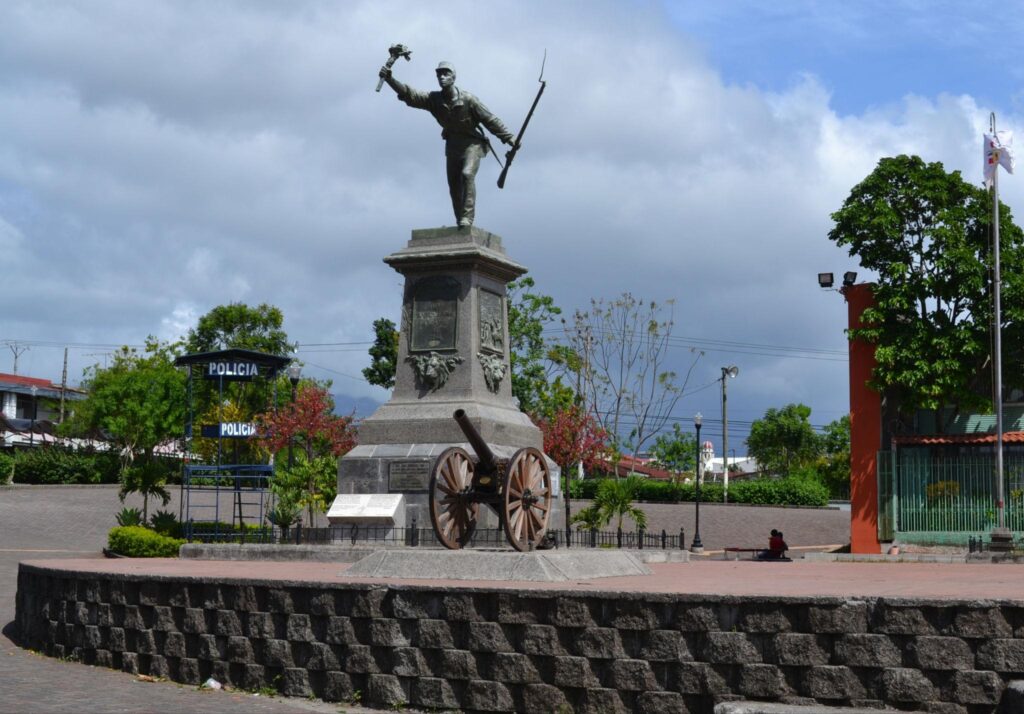
It was not until the late nineteenth century that the Costa Rican Liberal State embarked on a systematic project to consolidate national identity and unite society around a common past. For this purpose, the figure of Juan Santamaría proved ideal: a humble man of the people who embodied the values of loyalty, patriotism, and selfless sacrifice. In 1887, the government promoted a public subscription (national collection) to finance a monument in his honor. The culmination of this effort came on September 15, 1891, when amid massive and lavish celebrations in Alajuela, the imposing bronze statue of the hero was unveiled. The work, commissioned from French sculptor Aristide Onésime Croisy, presented an idealized, athletic figure with features resembling a European soldier, immortalizing the moment he raises the blazing torch.
This consecration of a bronze hero, however, unleashed a profound artistic and ideological struggle over how the son of the people ought to be represented. In 1896, Costa Rican painter Enrique Echandi challenged the monumental aesthetics of French inspiration by presenting his oil painting La Quema del Mesón (The Burning of the Mesón). Unlike the statue, Echandi portrayed Santamaría with a realist intent: a modest, dark-skinned peasant, suffering, bloodied, and struck by bullets in the act of bringing fire to the eaves. This raw and human vision clashed sharply with the ideals of the elite of the time; the official press and figures such as the director of the newspaper La República labeled the painting a “caricature,” even demanding that the canvas be burned for being an insult to patriotism. This debate revealed the tensions between the mythical construction of an impeccable official hero and the harsh reality of the sacrifice of a common mixed-race soldier who gave his life for the nation.
7. Impact on Costa Rica and Present-Day Projection: An Inextinguishable Symbol of Costa Rican Identity
The impact of Juan Santamaría on Costa Rican society transcended historical debate to become an unquestionable pillar of the country’s civic culture. At the beginning of the twentieth century, spontaneous demonstrations by various communities to pay him homage motivated a definitive step in the ritualization of his figure: in 1915, during the administration of Alfredo González Flores, the legislators officially declared April 11 a national holiday. Since then, this date has been consolidated as a fundamental civic event in which students, educators, and the people in general keep alive the memory of his sacrifice.
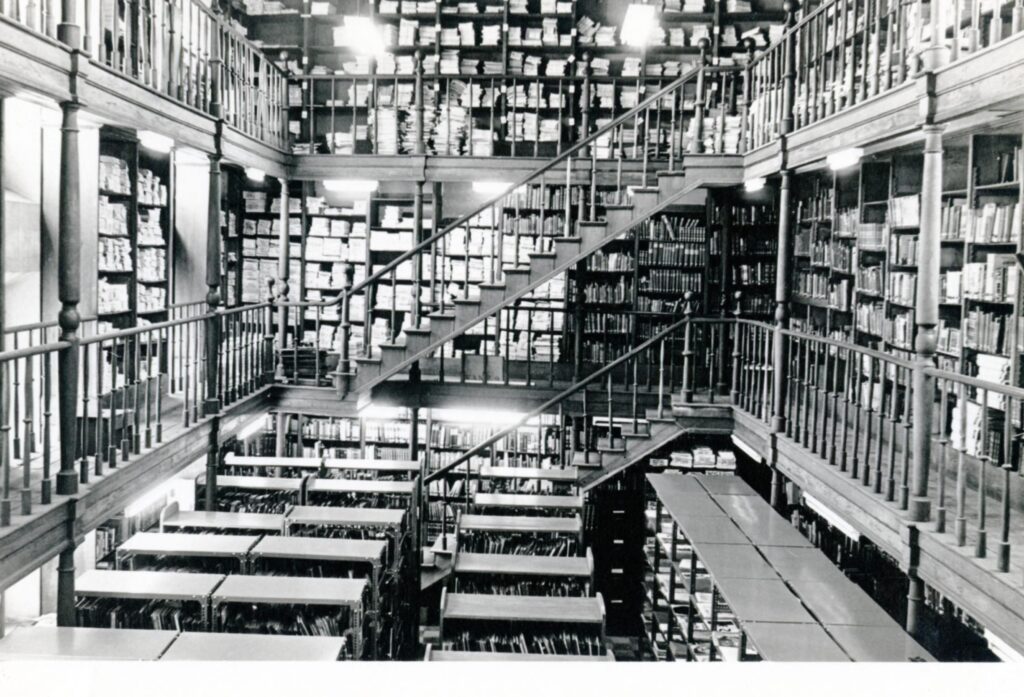
The consecration of the hero has also materialized in the physical and institutional space of the nation. In his honor, the country’s main air terminal was named the Juan Santamaría International Airport, projecting his legacy to all who visit Costa Rica. Likewise, on December 4, 1974, the Juan Santamaría Historical-Cultural Museum (MHCJS) was founded through Law No. 5619, with the primary mission of safeguarding and educating about the memory of the National Campaign of 1856–1857. In 1979, the transfer of this museum to the sturdy facilities of the old Alajuela Prison was authorized, achieving a beautiful urban metamorphosis: a building originally conceived for punishment and confinement was permanently transformed into a dynamic epicenter of education, art, and collective memory.
Today, the relevance of “el Erizo” continues to inspire the modern Republic and unite its society. To address the absence of a definitive official declaration emanating from the supreme representative body of the people, bills have been advanced in the Legislative Assembly — such as file No. 17,866 — aimed at formally and irrevocably declaring him “National Hero and Liberator of the Homeland.” This legal and historical effort seeks to place the humble Alajuelan drummer on the highest official pedestal, reaffirming that it was precisely during the National Campaign that the identity of a civilian, pacifist, and nearly unarmed people was forged — a people who knew how to rise up and defend their sovereignty and freedom against a foreign threat.
Ultimately, Juan Santamaría represents the particularity of a socially inclusive democracy, for Costa Rica stands out by recognizing as its greatest hero a figure from the most humble and popular sectors of its society. His sacrifice at the foot of the Mesón not only secured a military victory, but also lit a blazing torch that today remains an inextinguishable symbol of national unity, reminding new generations of the supreme value of independence, selflessness, and love of the homeland.