
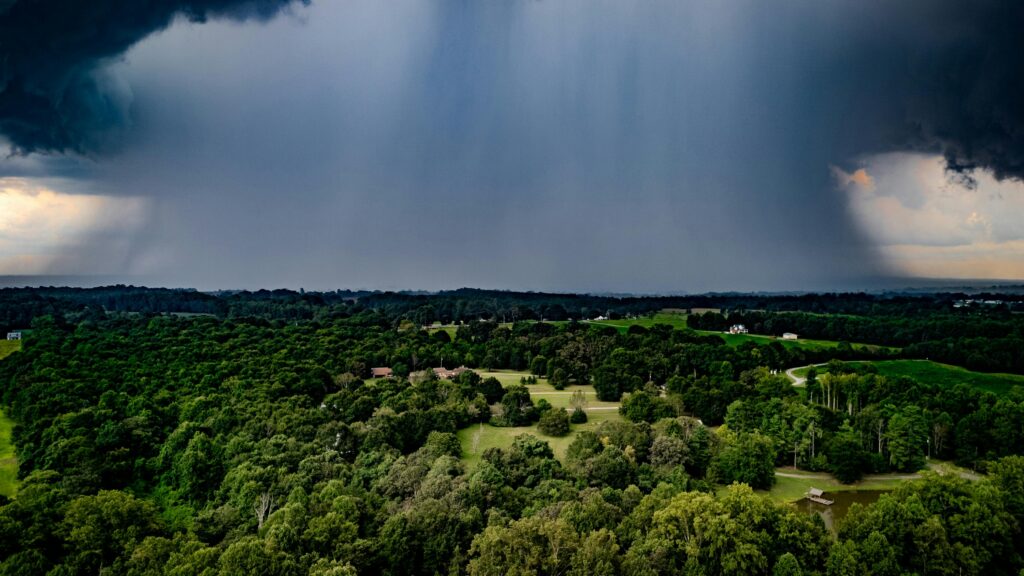
Atmospheric conditions could trigger heavy rainfall
Costa Rican meteorological and emergency authorities are monitoring the potential effects of an upper-level atmospheric trough, a weather phenomenon that could generate heavy rainfall in the Central Pacific and Southern Zone of the country in the coming days.
According to information from the National Meteorological Institute (IMN), current weather conditions — including high temperatures, weakening trade winds, and the presence of a trough — are creating atmospheric instability, which may lead to intense rain showers in several regions across the national territory.
In response to this situation, the National Emergency Commission (CNE) reported that Municipal Emergency Committees in the Central Pacific and South Pacific regions remain active and under preventive monitoring, particularly during the afternoon and evening hours when rainfall typically intensifies in these areas.
What is a trough and how it affects the weather
A trough is an atmospheric disturbance that increases instability in the atmosphere, favoring the formation of cloud cover, rainfall, and thunderstorms in the areas where it develops.
According to specialists from the IMN, this phenomenon can be described as a kind of “line of unstable weather” that increases the likelihood of precipitation and electrical storms in affected regions.
Troughs can occur both at the surface and in upper levels of the atmosphere and are relatively common in tropical countries such as Costa Rica. When they combine with other climatic factors — such as high humidity or shifts in wind patterns — they can intensify rainfall, particularly during the afternoon and evening hours.
Although this phenomenon may produce significant rainfall, it should not be confused with a cold front, as it does not necessarily involve sudden temperature changes.
Regions with the highest probability of rainfall
Weather forecasts indicate that the regions most likely to experience heavy rainfall are the Central Pacific and the South Pacific, although the influence of the system could extend to other parts of the country depending on how atmospheric conditions evolve.
In these areas, rainfall often develops more intensely during the afternoon and evening, sometimes accompanied by strong wind gusts and thunderstorms.
Authorities also remind the public that when heavy rainfall occurs within short periods of time, there is a greater risk of localized flooding, landslides, and road disruptions, particularly in areas where soils may already be saturated from previous rainfall.
Recent rainfall reports in the Southern Zone
In recent days, heavy rains have already been reported in several areas of the Southern Zone of the country, particularly in parts of the canton of Golfito, where intense rainfall accompanied by strong winds caused temporary disruptions in some communities.
Reported incidents include fallen trees blocking roads, temporary traffic interruptions, and power outages in certain areas.
These events highlight the importance of maintaining continuous meteorological monitoring during periods of atmospheric instability.
Recommendations from authorities
Given the situation, authorities recommend that residents stay informed through official channels of the National Meteorological Institute (IMN) and the National Emergency Commission (CNE), while also taking precautions in areas prone to flooding or landslides.
Among the main recommendations are:
- Avoid crossing swollen rivers or streams
- Monitor conditions in areas near slopes or unstable terrain
- Stay alert to possible road closures
- Follow updated weather reports
Continuous monitoring of weather systems allows institutions to activate preventive measures and coordinate responses if rainfall leads to local emergencies.
The importance of climate monitoring in Costa Rica
Due to its geographic location in the tropics, Costa Rica frequently experiences meteorological phenomena capable of producing intense rainfall, particularly during certain periods of the year.
Institutions such as the National Meteorological Institute (IMN) and the National Emergency Commission (CNE)work together to monitor atmospheric conditions, issue preventive alerts, and reduce the risks associated with extreme weather events.
Monitoring systems such as troughs, tropical waves, and the Intertropical Convergence Zone allows authorities to anticipate potential impacts and help communities prepare for adverse weather conditions.
Official and reference sources
National Meteorological Institute (IMN), meteorological reports and explanations regarding atmospheric troughs in Costa Rica.
National Emergency Commission (CNE), official communications on preventive monitoring and activation of municipal emergency committees.
CRHoy, article “Alerta ante posibles efectos de vaguada en el Pacífico y la Zona Sur”.
El Observador, meteorological reports on troughs and heavy rainfall in Costa Rica.
Additional meteorological information on atmospheric systems affecting Central America.