

Costa Rican democracy was not born from a spontaneous event, but from a process of “cultural and political sedimentation” that began long before the signing of its independence. To understand the country’s current stability, it is necessary to analyze the structural conditions of its foundational era.
The Colonial Substratum and Relative Egalitarianism
Unlike other regions of Latin America, colonial Costa Rica was characterized by geographic isolation and profound economic precariousness. According to historical literature, this lack of mineral wealth or large Indigenous populations for the encomienda system prevented the formation of rigid social hierarchies. This phenomenon generated a “relative egalitarianism” and a culture of negotiation that served as the foundation for the construction of the national State.
1821: An Independence of Ideas and Town Councils
The transition from colony to sovereign entity in 1821 was, above all, a civilist process. The political debate of the time was strongly influenced by the Enlightenment and the Cortes of Cádiz. The town councils and their “tertulias” became decisive spaces of deliberation, where the notion of citizenship began to take shape.
During this period, Costa Rica experimented with its first fundamental norms, highlighting the Pact of Concord (1821), which established the foundations of initial political coexistence. A relevant fact is that as early as the Political Constitution of 1844, early experiments with direct voting were carried out, although under an electoral roll limited to property-owning men.
1848: The Birth of the Republic
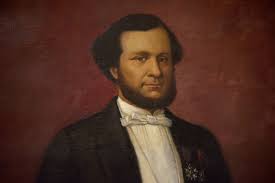
The definitive milestone of this stage occurred on August 31, 1848. Under the leadership of Dr. José María Castro Madriz, Costa Rica broke its last ties with the Central American Federation and proclaimed itself a sovereign and independent Republic.
This act was not merely symbolic; it brought with it the creation of a clear administrative division (provinces, cantons, and districts) and the strengthening of freedom of the press. Castro Madriz, known as the “Founder of the Republic,” promoted the idea that education and public opinion were the true pillars of a free nation, encouraging the emergence of the first newspapers that energized civic life.
The Economy as a Driver of Change
The consolidation of this republican model was linked to the rise of coffee. The agro-export model not only gave economic viability to the State, but also began to define the social structure that would participate in the electoral processes of the second half of the nineteenth century.
Sources consulted:
- Independence in Costa Rica, Historical Archive (Primera Línea).
- The Trajectory of Costa Rican Polyarchy: A Long-Term Historical, Institutional, and Sociopolitical Analysis.
- History of Costa Rica, Historical Synthesis Document.
- The Long Transition Toward Democracy in Costa Rica, Estado de la Nación Report (INEC).
- The 200 Years of the Republic of Costa Rica, SURCOS Digital.