Guanacaste is entering a period of major infrastructure investment aimed at improving access to essential services, strengthening connectivity, and supporting the province’s long-term development.
The projects cover areas including roads, bridges, education, healthcare, electricity, and water, with support from the Central American Bank for Economic Integration (CABEI).
A Major Infrastructure Program for the Province
One of the main programs underway is the Emergency Program for Comprehensive and Resilient Infrastructure Reconstruction (PROERI).
According to CABEI, the program includes 26 projects across nine of Guanacaste’s 11 cantons, with an investment of more than US$44 million for bridges, road sections, and educational facilities.
The objective is not only to repair deteriorated infrastructure, but also to build more resilient facilities and improve access to essential services in communities that can be particularly vulnerable to extreme weather events.
The National Road Council (CONAVI) also operates an official platform where the public can access information about PROERI projects, including their locations and procurement processes.
Roads and Bridges to Improve Connectivity
Road infrastructure represents an important part of these investments.
Among the projects already completed is the bridge over the Chingo River in La Cruz, an infrastructure project that improved daily mobility for more than 2,000 people, including students from Santa Elena School.
Other road and bridge projects are continuing to move through different stages of procurement and construction.
CABEI has also supported pre-investment studies for the modernization of the road between Liberia and Comunidad, a strategic route located near Daniel Oduber Quirós International Airport.
For a province whose economy relies heavily on tourism, agriculture, commerce, and regional transportation, better road connections can have an impact that goes beyond everyday mobility.
Greater Investment in Educational Infrastructure
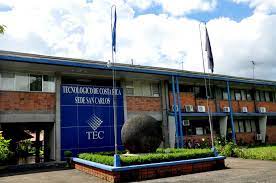
Education is another important component of the program.
Nationwide, PROERI includes more than 100 educational facilities. According to CABEI, 25 reconstructed educational centers are expected to reopen during 2026, benefiting thousands of students.
Among them is the Matías Duarte Sotela Educational Center in Santa Cruz, Guanacaste.
The projects aim to provide safer and more modern educational spaces, with improved conditions for students and teachers.
In many rural and semi-urban communities, schools also serve a role beyond education, functioning as important spaces for community activities and gatherings.
Water: A Priority for Guanacaste
Access to water remains one of Guanacaste’s main challenges. The province regularly experiences periods of drought and increasing pressure on its water resources.
One of the largest projects is the Water Supply Project for the Middle Tempisque River Basin and Coastal Communities (PAACUME), also known as “Agua para la Bajura.”
The project has received US$425 million in financing from CABEI and is designed to improve water supplies for human consumption and agricultural irrigation for more than 700,000 people in Guanacaste.
The infrastructure includes a reservoir, water conveyance and distribution systems, a drinking-water treatment plant, storage tanks, and other facilities designed to strengthen the region’s water supply.
Its importance goes beyond household consumption. Water availability is directly connected to agriculture, tourism, community growth, and Guanacaste’s ability to cope with periods of drought.
Improvements to Healthcare Infrastructure
Investment is also reaching the healthcare sector.
CABEI has supported the expansion and modernization of La Anexión Hospital in Nicoya. The project included a new hospital building with 134 additional beds, as well as equipment designed to expand access to different medical specialties.
According to CABEI, the investment benefits more than 120,000 people in the region.
Improving hospital infrastructure is particularly relevant in a geographically large province such as Guanacaste, where residents of more remote communities may have to travel considerable distances to access specialized medical services.
Renewable Energy as Part of Development
Guanacaste’s growth is also closely connected to the development of renewable energy sources.
CABEI has supported projects such as the Las Pailas I Geothermal Power Plant, which uses heat from beneath the earth’s surface to generate electricity.
According to the institution, the project provides renewable electricity to more than 119,800 households.
Geothermal energy is particularly well suited to Costa Rica because of its volcanic activity and forms part of the country’s strategy to make use of renewable energy sources for electricity generation.
An Investment That Goes Beyond Individual Projects
The projects currently underway are part of a broader history of investment in Guanacaste.
CABEI has reported that its investments in the province have exceeded US$600 million, supporting projects related to water, electricity, healthcare, transportation, and infrastructure.
In May 2026, the institution also reported that it had approved more than US$3.925 billion in financing for Costa Rica over previous years, including national infrastructure programs such as PROERI.
For Guanacaste, these investments represent much more than individual construction projects. Roads, bridges, schools, hospitals, water systems, and energy projects form part of a broader infrastructure network that supports everyday life and the development of the regional economy.
What Could These Projects Mean for Guanacaste?
The scale of these investments highlights the role infrastructure will play in the province’s future.
Better roads can facilitate transportation and commerce. Renovated educational facilities can provide safer and more suitable environments for students. Expanded healthcare infrastructure can bring specialized services closer to communities, while water projects can strengthen the province’s ability to face drought and population growth.
At the same time, geothermal energy projects and infrastructure designed to withstand future challenges highlight the growing importance of combining economic development, resilience, and environmental sustainability.
With dozens of projects at different stages of implementation, Guanacaste is entering a period of significant infrastructure transformation that could have a lasting influence on how its communities grow, connect, and access essential services in the years ahead.