Illegal Fishing Continues to Threaten an Iconic Species
Every year, thousands of green sea turtles arrive on Costa Rica’s Caribbean beaches to complete one of the most important stages of their life cycle: reproduction and nesting. However, this extraordinary natural event continues to face significant threats caused by human activities, including illegal fishing.
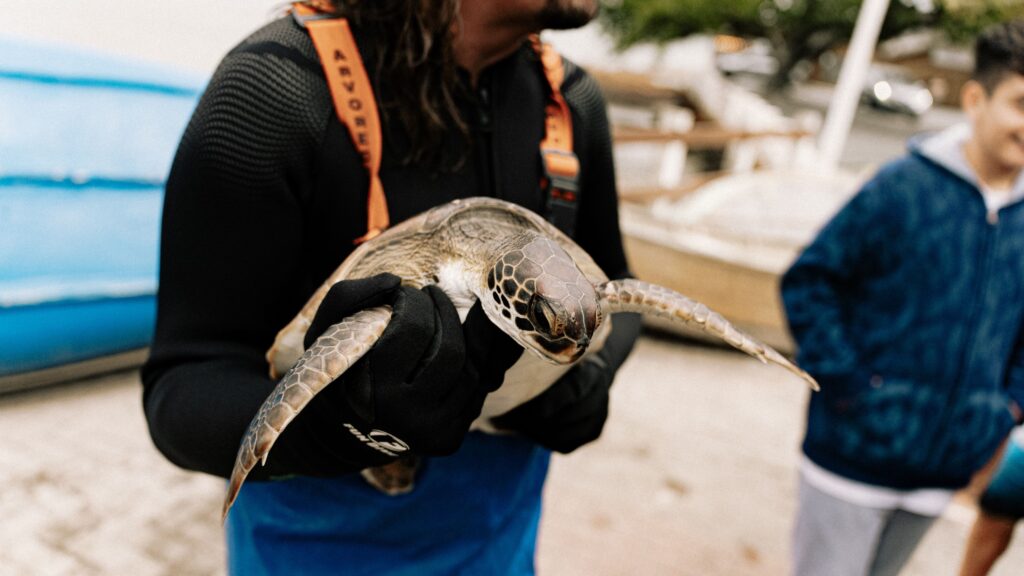
Recently, park rangers at Tortuguero National Park rescued a green turtle that had become entangled in illegal fishing gear, highlighting the importance of strengthening surveillance and conservation efforts during one of the most sensitive periods for this species.
The incident once again underscores the need to protect both marine habitats and nesting beaches that have made Tortuguero one of the world’s most important sites for sea turtle conservation.
Tortuguero: One of the Green Turtle’s Most Important Sanctuaries
Tortuguero National Park is home to one of the largest nesting populations of green sea turtles (Chelonia mydas) on the planet.
Each nesting season, thousands of females emerge from the sea at night to lay their eggs on the beaches of the northern Caribbean coast, repeating a natural behavior that has occurred for thousands of years.
This remarkable phenomenon also attracts researchers, tourists, and conservation organizations, making Tortuguero an international example of sustainable tourism linked to biodiversity conservation.
Illegal Fishing Remains a Constant Threat
Although Costa Rican legislation protects sea turtles and regulates fishing activities, illegal fishing continues to pose a serious risk.
Fishing nets and other illegal or abandoned fishing gear can trap turtles, causing severe injuries or death by drowning when they are unable to reach the surface to breathe.
Beyond its direct impact on sea turtles, illegal fishing also affects dolphins, sharks, rays, and numerous fish species, disrupting the balance of coastal marine ecosystems.
The Ongoing Work of Park Rangers
Officials from the National System of Conservation Areas (SINAC) conduct continuous patrols both on land and at sea to protect wildlife.
During the nesting season, surveillance efforts are intensified to prevent environmental crimes, control access to protected beaches, and respond quickly to emergencies involving wild animals.
The recent rescue demonstrates the importance of maintaining a permanent presence in protected areas where tourism, biodiversity, and fishing activities intersect.
A Key Species for Marine Ecosystems
Green turtles play a fundamental ecological role in maintaining healthy oceans.
Their diet, consisting primarily of seagrass, helps maintain these underwater ecosystems, supporting biodiversity and preserving essential feeding and breeding habitats for many species of fish and invertebrates.
A decline in green turtle populations would have consequences far beyond a single species, affecting the ecological balance of tropical marine environments.
Conservation Supported by Decades of Scientific Research
Costa Rica has developed scientific programs to study sea turtle populations for several decades.
National institutions and international organizations monitor nesting activity, survival rates, and the threats faced by different turtle species in order to improve conservation strategies.
The information collected has helped establish Tortuguero as one of the world’s leading natural laboratories for sea turtle research.
Public Participation Also Makes a Difference
Authorities emphasize that protecting sea turtles is not solely the responsibility of park rangers.
Visitors can contribute by respecting regulations during nighttime turtle tours, avoiding the use of bright lights on nesting beaches, leaving no litter behind, and reporting any suspicious activities related to illegal fishing or wildlife trafficking.
Environmental education and the involvement of coastal communities remain fundamental pillars of successful conservation programs.
An Ongoing Commitment to Biodiversity
The recent rescue of a green turtle in Tortuguero highlights both the challenges and the progress being made in protecting Costa Rica’s biodiversity.
Although illegal fishing continues to threaten many marine species, cooperation among park rangers, environmental institutions, scientists, and local communities demonstrates that conservation can be strengthened through surveillance, research, and education.
Protecting sea turtles also means protecting the health of the oceans and ensuring that future generations can continue to witness one of the Caribbean’s most extraordinary natural spectacles.
Recommended Official Sources
- National System of Conservation Areas (SINAC)
- Ministry of Environment and Energy (MINAE)
- Tortuguero National Park
- Costa Rican Institute of Fisheries and Aquaculture (INCOPESCA)
- Inter-American Convention for the Protection and Conservation of Sea Turtles (IAC)
- International Union for Conservation of Nature (IUCN)
- Sea Turtle Conservancy