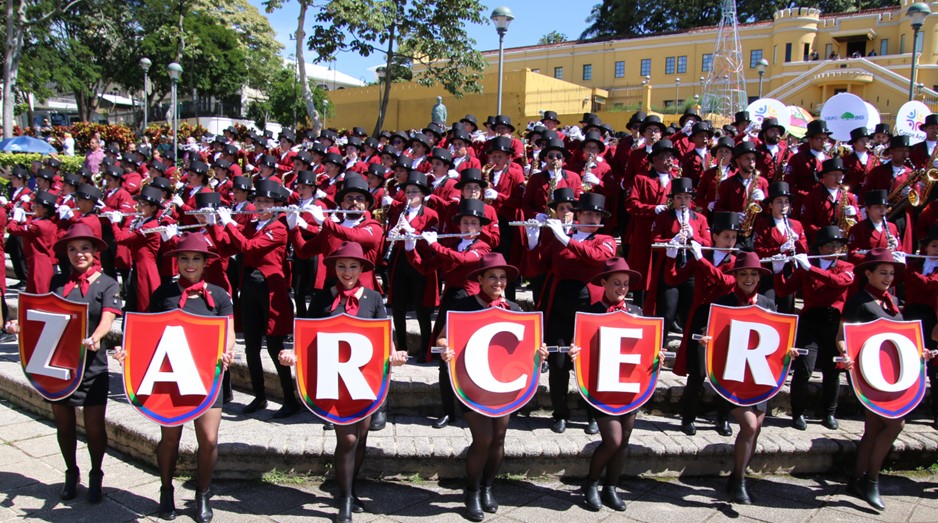
One of Costa Rica’s best-known musical groups continues to expand its presence on one of the world’s most important stages for marching bands.
The Banda Municipal de Zarcero, from the province of Alajuela, has built an impressive international career that has taken it to Pasadena, California, for the traditional Rose Parade, one of the most famous New Year’s events in the United States.
After participating in 2020 and 2024, the group continues to build a remarkable story for a Costa Rican band while bringing the country’s music to an international audience.
A Journey That Began in Zarcero
The Banda Municipal de Zarcero was founded in 2008 and has since become one of the leading marching bands in Costa Rica.
Its project combines musical training, discipline, and cultural representation. Over the years, its members have participated in various national and international events, carrying with them a part of Zarcero’s artistic identity.
The group itself highlights its goal of bringing Costa Rican talent and music to different stages around the world.
This growth has allowed a band from a relatively small community in Alajuela to perform before millions of spectators.
The Rose Parade: An International Tradition
The Tournament of Roses Parade takes place every January 1 in Pasadena, California, as part of New Year’s celebrations.
The tradition began in the late 19th century, and marching bands have been part of the parade’s history almost from its earliest years. According to the Tournament of Roses, the musical tradition began in 1891, when the Monrovia City Band participated in the second edition of the parade.
Since then, high school and university groups, military bands, and international marching bands have all taken part in the celebration.
The event combines flower-covered floats, musical bands, equestrian groups, and other performances, turning the streets of Pasadena into a major international stage.
A Costa Rican Presence That Has Made History
The Banda Municipal de Zarcero first participated in the Rose Parade in 2020.
Four years later, it returned to Pasadena for the 2024 edition, becoming the only Costa Rican band to have participated in the renowned parade, according to information published by the group itself.
These appearances represent a significant achievement for an ensemble founded in 2008 that has managed to establish itself at an event with a long international tradition.
Beyond the spectacle, each performance provides an opportunity to introduce international audiences to an expression of Costa Rican musical culture.
Zarcero’s Talent Before Millions of Spectators
Taking part in the Rose Parade involves much more than learning a musical repertoire.
Participating bands must prepare for a highly demanding performance, both musically and physically. Members march along a route several kilometers long while playing their instruments and maintaining precise choreography and formations.
For a group such as the Banda Municipal de Zarcero, this type of stage represents years of preparation, rehearsals, and teamwork.
Each member plays a role in a performance where coordination between musicians and dancers is essential.
A Window Into Costa Rican Culture
The band’s participation also has a cultural dimension.
When a Costa Rican group appears at an international event of this scale, it represents more than its musicians. It also carries the name of Zarcero and a glimpse of the country’s artistic culture.
Marching music can therefore become a tool for cultural outreach, presenting an alternative image of Costa Rica to international audiences.
In this sense, the story of the Banda Municipal de Zarcero demonstrates how local cultural projects can reach global stages when they are supported by training, organization, and continuity.
A Project Born in a Small Community
One of the most striking aspects of this story is the group’s origins.
Zarcero is a canton in Alajuela Province known for its mountainous landscapes, traditions, and cultural activities. From this community emerged a musical project that eventually reached one of the world’s most renowned parades.
The band’s story also illustrates the role local cultural initiatives can play in educating and developing young people.
A municipal band is not simply a group that performs in parades. It can also become a space for learning, discipline, social connection, and artistic development.
Beyond Pasadena
The Rose Parade is one of the most visible milestones in the group’s international career, but it is not the only one.
The Banda Municipal de Zarcero also highlights its participation as the first international band at the Aloha Festival in Honolulu, Hawaii.
These appearances demonstrate an evolution that began as a local musical project and gradually became a platform for cultural representation.
The group’s presence at different international events also creates connections between Costa Rica and other musical communities around the world.
A Pride That Goes Beyond Music
The success of the Banda Municipal de Zarcero extends beyond its performances.
Its story is the result of the work of musicians, instructors, families, organizers, and communities that have contributed to the group’s development since its founding.
Every international trip requires planning, resources, preparation, and commitment from dozens of people.
That is why, when the band marches through the streets of Pasadena, every performance also carries a story of collective effort.
Zarcero Continues to Take Costa Rica to the World
From a small community in Alajuela to one of the most recognized parades in the United States, the story of the Banda Municipal de Zarcero demonstrates that Costa Rican culture can find international opportunities in unexpected places.
Its appearances at the Rose Parade in 2020 and 2024 have already become part of the group’s history.
As it continues to expand its international career, the band remains connected to its roots: representing Zarcero and showcasing, through music, part of Costa Rica’s talent and cultural identity.
Sources
Banda Municipal de Zarcero: Institutional information about the group’s history, participation in the Rose Parade, and international activities.
Tournament of Roses: Official information about the history of the Rose Parade and the historical participation of marching bands.
Municipality of Zarcero: Institutional information about the canton of Zarcero and its local administration.
CRHoy: Information about the Banda Municipal de Zarcero’s international career and its connection to the Rose Parade.