A viral image that highlights Costa Rican wildlife
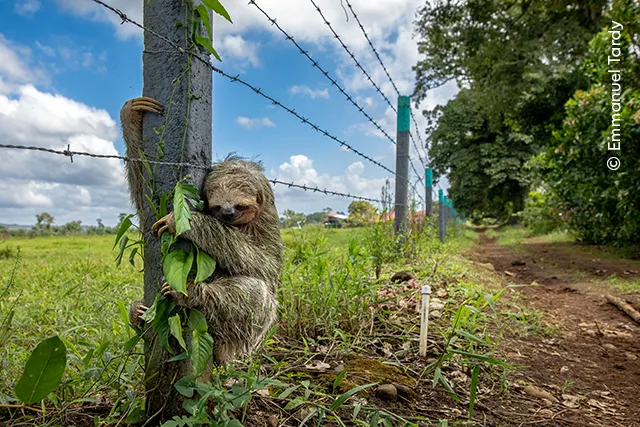
A photograph of a sloth taken in Costa Rica by French photographer Emmanuel Tardy has attracted significant international attention after becoming a trending image on the platforms of National Geographic in April 2026. The image, captured the previous year, has been widely shared across the magazine’s official channels, generating high engagement and recognition for its composition, quality, and the animal’s expressive appearance. (CRHoy)
The impact of the photograph not only celebrates the beauty and uniqueness of Costa Rican sloths, but also serves as a reminder of the country’s extraordinary wildlife richness. Costa Rica is one of the world’s most biodiverse destinations and home to iconic species such as the three-toed sloth (Bradypus variegatus), commonly observed in the country’s tropical forests.
The sloth: a symbol of biodiversity and nature
Sloths are arboreal mammals known for their slow movements and their characteristic “smiling” expression, which makes them highly photogenic and popular among nature lovers and wildlife observers. In Costa Rica, two main species are found: the three-toed sloth and the two-toed sloth, both typical of the country’s humid and dry forests, from the Caribbean coast to the Pacific regions.
These animals play an important ecological role in tropical ecosystems, contributing to seed dispersal and forming part of the food chain. Their presence in international media such as National Geographic helps raise awareness about habitat conservation and the protection of Costa Rican wildlife.
Conservation and wildlife education
Costa Rica has developed a strong wildlife conservation framework, led by institutions such as the Sistema Nacional de Áreas de Conservación (SINAC), responsible for protecting natural areas and coordinating actions for the preservation of native species. These policies are complemented by the work of specialized organizations dedicated to the rescue and rehabilitation of sloths and other mammals, such as the The Sloth Institute Costa Rica and the Sloth Sanctuary of Costa Rica, which care for orphaned or injured sloths and promote their safe return to the wild.
The interest generated by wildlife photographs and publications in international media reinforces the value of these species as part of Costa Rica’s natural heritage and encourages respect for fauna and ecosystems among visitors and residents.
Official and reference sources
• CRHoy — “Foto de perezoso tico es la sensación en National Geographic”
• National Geographic — global media platform that repeatedly shared the photograph
• SINAC — official institution for wildlife protection in Costa Rica
• The Sloth Institute Costa Rica — sloth rescue and conservation organization
• Sloth Sanctuary of Costa Rica — sloth rehabilitation center in Limón