




Listen to the podcast version of this article
The Invisible Resource Shaping a Nation
The radioelectric spectrum is one of a nation’s most critical assets. It is an invisible, finite public resource that serves as the foundation for our entire wireless world. Its allocation determines the speed and reach of our technological future, underpinning everything from next-generation 5G networks to advanced industrial applications. At the same time, it is the lifeblood of a healthy democracy, carrying the radio and television signals that inform citizens, foster local identity, and ensure a diversity of voices can be heard.
Recently, Costa Rica found itself at a critical juncture, managing two major spectrum allocation processes at the same time. The first was a forward-looking auction for 5G, designed to catapult the nation into a new era of connectivity. The second was a long-overdue auction to reassign frequencies for broadcast radio and television. While run in parallel, these two processes were guided by drastically different philosophies, leading to completely opposite outcomes.
This article distills the most surprising and impactful takeaways from these two parallel stories. By examining the stark contrast between the successful 5G auction and the paralyzed broadcast auction, we can see a clear reflection of the country’s priorities and uncover crucial lessons about how to manage a public resource that is vital for both economic progress and democratic health.
1. The 5G Auction’s Shocking Twist: It Wasn’t About the Money
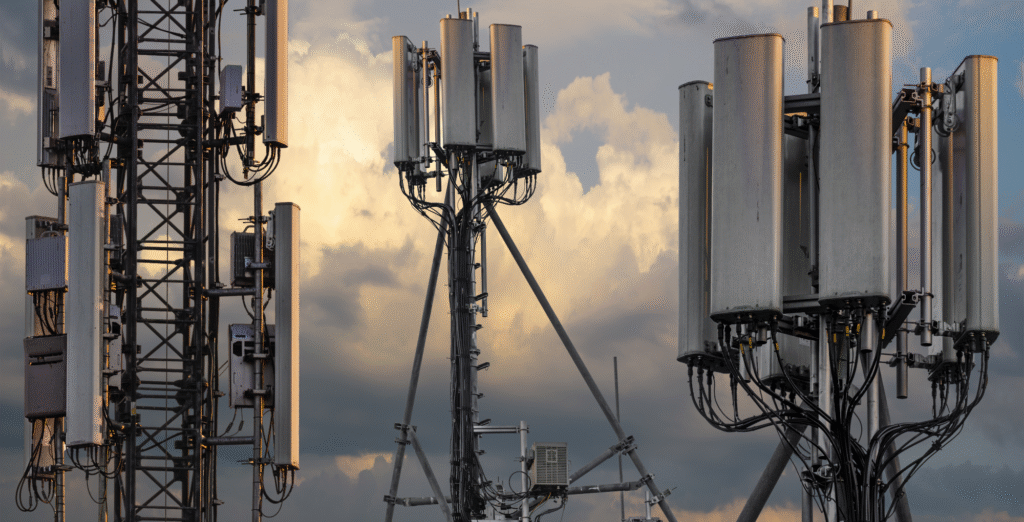
In a striking departure from global norms, Costa Rica’s major 5G spectrum auction (Licitación Mayor por Etapas N° 2024LY-000001-SUTEL) was designed with a counter-intuitive “non-revenue” model. The primary goal was not to maximize government income but to guarantee direct investment in national infrastructure and accelerate the closure of the digital divide.
The core mechanism of the auction was simple and focused on tangible development over fiscal gain. The value of each winning bid was structured as follows:
- 90% of the bid’s value had to be a commitment to build new infrastructure in the form of telecom towers or radiobases (Unidades de Infraestructura de Acceso – UIA).
- Only 10% of the bid’s value was a direct cash payment to the National Telecommunications Fund (FONATEL).
This unique approach prioritized network expansion, ensuring that the auction’s success would be measured in new coverage and better service, not just dollars in the treasury. Federico Chacón Loaiza, president of the Council of the Superintendency of Telecommunications (SUTEL), encapsulated this infrastructure-first strategy:
“La subasta tiene una modalidad única en el país, el 90% de la adjudicación de frecuencias será para los operadores que más pujen por el valor del espectro a través de infraestructura. Es decir, gana quien más infraestructura se comprometa a desarrollar.”
The final results were impressive. The auction secured a total commitment from winning operators to deploy 3,373 new radiobases (UIA) across the country. The total cash collected was approximately $32.5 million, reaching up to $34.8 million when including all phases. This model reframed the spectrum not as a state asset to be sold for maximum profit, but as a strategic catalyst for targeted national investment, proving highly effective in achieving policy goals beyond revenue.
2. Surprise Winners: Your Local Electric Co-op Might Be Your Next 5G Provider
The 5G auction’s structure was designed to foster diversity and competition, dividing the process into two parts: Phase 1 for operators seeking national coverage and Phase 2 for those targeting specific regions. While major national players Claro and Liberty secured spectrum for nationwide deployment—each committing to build 1,552 radiobases—the real surprise came from the winners of the regional blocks.
A diverse group of rural electrification cooperatives emerged as key players in bringing 5G to underserved areas. The regional winners, primarily rural electrification cooperatives, included:
- COOPELESCA R.L.
- COOPEGUANACASTE R.L.
- COOPESANTOS R.L.
- Coopealfaroruiz
- Ring Centrales de Costa Rica
These local cooperatives made significant commitments to expand the 5G footprint in their respective territories, turning organizations traditionally focused on electricity into key partners for digital inclusion.
| Regional Operator | Infrastructure Commitment |
| Coopesantos | 90 radiobases |
| Coopelesca | 63 radiobases |
| Coopeguanacaste | 58 radiobases |
This model has a profound social impact. The infrastructure commitments are specifically designed to bring new 5G coverage to 134 priority districts with existing connectivity gaps and to improve the quality of service in 353 additional districts. This decentralized approach, which deliberately empowers smaller, community-focused entities, represents a strategic policy choice to ensure the economic benefits of 5G are not captured solely by national incumbents but are distributed to historically underserved rural regions.
Listen to the podcast version of this article
3. The Great Radio Silence: How “Ruinous” Prices Threatened Local Media
While the 5G auction focused on building infrastructure, the parallel process for radio and television frequencies took a starkly different, revenue-focused approach. Although SUTEL’s stated goal was to “democratize access,” the economic reality of the auction’s design created the opposite effect, sparking a massive public outcry from media outlets and civil society.
The controversy centered on what many described as “exorbitant” and “ruinous” base prices for the frequencies, which created an insurmountable barrier for most local and independent media. The price tags included:
- National TV Frequency: Up to $1.6 million
- National FM Radio Frequency: Starting at $193,051
- National AM Radio Frequency: Ranging from $9,653 to $28,959
These figures had a chilling effect on participation. An extremely low number of offers were received: only 4 for television, 21 for FM radio, and just 1 for AM radio. Established and beloved media outlets such as Grupo Columbia, Radio Sinfonola, Radio Hit, and Cadena Musical publicly stated they could not participate, deeming the costs impossible to assume.
The Institute for Press and Freedom of Expression (IPLEX) issued a powerful statement, highlighting the threat this model posed not just to businesses, but to the nation’s democratic fabric:
“Cuando las comunidades pierden sus radios y televisoras locales, pierden espacios de identidad, expresión cultural y vigilancia del poder. Se empobrece el debate público y se concentra la oferta informativa en manos de actores con mayor músculo financiero, reduciendo la diversidad de voces indispensables para la democracia.”
Unlike the 5G auction’s inclusive, development-first model, the broadcast auction treated spectrum as a simple commodity. Its rigid, revenue-maximizing focus created a financial barrier that directly threatened media pluralism and the survival of the very local voices it claimed to democratize.
4. The Final Verdict: One Process Ended with Signed Contracts, The Other Ended Up in Court
The starkly different regulatory philosophies led to definitively opposite outcomes. One process concluded successfully, launching a new technological era for the country, while the other became completely paralyzed by legal challenges.
On July 29, 2025, the 5G auction process reached its successful conclusion. The Comptroller General of the Republic (CGR) provided the official endorsement (“refrendo”) for all six 5G concession contracts. This act granted the contracts “validez y eficacia final” (final legal validity and enforceability) and officially marked the beginning of the infrastructure deployment phase, providing clear legal certainty for all parties involved.
In stark contrast, the broadcast auction for radio and television frequencies is currently blocked by extensive legal action. The process has been brought to a standstill by:
- At least seven accumulated lawsuits filed in the Administrative Contentious Court, challenging the legality of the auction’s terms.
- Multiple constitutional challenges (recursos de amparo) admitted for study by the Constitutional Chamber (Sala IV), which question the auction’s violation of fundamental rights like freedom of expression and media pluralism.
A key factor in this divergence was regulatory flexibility. During the 5G process, SUTEL adjusted the bidding rules in response to objections from operators, a pragmatic approach that ensured the auction could proceed successfully. Conversely, the absolute rigidity of the broadcast auction’s financial terms, despite widespread protest, led to a complete legal and social stalemate, leaving the future of dozens of local media outlets in limbo.
A Nation’s Priorities on Display
The simultaneous management of these two spectrum auctions revealed a deep contradiction in Costa Rica’s policy goals. One path, guided by flexibility and a focus on long-term development, successfully fostered inclusive growth and technological progress. The other, driven by a rigid focus on short-term revenue, prioritized fiscal gain at the risk of silencing local voices and undermining media diversity.
As Costa Rica continues to build its digital society, the starkly different outcomes of these two auctions pose a fundamental question: Is the nation’s airwave policy designed to build more bridges for communication, or higher walls for participation?