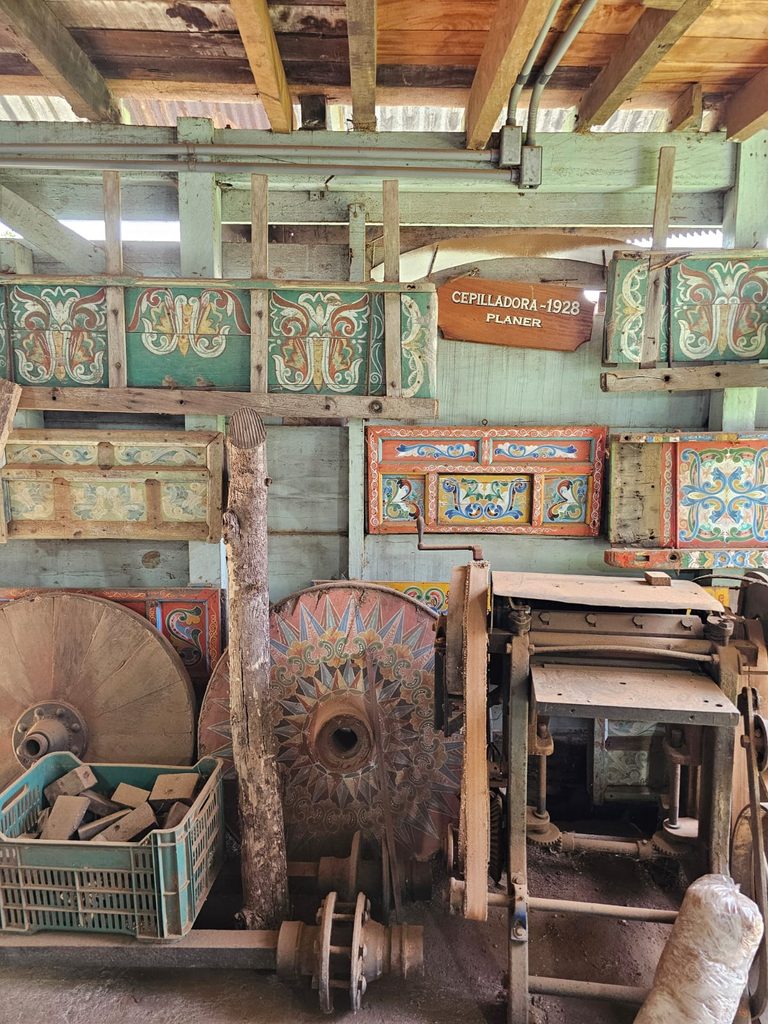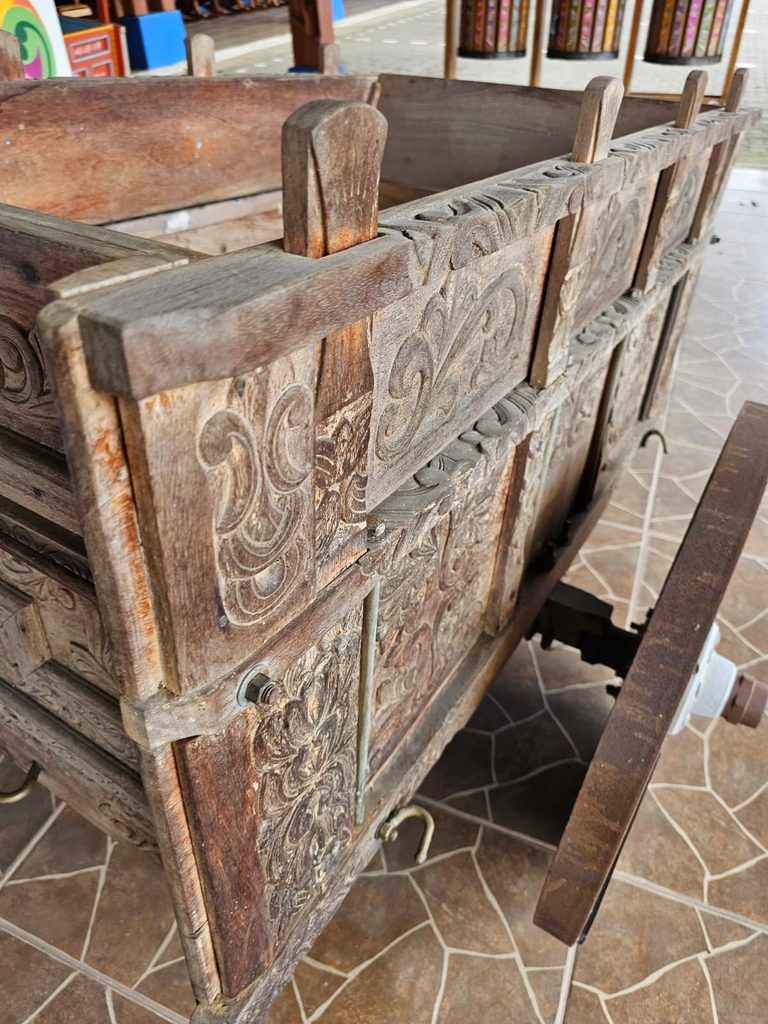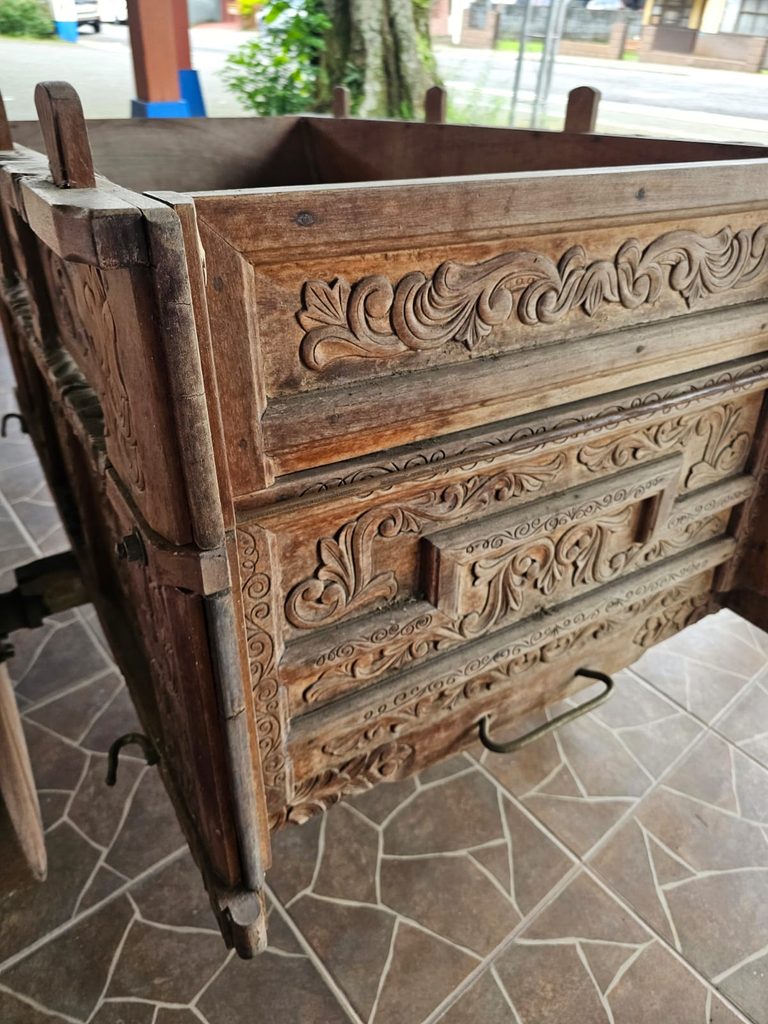
The town of Sarchí is the undisputed cradle of Costa Rican national craftsmanship. Its colorful heart beats to the steady rhythm of the brushes and chisels of over two thousand artisans, cabinetmakers, and sculptors. In their hands, raw wood loses its rigidity to become furniture, works of art, and the country’s most vibrant symbol: the traditional oxcart.
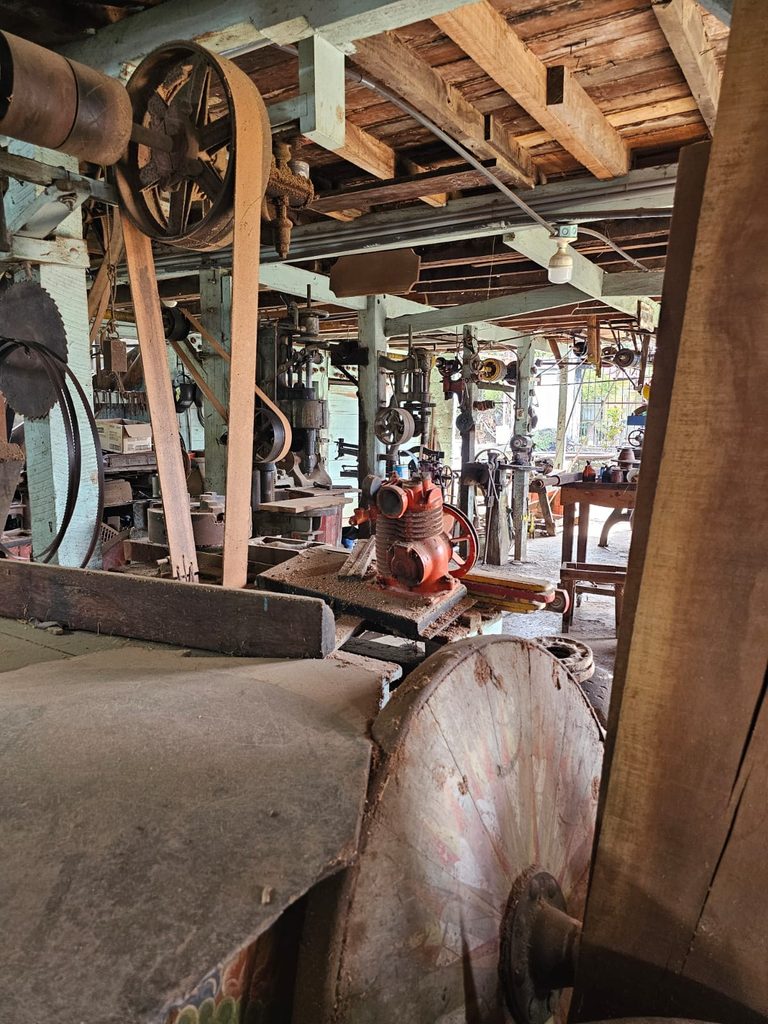
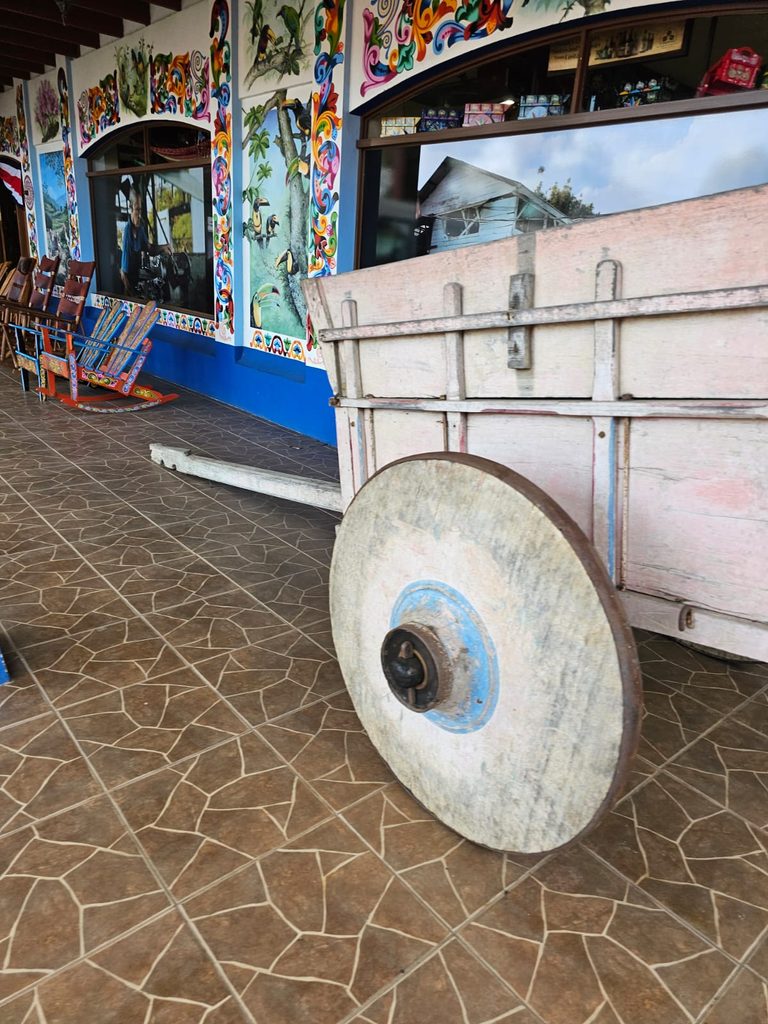
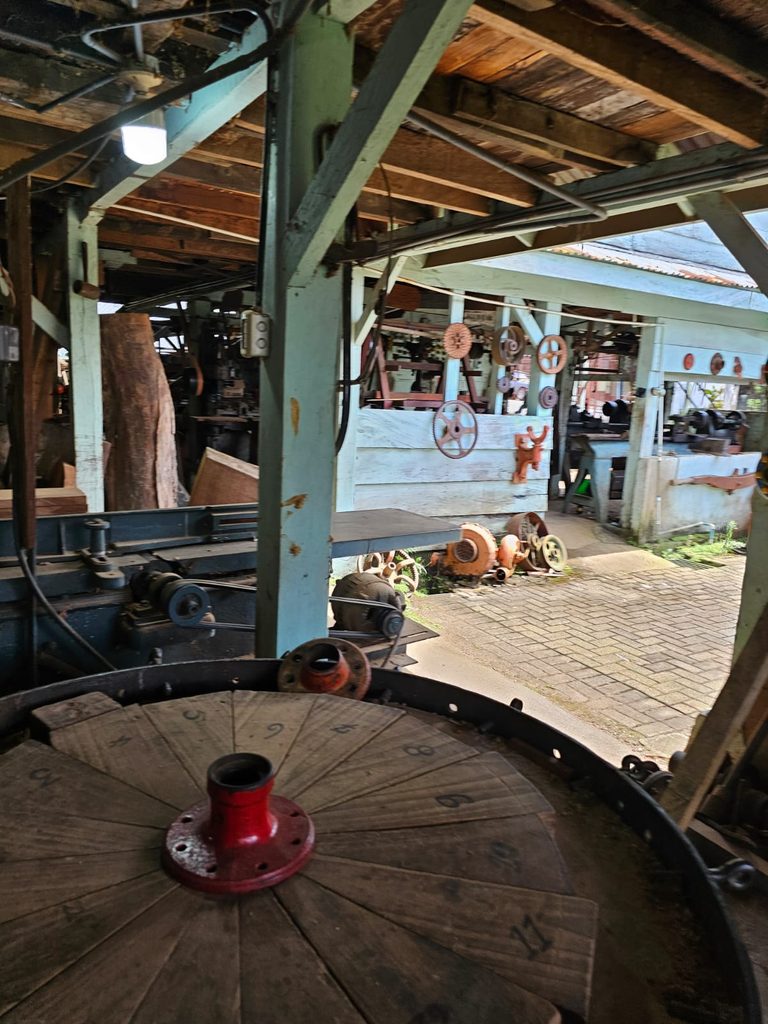
Right in the center of this creative valley breathes the Eloy Alfaro Oxcart Factory, a historical lung with over 120 years of uninterrupted legacy and a well-deserved title of Costa Rican cultural heritage. Long before Sarchí was globally acclaimed as the epicenter of craftsmanship, this factory was already moving the country. In those times when the rugged geography and vast distances meant that trade took days of journeying along mud and stone paths, the alliance between the oxherd (boyero), the oxen, and the oxcart formed an indispensable trinity. It was the true economic engine of the nation; a vital tool and, due to the effort and mastery required for its assembly, a highly valuable investment for any family.
The Costa Rican oxcart blurs the line between a heavy-duty work tool and an artistic canvas. It is a moving tribute to the farmer’s tenacity. To achieve this work of engineering and aesthetics, artisans meticulously select woods of contrasting tones and grains such as mahogany, laurel, teak, purpleheart (nazareno), and mango, pairing them with the precision of forged metal for its wheels and gears.
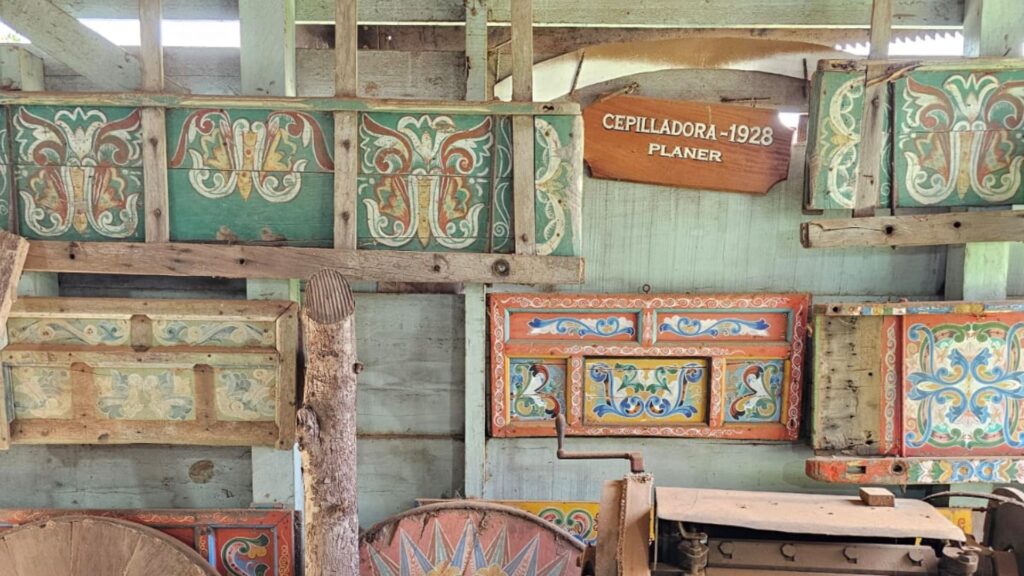
The choreographed labor of assembling, polishing, and decorating each piece demands a level of detail that rejects modern industrial production. It is an intimate process where freehand painting transforms the wood into a kaleidoscope of geometric and floral shapes. Keeping this cultural resistance against the clock alive, don Eloy Alfaro’s factory produces, with the same care as a century ago, an average of three oxcarts a month, ensuring that the echo of the oxen and the color of Sarchí never stop.