Civil society groups raise concerns about environmental deterioration and governance
More than 40 civil society organizations grouped within the Civic Environmental Parliament have issued a public statement warning of a deep environmental crisis in Costa Rica, arguing that the situation in Crucitas is not an isolated event but rather a symptom of structural weaknesses in the country’s environmental governance.
According to the collective, current environmental challenges are not limited to a single region but reflect institutional fragility and public policies that have progressively weakened the State’s ability to protect natural resources and properly manage land use.
What is happening in Crucitas
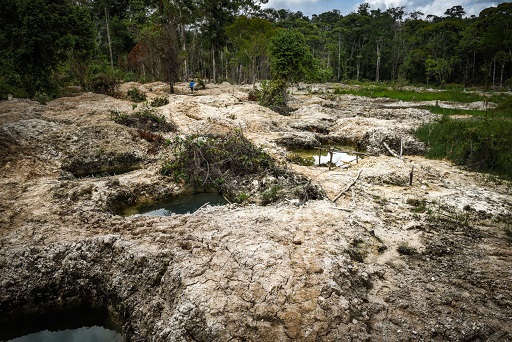
The issue in Crucitas, located in the district of Cutris in the province of Alajuela, revolves around illegal gold mining activities that continue despite legal prohibitions and regulatory controls. These operations have caused significant environmental damage to soils and water resources.
Environmental organizations point out that the lack of clear territorial planning, insufficient enforcement of environmental regulations, and reduced technical capacity for monitoring and response have created conditions that allow illegal activities such as mining to proliferate, especially in vulnerable areas.
Factors behind the national environmental crisis
In its statement, the Civic Environmental Parliament argues that the crisis in Crucitas is a manifestation of an unsustainable socio-environmental development model and of the gap between Costa Rica’s official environmental discourse and practical reality.
The collective highlights political decisions, budget cuts in conservation, and insufficient attention to ecosystem protection as factors that have weakened the State’s capacity to respond to multiple environmental conflicts that are now emerging across the country.
Implications for public policy and sustainability
The organizations’ call goes beyond denouncing the situation in Crucitas. They advocate for a structural transformation in Costa Rica’s environmental governance, including stronger institutions, greater technical autonomy, and evidence-based policy approaches.
Such changes, they argue, are essential to effectively address environmental challenges ranging from illegal mining to biodiversity protection and sustainable land management.
Sources consulted
• Civic Environmental Parliament — public statement on the environmental situation in Crucitas
• Reports and coverage on illegal mining and environmental damage in Crucitas
• Public information on land-use planning and environmental governance in Costa Rica