
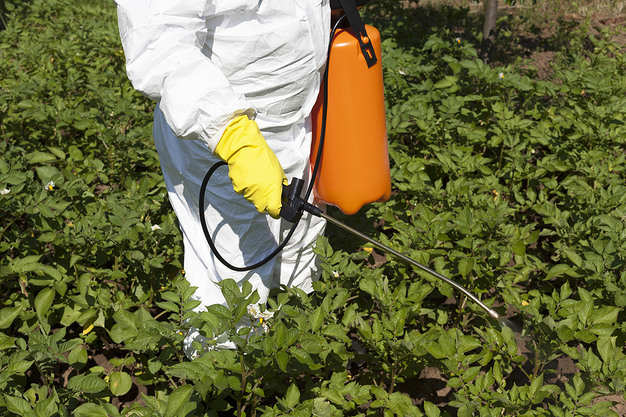
The Government of Costa Rica has announced the start of a gradual phase-out of fipronil in agriculture, marking an important shift in the country’s environmental and health policy. The initiative, led by the Ministry of Health in coordination with the Ministry of Agriculture and Livestock (MAG) and the Ministry of Environment and Energy (MINAE), sets a 24-month timeline for the complete elimination of this pesticide.
The decision is based on technical evidence highlighting the risks of fipronil to human health, the environment, and particularly pollinators, which are crucial for food security.
A gradual process with defined timelines
The decree establishes a clear roadmap for withdrawing fipronil from the national agricultural market, regulating all stages: registration, importation, manufacturing, commercialization, and use.
During the first 12 months, products with a valid registration may still be used, but subsequently, the import, export, manufacture, and formulation of substances containing this active ingredient will be prohibited. After 24 months, the use of fipronil in all crops will be completely banned.
During this transition period, commercialization will be subject to stricter technical controls and, in some cases, professional prescription by agronomy specialists.
Risks to health, the environment, and biodiversity
The decision is supported by technical studies showing significant negative impacts associated with fipronil use. Key risks include harm to pollinators such as bees, whose decline directly affects agricultural production.
MINAE research has also shown that even low doses of this insecticide can pose risks to birds and aquatic organisms. Since many crops rely on pollinators, their reduction affects crop quality, agricultural productivity, and the stability of food systems.
A measure aligned with sustainable agriculture
Authorities stress that this decision responds not only to environmental protection concerns but also to the need to advance a more sustainable and competitive agricultural model.
According to MAG, the phase-out is feasible due to the availability of new technologies and safer alternatives, allowing productivity to continue without compromising health or the environment.
The measure also aligns with international trends promoting the reduction of highly hazardous pesticides and safer farming practices.
Exceptions and control during the transition
The decree allows exceptions only in cases of phytosanitary emergency, which must be evaluated and authorized under strict technical criteria.
During the transition period, companies must report existing fipronil-containing products and comply with safe handling requirements. Noncompliance may result in seizure of products. Control and traceability mechanisms will be strengthened to ensure effective implementation.
Impact on production and food security
The gradual elimination of fipronil aims to strengthen national food security by protecting pollinators, essential for food production.
Reducing the use of such substances also improves the quality of agricultural products and decreases population exposure to potentially hazardous chemicals.
This measure represents a balance between agricultural productivity, environmental protection, and public health, key pillars of Costa Rica’s sustainable development model.
A step toward safer agriculture
With this decision, Costa Rica reaffirms its commitment to sustainability and the protection of natural resources, positioning itself as a regional leader in agrochemical regulation.
Phasing out fipronil not only addresses an immediate environmental need but also opens the door to broader agricultural transformation based on innovation, responsibility, and resilience.
Official and reference sources
– Ministry of Health of Costa Rica, official statement on fipronil phase-out
– Ministry of Agriculture and Livestock (MAG) & Ministry of Environment and Energy (MINAE), institutional statements
– Infobae Costa Rica, article on fipronil elimination
– Semanario Universidad, analysis on impacts on pollinators
– Delfino.cr, information on decree and timeline
– Teletica.com, coverage of insecticide ban and environmental impact